
How Quickly Can Solar Panels Pay for Themselves?
Installing solar panels is a long-term investment that can help homeowners and businesses reduce electricity expenses while generating clean, renewable energy. But before investing in a rooftop solar system, one of the most important questions is: How long does it take for solar panels to pay for themselves?
The answer depends on several factors, including the size and cost of the solar system, electricity consumption, local electricity tariffs, solar generation, available incentives, maintenance costs, and how much energy the system produces each year.
For many properties, the solar payback period can be measured in several years rather than decades. Once the initial investment has been recovered through electricity savings and applicable benefits, the system can continue generating electricity for many more years.
This guide explains how solar payback works, what affects the timeline, and how homeowners can potentially improve their return on investment.
What Is the Solar Payback Period?
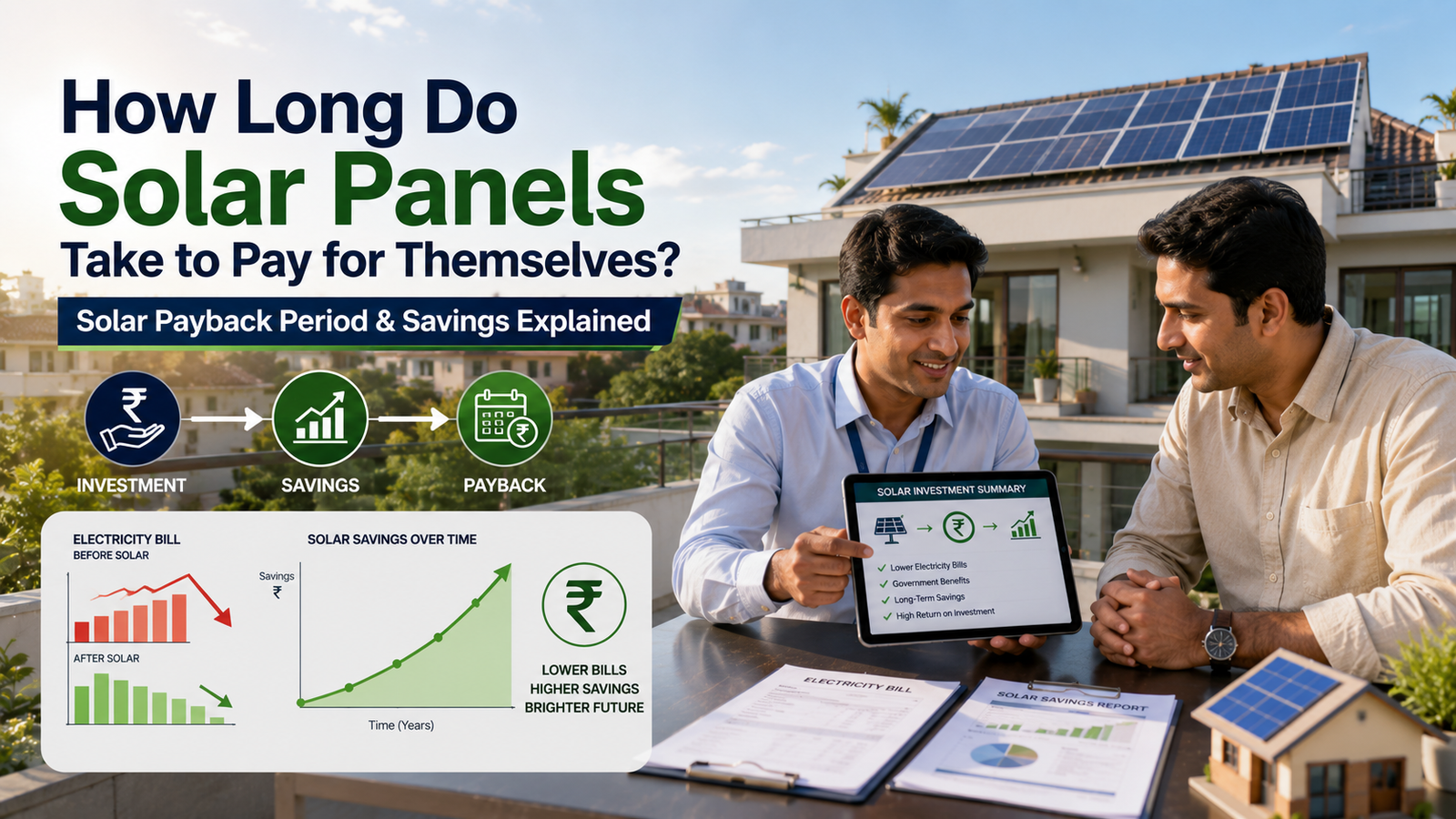
The solar payback period is the amount of time required for the savings and financial benefits generated by a solar system to recover its initial investment. solar panels
In simple terms:
Solar Payback Period = Initial Solar Investment ÷ Annual Solar Savings
For example, if a solar installation costs ₹4 lakh and generates approximately ₹80,000 in annual electricity savings, the simple payback period would be around five years.
However, this is only an illustrative calculation. Actual savings can vary considerably depending on electricity usage, tariffs, solar production, system performance, subsidies, financing, and other factors.
How Long Does It Usually Take for Solar Panels to Pay for Themselves?
Every solar system has a different payback timeline based on factors such as cost, energy usage, and savings.
A residential rooftop system may recover its initial investment in several years, while the exact timeline can be shorter or longer depending on the property’s electricity consumption and installation cost.
The payback period can be influenced by:
- Solar system size
- Installation cost
- Electricity tariff
- Annual electricity consumption
- Solar energy generation
- Government incentives or subsidies
- Net-metering arrangements
- System maintenance
- Roof orientation and shading
- Financing costs
Properties with high electricity consumption may sometimes achieve faster financial payback because they can use more of the solar panels electricity generated.
What Determines Solar Payback Time?
1. Initial Installation Cost
The first factor is the amount you spend on your solar system.
The total cost can include:
- Solar panels
- Solar inverter
- Mounting structure
- Electrical equipment
- Installation
- Wiring
- Safety equipment
- Metering-related work
- Other site-specific requirements
A higher-quality system may have a higher initial price, but choosing equipment based only on the lowest upfront cost can be misleading.
Reliability, warranties, efficiency, installation quality, and after-sales support should also be considered.
2. Electricity Consumption
Your electricity consumption has a major effect on the potential savings from solar.
A home with a relatively high monthly electricity bill may have greater opportunities to offset grid electricity with rooftop solar panels.
For example, a household using multiple air conditioners, refrigerators, water pumps, and other appliances may consume considerably more electricity than a smaller household.
The higher the portion of your electricity demand that can be effectively offset by solar, the greater the potential annual savings.
3. Electricity Tariffs
Electricity prices directly influence the value of the electricity generated by your solar system.
If the price of grid electricity increases over time, the value of the electricity produced by your solar installation may also become more significant.
This is one reason solar should be viewed as a long-term energy investment rather than simply a way to reduce today’s electricity bill.
4. Solar Energy Generation
A solar system’s annual production depends on several conditions.
These include:
- Location
- Available sunlight
- Panel orientation
- Panel tilt
- Shading
- Temperature
- Dust and dirt
- Equipment efficiency
- System design
A well-designed rooftop system with good sunlight exposure can generally produce more electricity than an installation affected by significant shading.
For homeowners in sunny regions such as Nagpur, rooftop solar can be particularly attractive because strong solar availability provides good conditions for electricity generation.
Does Solar Subsidy Reduce the Payback Period?
Government incentives and subsidies can reduce the amount a qualifying homeowner needs to invest initially.
When the upfront cost is reduced, the time required to recover the remaining investment can also decrease.
However, eligibility, subsidy amounts, application procedures, and program conditions can change. Homeowners should verify the current applicable rules before including a subsidy in their financial calculations.
A professional solar installer can help explain the applicable process and documentation requirements. solar panels
How Net Metering Can Affect Solar Savings
Net metering can play an important role in the economics of rooftop solar where it is available under the applicable utility rules.
During periods when your solar system produces more electricity than your property is consuming, surplus electricity may be exported to the grid.
Depending on the applicable metering arrangement, this exported electricity can contribute toward reducing your electricity costs.
This means your solar investment should not be evaluated only by looking at how much electricity your home consumes during daylight hours.
The applicable electricity and metering regulations should also be considered.
Example of a Solar Payback Calculation
Consider a hypothetical homeowner who installs a rooftop solar system for ₹3,50,000 after applicable adjustments.
Suppose the system provides average annual electricity savings of approximately ₹70,000.
A simplified calculation would be:
₹3,50,000 ÷ ₹70,000 = 5 years
This suggests a simple payback period of approximately five years.
However, real-world calculations may include:
- Changes in electricity tariffs
- Annual system degradation
- Maintenance expenses
- Financing costs
- Subsidies
- Changes in electricity consumption
- Exported electricity
- Unexpected repair costs
Therefore, a professional solar proposal should ideally provide a more detailed financial estimate based on your actual electricity bills and property conditions.
Does Solar Payback Mean You Stop Paying Electricity Bills?
Not necessarily.
Installing solar does not automatically mean your electricity bill becomes zero.
You may still have: solar panels
- Fixed utility charges
- Taxes or regulatory charges
- Grid-related fees
- Electricity consumed when solar production is insufficient
For an on-grid system, electricity may still be drawn from the grid when your household demand exceeds solar generation.
Therefore, it is more accurate to say that solar can significantly reduce electricity expenses, rather than guaranteeing a completely zero bill.
What Happens After the Payback Period?
Once the initial investment has been recovered through accumulated savings, the solar system can continue producing electricity.
Solar panels are designed for long-term operation, although their output gradually declines over time.
After the payback period, continued electricity generation can provide additional financial value over the remaining useful life of the system.
This is one of the major reasons homeowners consider solar a long-term investment.
How to Shorten the Solar Payback Period
While you cannot control every factor, several decisions can improve the financial performance of your solar system.
Choose the Right System Size
Installing a system that closely matches your electricity requirements can help avoid unnecessary investment.
A system that is too small may not offset enough electricity consumption, while an unnecessarily large system may increase the upfront cost without providing proportional benefits.
Maximize Daytime Solar Usage
Using electricity while your solar system is actively generating can increase direct solar consumption.
Where practical, consider operating flexible appliances such as washing machines, pumps, or other equipment during daylight hours.
Reduce Shading
Shading can reduce electricity production.
Before installation, identify potential shading from trees, nearby buildings, water tanks, and other structures.
Keep Panels Clean
Dust and other deposits can reduce the amount of sunlight reaching the solar cells.
Regular cleaning appropriate to your local environment can help maintain performance.
Monitor System Performance
Use your inverter or monitoring application to track electricity generation.
If you notice an unexplained and persistent decline in output, professional inspection can help identify the cause.
Does Solar Panel Quality Affect Payback?
Yes.
The quality of solar panels, inverter, mounting structure, wiring, and installation can influence long-term system performance.
Choosing extremely low-cost equipment may reduce the initial investment but can create problems if the equipment has poor reliability or inadequate support.
Instead of focusing exclusively on purchase price, consider the total value over the system’s operating life.
A professionally designed system using dependable components may provide better long-term value.
How Maintenance Affects Solar ROI
Solar panels generally require relatively little maintenance, but preventive care is still important.
Maintenance may include:
- Panel cleaning
- Inverter inspection
- Cable checks
- Mounting structure inspection
- Performance monitoring
- Electrical safety checks
A well-maintained system can help identify problems early and reduce avoidable performance losses.
This can contribute to maintaining the expected financial benefits of your solar investment.
Residential vs Commercial Solar Payback
Solar payback can differ significantly between residential and commercial installations.
Residential Solar
Homeowners generally install solar to reduce household electricity expenses and increase energy independence.
The ideal system size depends on:
- Monthly electricity consumption
- Number of ACs
- Appliance usage
- Roof space
- Daytime electricity demand
Commercial Solar
Businesses often have larger electricity requirements, making rooftop solar particularly useful for reducing operating expenses.
Factories, offices, hotels, schools, warehouses, and other commercial properties may consume substantial electricity during daylight hours, which can create strong opportunities for direct solar consumption.
Is Solar Still Worth It After Considering the Payback Period?
For many homeowners and businesses, solar can offer significant long-term value beyond the initial payback period.
The benefits can include:
- Lower electricity expenses
- Renewable energy generation
- Reduced dependence on grid electricity
- Greater protection against rising energy costs
- Long-term energy savings
- Lower environmental impact
However, solar should be evaluated using your actual electricity consumption and property conditions rather than relying on a generic payback estimate.
Frequently Asked Questions
How many years does it take for solar panels to pay for themselves?
The timeline varies by system cost, electricity savings, solar generation, incentives, and consumption. A personalized calculation based on your electricity bills provides a more useful estimate than a general industry figure.
Is a shorter payback period always better?
A shorter payback period can be financially attractive, but it should not be the only factor considered. Equipment quality, warranties, installation standards, maintenance, and expected system life are also important.
Can solar panels increase home value?
A professionally installed solar system may make a property more attractive to buyers because it can offer lower energy expenses and renewable electricity generation. The actual impact on property value varies by location and market conditions.
Does solar work during cloudy weather?
Solar panels can continue producing electricity during cloudy conditions, although generation is generally lower than during strong sunlight.
How long can solar panels continue generating electricity?
Solar panels are designed for long-term operation. Their electricity output gradually decreases over time, so buyers should review the manufacturer’s performance warranty and degradation terms when selecting equipment.
So, how long does it take for solar panels to pay for themselves? There is no universal answer. The payback period depends on the initial installation cost, electricity consumption, tariff rates, solar generation, applicable incentives, net-metering arrangements, and ongoing system performance.
The best way to determine your expected payback is to analyze your actual electricity bills and design a solar system around your property’s energy requirements.
For homeowners and businesses in Nagpur, a professionally designed rooftop solar system can provide an opportunity to reduce electricity expenses while generating clean energy for many years.
Ready to Calculate Your Solar Payback?
Ranas Solar Enterprises can help you evaluate your electricity consumption, rooftop conditions, system requirements, and potential savings.
Get a customized solar assessment and understand how a properly sized rooftop solar system can help reduce your electricity expenses and deliver long-term energy value.