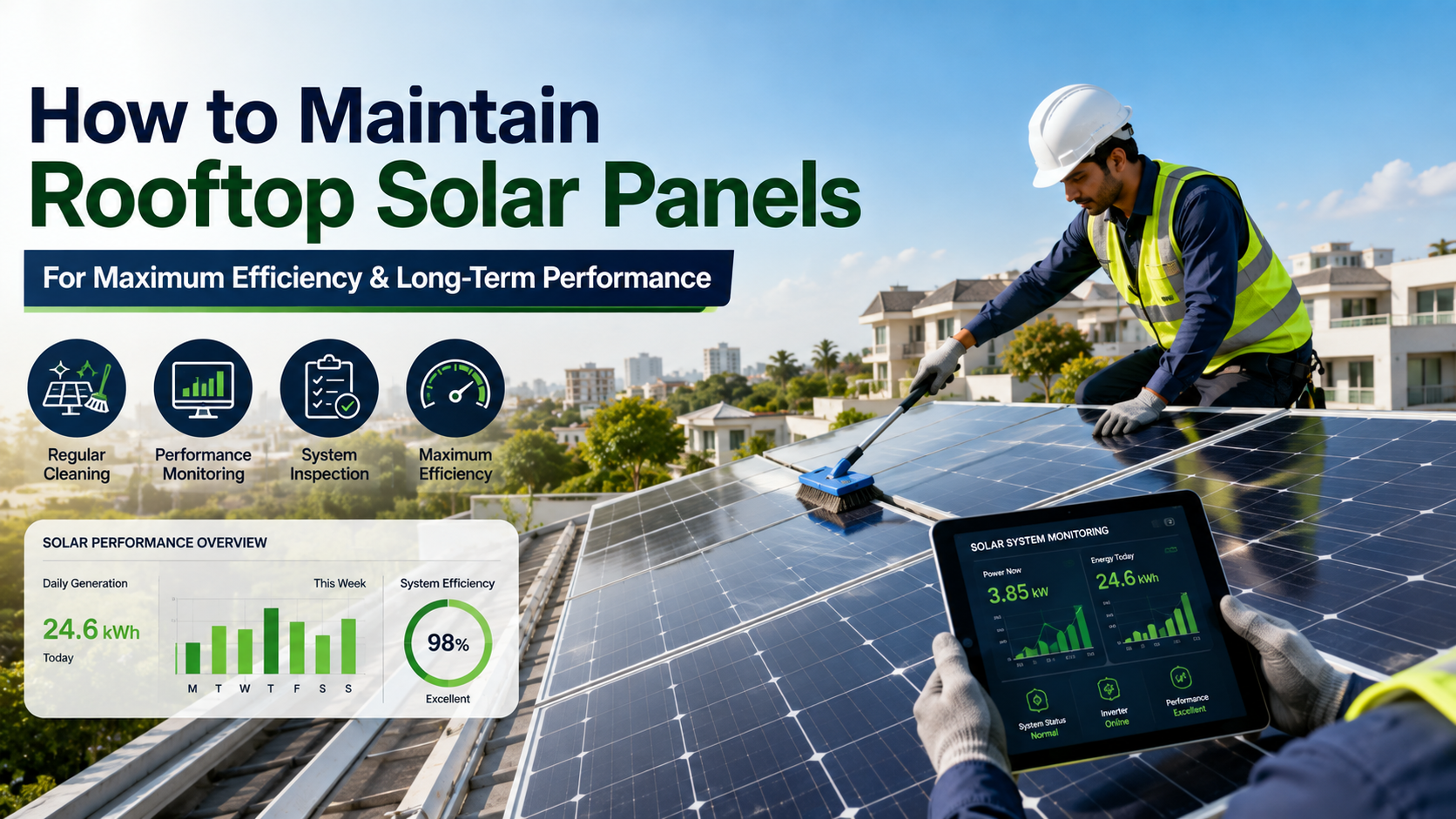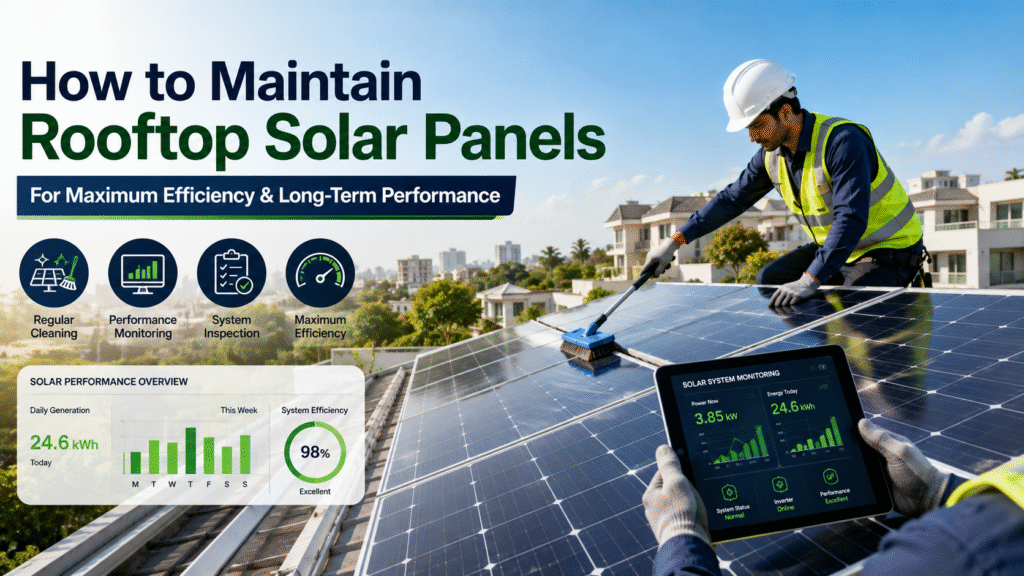
Professional technician maintaining rooftop solar panels on a modern Indian home

How to Maintain Rooftop Solar Panels for Maximum Efficiency

Rooftop solar is a long-term investment that can help homeowners and businesses generate clean electricity and reduce dependence on conventional power. However, installing solar panels is only the beginning. Regular care and proper monitoring are important for keeping the system safe, productive, and reliable over the years.

Although modern solar panels are designed to withstand outdoor conditions and generally require limited upkeep, their performance can be affected by dust, bird droppings, leaves, shading, weather, and equipment faults. A simple maintenance routine can help identify these issues before they become bigger problems.

This guide explains practical ways to maintain rooftop solar panels and keep your solar system performing efficiently.

Why Is Solar Panel Maintenance Important?

Solar panels need adequate sunlight to generate electricity. When dirt or other debris accumulates on the panel surface, it can block part of the sunlight reaching the photovoltaic cells.

The effect varies depending on the local environment, amount of dust, rainfall, panel angle, and type of contamination. For example, homes located near construction sites or busy roads may experience faster dust accumulation.

Maintenance is also about more than cleaning. The inverter, cables, mounting structure, electrical connections, and safety equipment should also be checked periodically.

Proper maintenance can help:

  • Maintain consistent energy generation
  • Detect problems at an early stage
  • Protect important system components
  • Improve overall system reliability
  • Reduce avoidable repair expenses
  • Support long-term solar performance

1. Keep Solar Panels Clean

One of the easiest ways to care for a rooftop solar system is to keep the panel surface reasonably clean.

Dust, pollen, leaves, bird droppings, and other contaminants can accumulate over time. Rain can remove some surface dirt, but it may not completely clean stubborn deposits.

There is no single cleaning schedule suitable for every location. Your cleaning requirements depend on the amount of dust, rainfall, surrounding trees, bird activity, and local environmental conditions.

Safe Cleaning Practices

When cleaning solar panels:

  • Follow the manufacturer’s recommendations.
  • Use suitable cleaning equipment.
  • Avoid abrasive brushes or materials.
  • Do not use aggressive chemicals without manufacturer approval.
  • Avoid putting unnecessary pressure on the panels.
  • Do not walk or stand on the panels.

Rooftop cleaning can involve significant fall and electrical hazards. If you do not have appropriate safety equipment and experience, hiring trained professionals is the safer option.


2. Monitor Your Solar System’s Performance

A solar system can sometimes develop a problem without showing obvious physical damage. That’s why monitoring electricity generation is an important part of maintenance.

Many modern solar systems allow homeowners to view production through an inverter display or mobile monitoring application.

Pay attention to unusual changes such as:

  • A sudden reduction in generation
  • Repeated inverter warnings
  • Unexpected system shutdowns
  • Persistent performance drops

Remember that solar production naturally changes because of weather, seasons, temperature, and sunlight availability. One cloudy day does not necessarily indicate a problem.

However, if production remains unusually low under similar weather conditions, professional inspection may be appropriate.


3. Prevent Unnecessary Shading

Even partial shading can affect solar generation, depending on the system design and equipment used.

Trees may grow over time, neighboring construction may change the surroundings, and rooftop structures can create new shadows.

Check your property periodically for changes that could affect sunlight reaching the panels.

Potential sources of shading include:

  • Growing trees
  • Water tanks
  • Nearby buildings
  • Antennas
  • Other rooftop equipment

If vegetation is causing significant shading, have it safely managed rather than attempting risky rooftop work yourself.


4. Inspect the Solar Inverter

The inverter is a critical component of a solar installation because it manages the conversion of electricity generated by the panels into usable AC electricity.

Homeowners should pay attention to the inverter’s display and monitoring system.

Potential warning signs include:

  • Error messages
  • Repeated shutdowns
  • Unusual sounds
  • Excessive heat
  • Unexpected changes in system performance

Do not open an inverter or attempt internal electrical repairs yourself. Electrical troubleshooting should always be performed by an appropriately qualified professional.


5. Check Cables and Electrical Connections

Solar installations contain electrical cables and connection points that should remain secure and protected.

During a professional inspection, technicians can look for:

  • Damaged cables
  • Loose connections
  • Corrosion
  • Signs of overheating
  • Physical deterioration
  • Poor cable routing

If you notice exposed wiring, burning smells, sparks, or visible electrical damage, do not touch the equipment. Follow the system’s safety instructions and contact a qualified solar technician.


6. Inspect the Mounting Structure

Solar panels depend on a strong mounting system to remain securely positioned on the rooftop.

Over time, weather exposure can affect mounting components. Professional inspections can help identify:

  • Loose fasteners
  • Corrosion
  • Damaged mounting components
  • Structural movement
  • Other signs of deterioration

This becomes particularly important after strong winds, storms, or other severe weather events.

A secure mounting structure helps protect the panels and maintain their intended positioning.


7. Watch for Roof Water Leakage

Solar installations should be properly integrated with the existing roof structure. Mounting points and roof penetrations should be checked when appropriate.

Signs of a potential problem may include:

  • Damp patches
  • Ceiling stains
  • Water entering the building
  • Moisture around installation areas

If you notice signs of leakage, arrange a professional inspection rather than attempting to dismantle the solar structure yourself.


8. Keep the Rooftop Area Clear

Leaves, branches, plastic, and other debris should not be allowed to accumulate around the solar installation.

However, rooftop access should always be approached with safety in mind.

Do not place objects on the panels, and avoid unnecessary movement across the installation.

Keeping the surrounding area organized can also make future maintenance and inspections easier.


9. Schedule Professional Solar Inspections

Even when your solar system appears to be working normally, periodic professional inspections can be useful.

A trained technician can evaluate components that may not be easy for a homeowner to assess safely.

An inspection may include:

  • Panel condition
  • Inverter operation
  • Electrical connections
  • Mounting structure
  • Earthing
  • Protection equipment
  • System generation data
  • Cable condition

The appropriate inspection frequency depends on the installation, environment, equipment manufacturer’s recommendations, and local conditions.


10. Check Earthing and Protection Systems

Electrical safety should always be a priority.

A professional technician can verify that the system’s earthing and protective devices remain in appropriate condition.

Depending on the installation, safety equipment may include:

  • Earthing arrangements
  • Surge protection
  • DC protection
  • AC protection
  • Isolation equipment

Never bypass, remove, or modify a safety component without professional guidance.


11. Inspect the System After Severe Weather

Heavy rain, storms, high winds, and other extreme weather can potentially affect rooftop solar equipment.

After a severe weather event, look for visible signs such as:

  • Cracked panels
  • Loose equipment
  • Damaged cables
  • Displaced mounting components
  • Water intrusion

Do not handle damaged electrical equipment yourself. If you suspect damage, arrange a professional inspection.


12. Use Solar Monitoring to Track Long-Term Performance

If your system has a monitoring application, make use of it.

Regularly reviewing production data can help you understand how your solar system behaves throughout the year.

Depending on the monitoring platform, you may be able to view:

  • Daily generation
  • Monthly production
  • Historical performance
  • System alerts
  • Inverter status

Keeping track of this information can make it easier to identify unusual changes and discuss them with your solar service provider.


Common Solar Maintenance Mistakes to Avoid

Good intentions can sometimes lead to unnecessary damage. Avoid these common mistakes.

Using Rough Cleaning Tools

Abrasive materials can scratch the protective surface of solar panels.

Walking on Panels

Solar panels should never be treated as a walking surface. Pressure can damage components and create safety risks.

Ignoring Inverter Alerts

Repeated warnings or errors should be investigated rather than ignored.

Cleaning During Dangerous Weather

Avoid rooftop maintenance during rain, strong winds, or other unsafe conditions.

Using Unapproved Chemicals

Cleaning products should be compatible with the panel manufacturer’s recommendations.

Attempting Electrical Repairs

Solar systems contain electrical hazards. Repairs should be handled by qualified professionals.


How Often Should Rooftop Solar Panels Be Cleaned?

The ideal cleaning frequency depends on the environment.

Factors include:

  • Local dust levels
  • Rainfall
  • Panel tilt
  • Nearby construction
  • Trees
  • Bird activity
  • Air pollution

Instead of following a rigid schedule, inspect the panels safely and clean them when significant contamination is visible or when performance data suggests that cleaning may be beneficial.


Does Rain Clean Solar Panels?

Rain can naturally remove some dust from solar panels, but it does not guarantee a complete clean.

Bird droppings, sticky deposits, and accumulated dirt may remain even after rainfall.

If significant contamination remains on the panels, appropriate cleaning may be necessary.


How Can Maintenance Improve Solar Performance?

Solar output depends on several factors, including sunlight availability, temperature, shading, panel technology, system design, and equipment condition.

Maintenance cannot control weather or seasonal changes, but it can help prevent avoidable performance losses.

Keeping the system clean, monitoring generation, managing shading, and addressing equipment issues promptly can help maintain reliable operation.


Professional Solar Maintenance for Homes and Businesses

Residential and commercial solar systems both benefit from appropriate preventive maintenance.

For homeowners, maintenance can focus on:

  • Panel cleanliness
  • System monitoring
  • Inverter condition
  • Electrical safety
  • Performance checks

Commercial systems may require more structured maintenance because they are typically larger and can have a greater financial impact if production is interrupted.

A professional maintenance plan can be customized according to the system’s size, equipment, operating environment, and energy requirements.


Benefits of Professional Solar Maintenance

Professional maintenance can provide several advantages:

  • Early identification of potential faults
  • Safer system inspections
  • Better performance monitoring
  • Proper equipment checks
  • Reduced risk of unexpected downtime
  • Longer-lasting system components

Qualified technicians can also identify issues that may not be visible during a basic visual inspection.


Maintaining rooftop solar panels doesn’t have to be complicated. Regular cleaning, performance monitoring, shading management, equipment inspections, and timely professional servicing can help protect your solar investment.

Remember that effective solar maintenance involves the entire system, not just the panels. The inverter, cables, mounting structure, electrical protection, and safety components also deserve attention.

For homeowners and busines

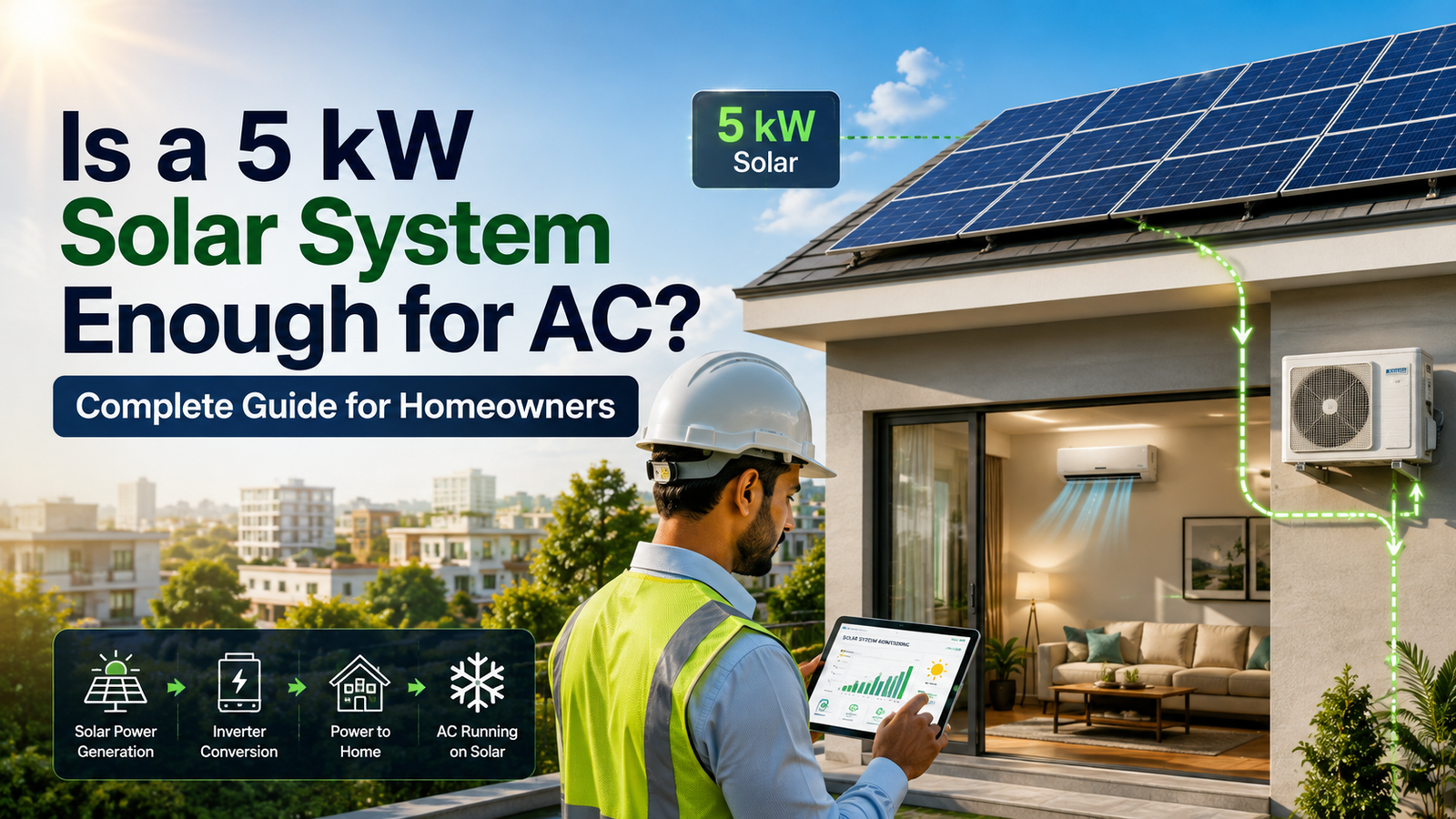
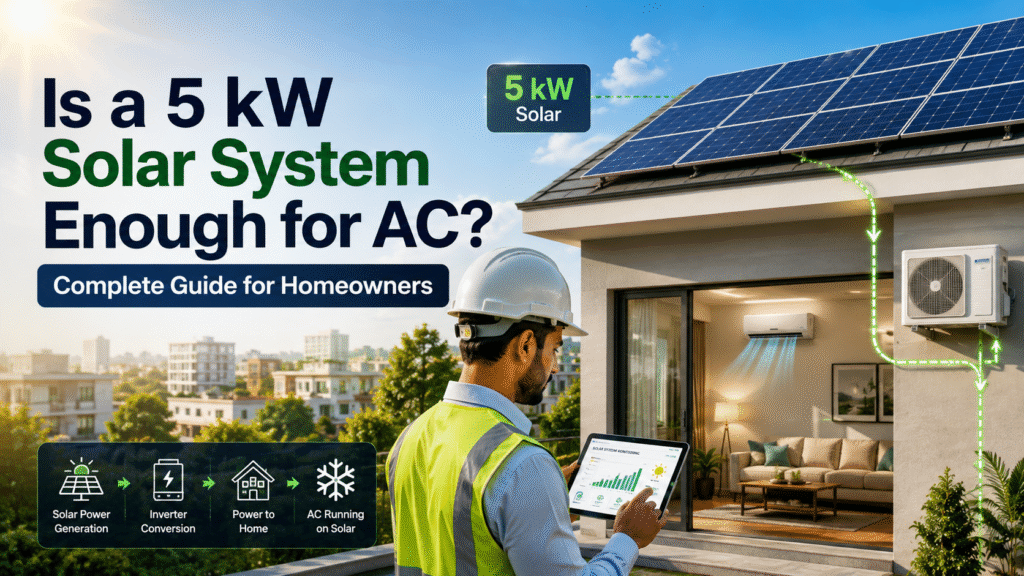
5 kW rooftop solar system powering an air conditioner in a modern Indian home

Is a 5 kW Solar System Enough for AC? Complete Guide

With electricity costs increasing and air conditioners becoming essential during hot Indian summers, many homeowners are considering solar energy to manage their power expenses. One of the most common questions before installing rooftop solar is: Is a 5 kW solar system enough for AC?

In many cases, yes, a 5 kW solar system can support air-conditioning loads, especially when energy-efficient inverter ACs operate during daylight hours. However, the actual result depends on the AC capacity, number of operating hours, efficiency rating, other household appliances, local sunlight conditions, and the type of solar system installed.

Simply knowing that your solar system is rated at 5 kW is not enough to determine exactly how many appliances it can operate. Understanding your home’s overall electricity consumption is essential.

This guide explains how a 5 kW solar system works with air conditioners and what you should consider before choosing solar for your home.

What Is a 5 kW Solar System?

A 5 kW solar system refers to a photovoltaic system with approximately 5 kilowatts of rated solar-panel capacity under standard test conditions.

A typical residential installation consists of:

  • Solar panels
  • Solar inverter
  • Mounting structure
  • AC and DC cables
  • Distribution and protection equipment
  • Earthing and safety components
  • Energy monitoring system

Battery storage may also be included in off-grid and hybrid configurations.

The actual electricity generated by a 5 kW system changes throughout the day and year. Sunlight availability, temperature, weather, shading, panel orientation, dust accumulation, equipment efficiency, and system losses can all influence production.

Therefore, a 5 kW installation should not be treated as a source that continuously supplies exactly 5 kW from morning to evening. 5 kW solar system

Is a 5 kW Solar System Enough for AC?

A properly designed 5 kW solar system can support an AC and may support multiple efficient ACs depending on their power requirements and the other electrical loads operating at the same time.

For example, an energy-efficient inverter AC can adjust compressor output according to cooling demand. Once a room reaches the selected temperature, its electricity consumption may decrease.

However, AC tonnage matters.

A 1-ton AC generally requires less energy than a 1.5-ton or 2-ton unit under comparable operating conditions. An older fixed-speed AC can also have a different consumption pattern from a modern inverter model.

For this reason, the answer should be based on the actual rated input and energy consumption of your AC, rather than tonnage alone. 5 kW solar system

Can a 5 kW Solar System Run a 1-Ton AC?

In many residential situations, a 5 kW rooftop solar installation can comfortably contribute enough daytime electricity to operate a modern 1-ton AC along with several smaller household loads.

The remaining solar generation may be used for appliances such as fans, lights, a refrigerator, television, computers, and other equipment.

However, the available power changes according to solar conditions. If clouds reduce generation or several high-load appliances are switched on simultaneously, an on-grid system can draw the additional electricity required from the utility grid.

Can a 5 kW Solar System Run a 1.5-Ton AC?

A 5 kW solar system can generally contribute enough power to operate an energy-efficient 1.5-ton AC during good daytime solar conditions.

The important factor is not simply the AC’s tonnage but its actual electrical input.

Modern inverter ACs vary their compressor speed rather than continuously operating at maximum capacity. This can make them particularly suitable for households trying to maximize daytime solar consumption.

Before installation, check the AC’s energy label or manufacturer specifications and have your complete household load assessed.

What About a 2-Ton AC?

A 2-ton air conditioner typically has greater cooling capacity and may consume more electricity than a smaller unit, depending on efficiency and operating conditions.

A 5 kW rooftop system can still contribute significantly toward its electricity requirement during sunny hours. Whether solar generation can cover the AC and all other household appliances simultaneously depends on the actual load at that moment.

This is why solar capacity should be designed around the whole property’s energy profile rather than one appliance.

Can a 5 kW Solar System Run Two ACs?

It can be possible.

Two efficient inverter ACs may operate while a 5 kW solar system is generating electricity, particularly during strong daytime production.

But this does not mean a 5 kW system can always supply two ACs entirely from solar power.

Consider a home simultaneously operating:

  • Two ACs
  • Refrigerator
  • Water pump
  • Television
  • Fans and lights
  • Washing machine
  • Microwave or induction cooktop

The combined instantaneous demand can become substantial.

With an on-grid system, electricity from the grid can supplement solar generation whenever household demand exceeds the amount being produced by the panels. 5 kW solar system

Daytime AC Usage vs Nighttime AC Usage

This distinction is extremely important.

Running an AC During the Day

Solar panels generate electricity during daylight hours. Therefore, operating your AC when solar generation is strong allows you to directly use more of the electricity produced on your rooftop.

This can help reduce the amount of electricity purchased from the grid.

Running an AC at Night

Solar panels do not generate electricity after sunset.

With an on-grid solar system, nighttime AC consumption normally comes from the electricity grid.

If you want to run an AC using solar energy stored during the day, you need a suitable battery-based or hybrid solar system. Battery capacity must be carefully calculated according to the AC’s consumption and desired backup duration. 5 kW solar system

On-Grid Solar for Air Conditioners

An on-grid system is connected to the utility electricity network.

During daylight hours, rooftop solar electricity can supply household loads. When consumption exceeds solar generation, the grid provides the additional electricity required.

When generation exceeds consumption, surplus electricity may be exported under the applicable metering arrangement and local regulations.

An on-grid system can be an attractive choice for homeowners whose main objective is reducing electricity bills rather than obtaining backup power.

Hybrid Solar for AC Usage

A hybrid solar system integrates solar power generation with battery storage and a connection to the utility grid, based on the system setup.depending on the configuration.

This can provide additional flexibility when homeowners want backup power as well as electricity savings.

However, operating an AC from batteries can require considerable storage capacity. Running multiple ACs for several hours can increase the required battery size and overall system cost significantly. 5 kW solar system

Professional load calculation is therefore particularly important for hybrid systems.

How Much Electricity Does an AC Use?

There is no single electricity-consumption figure that applies to every AC.

Actual consumption depends on:

  • AC tonnage
  • Star rating
  • Inverter technology
  • Room size
  • Room insulation
  • Outdoor temperature
  • Thermostat setting
  • Number of operating hours
  • Age and condition of the unit

Instead of relying only on online estimates, check the rated power input and annual energy-consumption information provided with your specific AC model.

This allows your solar installer to make a more accurate recommendation.

Other Appliances You Can Use with a 5 kW Solar System

A 5 kW residential rooftop system can contribute electricity toward many common household appliances, including:

  • LED lights
  • Ceiling fans
  • Refrigerator
  • Television
  • Wi-Fi router
  • Computers and laptops
  • Washing machine
  • Water pump
  • Kitchen appliances
  • Air conditioners

The important point is simultaneous load.

A list of appliances that can use solar electricity does not mean all of them can necessarily operate at maximum power from solar generation alone at exactly the same moment.5 kW solar system

High-power appliances should be used strategically to make the most of the electricity generated directly by your solar system. 

Factors That Affect 5 kW Solar Performance

Sunlight Availability

Solar panels produce more electricity when sufficient solar radiation is available. Cloud cover and seasonal weather patterns can affect daily generation.

Rooftop Shading

Trees, nearby buildings, water tanks, antennas, and other structures can cast shadows on solar panels and reduce output.

Panel Orientation and Layout

Professional system design helps position panels to make effective use of available sunlight while accounting for roof limitations.

Solar Panel Quality

Panel efficiency, degradation characteristics, warranty, and manufacturing quality can influence long-term system performance.

Inverter Efficiency

The inverter plays an essential role in converting electricity generated by the solar panels into electricity suitable for household use.

Maintenance

Dust, leaves, bird droppings, and other debris can reduce panel performance. Periodic inspection and appropriate cleaning help maintain effective operation. 5 kW solar system


Can Your Whole House Run on a 5 kW Solar System?

Possibly—but it depends on your consumption.

A household with efficient appliances and moderate electricity usage may find 5 kW well suited to its requirements. A property with several ACs, electric water heating, pumps, high-powered kitchen equipment, or other heavy loads may require a different capacity.

Your installer should ideally examine previous electricity bills and understand:

  • Monthly electricity consumption
  • Daytime consumption
  • AC capacity
  • AC operating hours
  • Simultaneous appliance loads
  • Available rooftop space
  • Future energy requirements

These factors provide a much stronger basis for system sizing than choosing capacity simply because another household uses a 5 kW installation.

Should You Install 5 kW or a Larger Solar System?

Do not automatically choose a larger system simply because you use an AC.

Similarly, do not assume 5 kW will be enough just because it is a common residential system size.

The correct solar capacity should balance your electricity consumption, usable roof area, investment budget, applicable utility rules, and future energy requirements.

For example, if you expect to add another air conditioner or an electric vehicle in the future, discussing that requirement before installation can help you plan more effectively.

How to Get More Value from Your Solar System

You can improve the utilization of rooftop solar by aligning flexible electricity consumption with solar-generation hours.

Where practical:

  • Use high-load appliances during daylight hours.
  • Choose energy-efficient inverter ACs.
  • Keep unnecessary appliances switched off.
  • Maintain an efficient AC temperature setting.
  • Keep solar panels appropriately maintained.
  • Monitor system performance.
  • Have unusual drops in generation inspected.

Using electricity intelligently can improve the amount of solar energy consumed directly within your home.5 kW solar system

Benefits of Using Solar Power for AC

Air conditioning can represent a significant portion of household electricity consumption during summer. Rooftop solar can help offset this daytime demand.

Potential benefits include:

  • Reduced grid electricity consumption
  • Lower electricity expenses
  • Clean renewable energy generation
  • Better utilization of rooftop space
  • Long-term energy savings
  • Reduced dependence on conventional electricity sources

Actual financial savings will depend on your consumption, electricity tariff, solar production, system cost, applicable policies, and other site-specific factors.

Frequently Asked Questions

Is a 5 kW solar system enough for one AC?

In many cases, yes. A properly designed 5 kW system can contribute enough daytime electricity for an efficient residential AC while also supporting other household loads. Actual performance depends on the AC and solar conditions.

Can a 5 kW solar system run a 1.5-ton AC?

Yes, it can support a 1.5-ton AC under suitable conditions. The AC’s actual input power, operating hours, other household loads, and available solar generation should still be considered.

Can I use two ACs with a 5 kW solar system?

Potentially. Two efficient ACs can operate while a 5 kW system is generating electricity, but solar may not cover the complete household load at every moment. An on-grid connection can supply any shortfall.

Can I run an AC at night with a 5 kW solar system?

Not directly from the solar panels. At night, an on-grid system uses grid electricity. Running an AC from stored solar energy requires an appropriately sized battery or hybrid system.

Does a 5 kW system generate exactly 5 kW all day?

No. The 5 kW figure represents the system’s rated panel capacity under standard conditions. Actual output varies throughout the day according to sunlight, temperature, weather, shading, and system losses.

Is 5 kW enough for a three-bedroom home?

It may be, but bedroom count alone does not determine solar requirements. Your electricity consumption, AC usage, other appliances, rooftop conditions, and future loads are more important.

So, is a 5 kW solar system enough for AC? For many homeowners, the answer is yes. A well-designed 5 kW rooftop solar installation can contribute substantially toward the electricity required by one or more efficient air conditioners, especially when they operate during strong daylight hours.

However, system sizing should never be based only on AC tonnage. Your AC’s actual electricity consumption, operating hours, other household loads, rooftop conditions, solar availability, and whether you need nighttime backup all affect the final requirement.

Before choosing a system, a professional site survey and electricity-load assessment can determine whether 5 kW is suitable for your home or whether another capacity would provide better value.

Ready to Find the Right Solar System for Your AC?

Ranas Solar Enterprises can evaluate your electricity bills, AC usage, rooftop conditions, and overall household energy requirements to recommend a suitable solar solution.

A properly sized system helps you make better use of rooftop solar, reduce dependence on grid electricity, and achieve reliable long-term energy savings.

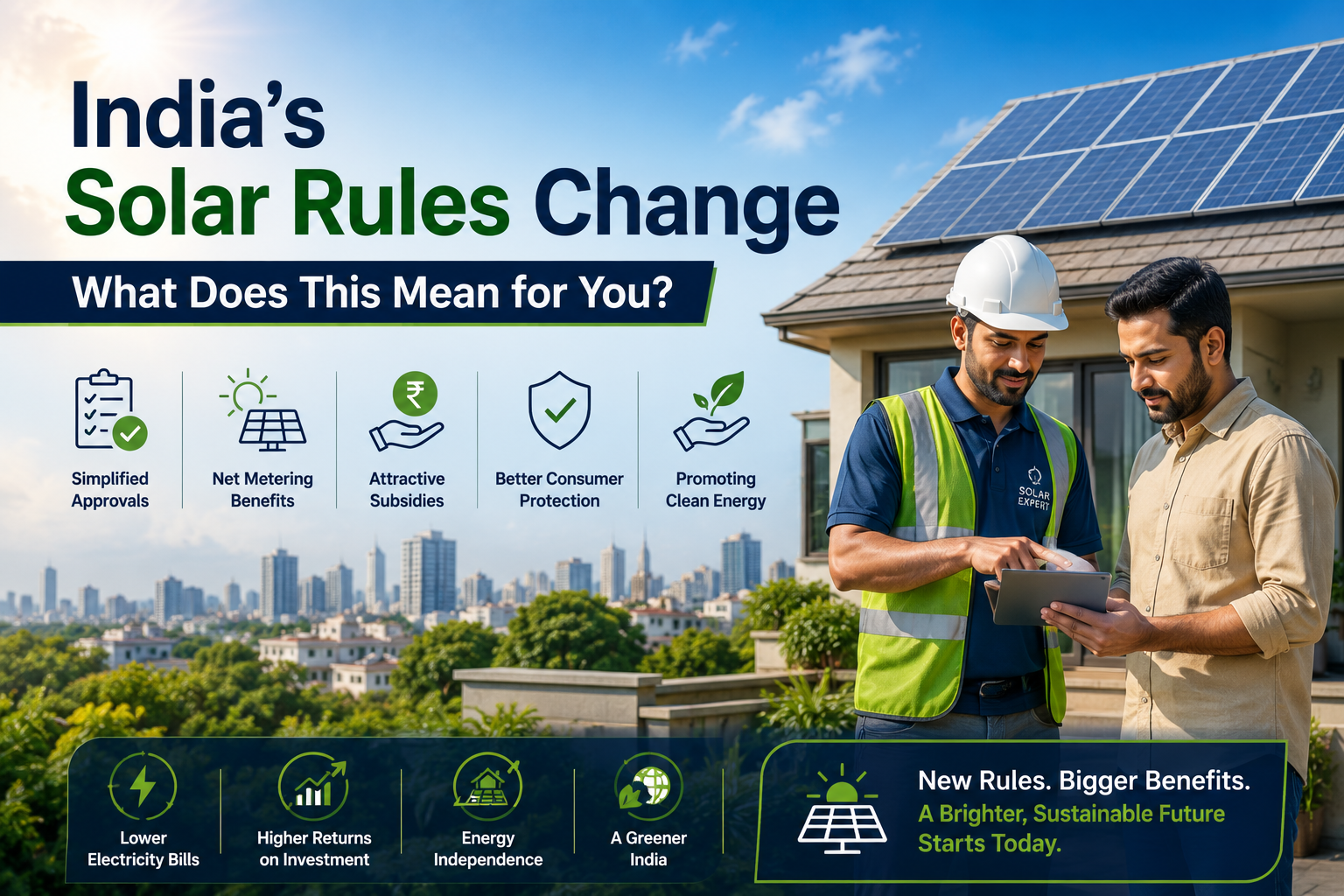
Modern Indian residential and commercial buildings with rooftop solar panels highlighting India's new solar rules and renewable energy policy updates

How India’s New Solar Rules Impact Homeowners and Businesses 

As India accelerates its transition toward clean and renewable energy, the government continues to introduce policies that make solar power more accessible and affordable. Recent India’s Solar Rules Change initiatives are designed to simplify the installation process, encourage rooftop solar adoption, and help homeowners and businesses reduce their electricity costs. These changes are expected to play a significant role in achieving the country’s renewable energy goals while making solar energy a practical investment for millions of people.

Whether you are planning to install solar panels for your home, apartment, office, or commercial property, understanding the latest regulations can help you make informed decisions and maximize the benefits of your investment.Solar Rules

Why Has India Changed Its Solar Rules?

India has set ambitious renewable energy targets to reduce its dependence on fossil fuels and lower carbon emissions. The updated solar regulations are part of the government’s long-term strategy to increase clean energy production and encourage widespread adoption of rooftop solar systems.

The new solar rules aim to:

  • Simplify the solar installation process.
  • Promote renewable energy adoption.
  • Reduce electricity costs for consumers.
  • Improve energy security.
  • Support India’s clean energy and sustainability goals.

These reforms benefit both residential and commercial consumers by making solar energy easier to adopt and more financially rewarding.Solar Rules

Key Changes in India’s Solar Rules

The latest India’s Solar Rules Change introduces several improvements that make solar adoption more convenient and transparent.

Easier Rooftop Solar Installation

The approval process for rooftop solar systems has become simpler in many regions. Homeowners can now expect quicker approvals, fewer administrative hurdles, and a more streamlined installation process.

This allows families to begin generating clean electricity much sooner after deciding to invest in solar power.Solar Rules

Improved Net Metering Process

Net metering remains one of the biggest advantages of installing rooftop solar.

Under this system, excess electricity generated by your solar panels can be exported to the utility grid. In return, you receive energy credits that help reduce future electricity bills.

The updated regulations are intended to make this process more transparent and user-friendly.

Better Access to Solar Subsidies

Government subsidy programs continue to encourage residential rooftop solar installations by reducing the initial investment.

Eligible homeowners may receive financial assistance that lowers the overall installation cost, making solar systems more affordable than ever before.

Higher Quality Standards

The updated regulations place greater emphasis on installation quality, equipment reliability, and consumer protection.

Choosing certified installers and quality solar components helps ensure long-term system performance and safety.

What Do These Changes Mean for Homeowners?

For homeowners, the latest India’s Solar Rules Change offers several significant benefits.

Lower Installation Costs

Government incentives and subsidies help reduce the upfront investment required for rooftop solar systems.

This makes solar energy accessible to more families across India.Solar Rules

Faster Return on Investment

Lower installation costs combined with ongoing electricity savings enable homeowners to recover their investment more quickly.

After the payback period, the solar system continues generating clean electricity for many years with minimal operating costs.

Reduced Electricity Bills

Generating electricity from sunlight significantly reduces dependence on conventional power sources.

Many homeowners experience noticeable reductions in their monthly electricity expenses after installing rooftop solar systems.

Increased Property Value

Properties equipped with professionally installed solar systems often attract greater buyer interest due to their lower operating costs, improved energy efficiency, and long-term savings potential.

Benefits for Businesses

Commercial buildings can also benefit greatly from the updated solar regulations.

Businesses that install rooftop solar systems may enjoy:

  • Lower operating expenses
  • Reduced electricity costs
  • Improved energy efficiency
  • Greater energy independence
  • Support for sustainability initiatives
  • Better long-term financial planning

For industries with high electricity consumption, commercial solar systems can deliver substantial savings over time.Solar Rules

Understanding Solar Subsidies

Government subsidy programs continue to make rooftop solar more affordable for homeowners.

Although subsidy eligibility and benefits may vary based on current government policies, financial assistance can significantly reduce the initial installation cost.

Working with an experienced solar company can help ensure the application process is completed correctly and efficiently.Solar Rules

Why Professional Installation Matters

While solar technology has become more accessible, proper installation remains essential for achieving maximum performance.

Professional installers ensure:

  • Correct system sizing
  • Safe electrical connections
  • Proper panel orientation
  • Maximum sunlight exposure
  • Long-term system reliability

Choosing an experienced installer helps avoid costly mistakes and improves the overall efficiency of your solar investment.

How to Choose the Right Solar Company

When selecting a solar installation company, consider the following factors:Solar Rules

  • Industry experience
  • Certified installation team
  • High-quality solar panels
  • Reliable inverters
  • Product warranties
  • Customer reviews
  • Maintenance services
  • Transparent pricing

Partnering with a trusted installer ensures your solar system delivers reliable performance for decades.Solar Rules

Why Choose Ranas Solar Enterprises?

At Ranas Solar Enterprises, we help homeowners and businesses take advantage of India’s evolving solar policies with complete end-to-end solar solutions.

Our services include:

  • Residential Rooftop Solar Installation
  • Commercial Solar Solutions
  • Solar System Design
  • Professional Installation
  • Net Metering Assistance
  • Solar Subsidy Guidance
  • Preventive Maintenance
  • After-Sales Support

Our experienced team is committed to delivering reliable, high-performance solar systems that provide long-term savings and dependable energy generation.

Frequently Asked Questions

What are India’s new solar rules?

The latest solar rules are designed to simplify rooftop solar adoption, improve consumer protection, and encourage greater use of renewable energy.Solar Rules

Can homeowners still receive solar subsidies?

Eligible homeowners may qualify for government subsidy programs based on current regulations and applicable schemes.

What is net metering?

Net metering allows excess electricity generated by your solar system to be exported to the utility grid in exchange for energy credits that reduce future electricity bills.

Is now a good time to install rooftop solar?

Yes. With supportive government initiatives, improving technology, and rising electricity costs, now is an excellent time to invest in rooftop solar.

India’s latest solar policy updates make renewable energy more accessible, affordable, and efficient for homeowners and businesses. By simplifying installation procedures, encouraging rooftop solar adoption, and supporting government subsidy programs, these changes help consumers enjoy lower electricity bills while contributing to a cleaner environment.

If you’re considering installing a solar system, working with an experienced solar company ensures you receive expert guidance, quality products, and dependable long-term support.

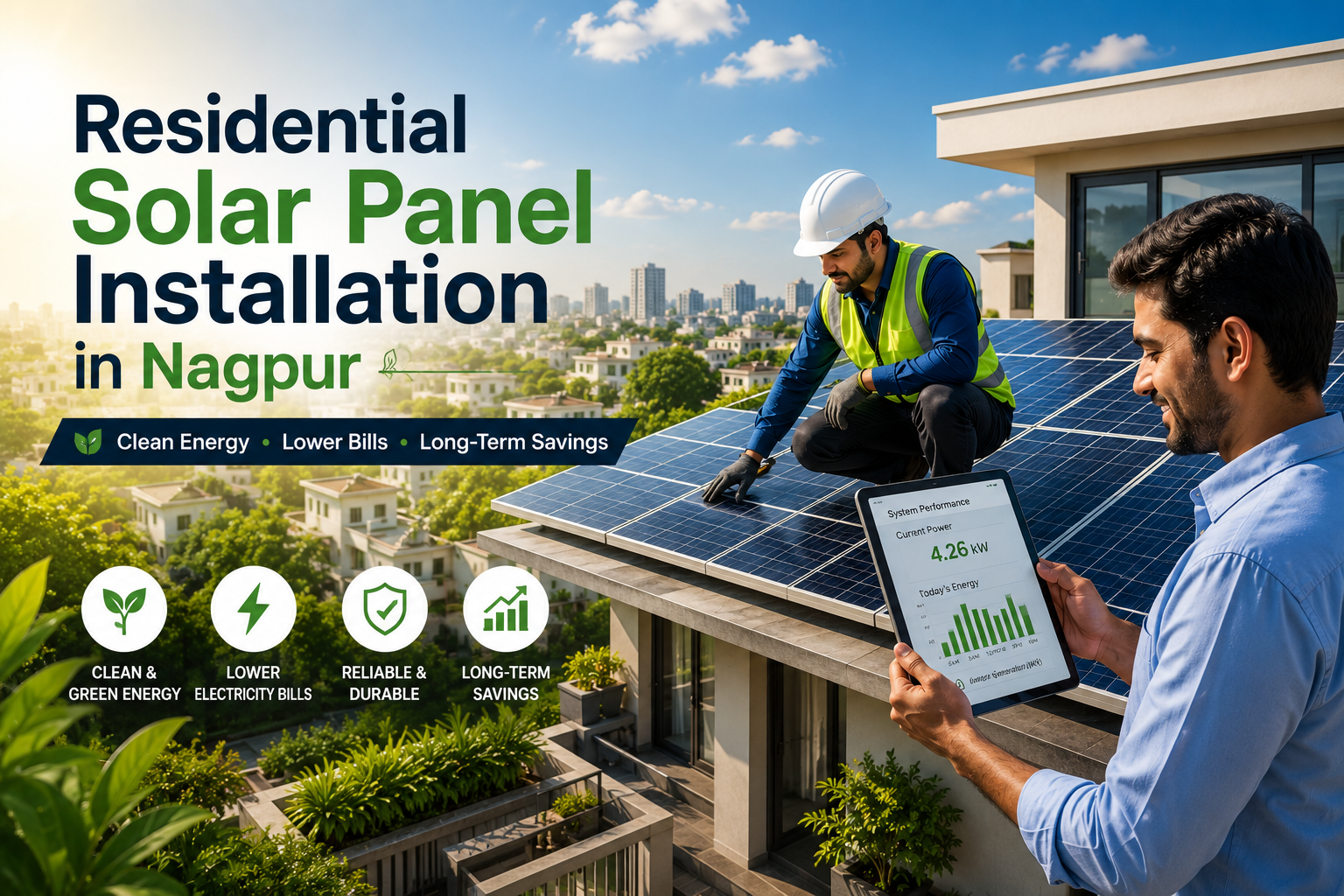
Residential rooftop solar panel installation on a modern home in Nagpur by Ranas Solar Enterprises

Residential Solar Panel Installation in Nagpur: Complete Guide for Homes & Businesses

Electricity costs continue to rise every year, making homeowners and businesses look for smarter ways to reduce their monthly expenses. One of the most effective solutions available today is Residential Solar Panel Installation in Nagpur. With abundant sunshine throughout the year, Nagpur offers excellent conditions for generating clean and renewable energy through rooftop solar systems.

Installing solar panels is no longer just an environmentally responsible decision—it is also a practical investment that helps reduce electricity bills, increases property value, and provides long-term energy security. Advances in solar technology, government subsidy programs, and professional installation services have made solar energy more accessible than ever.

At Ranas Solar Enterprises, we specialize in delivering high-quality Residential Solar and Commercial Solar solutions tailored to the unique energy needs of homeowners and businesses. Our experienced team ensures every project is designed, installed, and maintained to maximize performance and savings.

This comprehensive guide explains everything you need to know about Residential Solar Panel Installation in Nagpur, including its benefits, installation process, costs, government subsidies, maintenance, and how to choose the Best Solar Company in Nagpur.

Why Choose Residential Solar Panel Installation in Nagpur?

Nagpur enjoys over 300 sunny days each year, making it one of the most suitable locations for solar energy generation. This abundant sunlight allows rooftop solar systems to produce significant amounts of electricity throughout the year.

Some major benefits include:

  • Lower electricity bills
  • Reliable renewable energy
  • Reduced dependence on the utility grid
  • Low maintenance requirements
  • Increased property value
  • Long-term return on investment
  • Reduced carbon footprint

Choosing Residential Solar Panel Installation in Nagpur allows homeowners to generate their own electricity while enjoying substantial long-term savings.

Benefits of Rooftop Solar

Significant Electricity Savings

One of the primary reasons homeowners invest in Rooftop Solar is the ability to reduce monthly electricity expenses. Solar panels generate electricity during daylight hours, reducing dependence on the electricity grid.Residential Solar Panel Installation in Nagpur

Long-Term Financial Benefits

Although installing a solar system requires an initial investment, most systems recover their cost within a few years through savings on electricity bills.  Following the payback period, the solar system continues to produce clean electricity for decades, delivering long-term financial benefits with very low operating costs. 

Environmentally Friendly

Unlike conventional energy sources, solar energy generates clean electricity without harmful emissions. Using clean solar energy helps reduce carbon emissions, improve air quality, and contribute to a healthier, more sustainable environment. 

Increased Property Value

Professionally installed solar systems can increase a home’s market appeal by providing lower electricity expenses, improved energy efficiency, and greater independence from the traditional power grid. 

How Residential Solar Panel Installation Works

With the support of qualified solar experts, the installation process is completed efficiently while ensuring optimal system performance. Residential Solar Panel Installation in Nagpur

Site Survey

Engineers inspect your property to assess:

  • Roof condition
  • Sunlight availability
  • Roof orientation
  • Available installation space
  • Electricity consumption

This information helps determine the ideal system size.

System Design

Based on the survey, a customized solar system is designed, including:

  • Solar panel layout
  • Inverter selection
  • Mounting structure
  • Electrical wiring
  • Safety components

Installation

Certified technicians install premium solar panels using durable mounting systems designed to withstand local weather conditions.

Electrical Connection

Solar panels generate direct current (DC) electricity. A solar inverter converts this into alternating current (AC), allowing it to power household appliances safely.

Testing and Commissioning

The system undergoes detailed testing to ensure safe operation and maximum efficiency before it becomes operational.

Types of Solar Systems

On-Grid Solar System

An on-grid system connects directly to the utility electricity network.

Advantages include:

  • Lower installation cost
  • Net metering benefits
  • Reduced electricity bills
  • High efficiency

This is the most common option for Residential Solar Panel Installation in Nagpur.

Off-Grid Solar System

These systems operate independently from the electricity grid using battery storage.

Suitable for:

  • Remote locations
  • Areas with unreliable electricity supply

Hybrid Solar System

Hybrid systems combine battery storage with grid connectivity, providing backup power during outages while allowing excess electricity to be exported to the grid.Residential Solar Panel Installation in Nagpur

Residential Solar vs Commercial Solar

Residential Solar

Designed for:

  • Homes
  • Villas
  • Apartments
  • Housing societies

Commercial Solar

Ideal for:

  • Offices
  • Schools
  • Hospitals
  • Factories
  • Hotels
  • Warehouses
  • Shopping complexes

Commercial systems generally have higher capacities to meet larger energy demands.

Solar Installation Cost in Nagpur

The Solar Installation Cost depends on several factors:

  • System capacity
  • Type of solar panels
  • Inverter quality
  • Roof structure
  • Mounting system
  • Installation complexity

Although prices vary, investing in quality equipment and professional installation ensures better performance and long-term reliability.

Government Solar Subsidy

Homeowners installing residential rooftop solar systems may be eligible for government Solar Subsidy programs, depending on applicable policies and eligibility criteria.

Benefits include:

  • Lower upfront investment
  • Faster return on investment
  • Greater affordability

A professional installer can guide you through the subsidy application process.

Solar Maintenance Tips

Modern solar systems require minimal maintenance, but regular care helps maximize efficiency.

Recommended maintenance includes:

  • Cleaning panels periodically
  • Inspecting wiring and connectors
  • Monitoring inverter performance
  • Scheduling annual inspections
  • Removing debris and bird droppings

Professional Solar Maintenance ensures consistent energy generation and extends system lifespan.Residential Solar Panel Installation in Nagpur

Why Choose the Best Solar Company in Nagpur?

Selecting the right installer is essential for long-term system performance.

Look for a company that offers:

  • Industry experience
  • Certified installation team
  • Premium-quality products
  • Strong product warranties
  • Reliable after-sales service
  • Comprehensive maintenance support
  • Positive customer reviews

Why Choose Ranas Solar Enterprises?

With years of industry expertise, Ranas Solar Enterprises offers premium solar installation services backed by quality products, skilled professionals, and exceptional customer support. 

Our services include:

  • Residential Solar Panel Installation in Nagpur
  • Commercial Solar Installation
  • Rooftop Solar Systems
  • Solar System Design
  • Net Metering Assistance
  • Solar Maintenance Services
  • Technical Support
  • Government Subsidy Guidance

We use trusted products and proven installation practices to help customers achieve maximum energy savings.Residential Solar Panel Installation in Nagpur

Frequently Asked Questions

How long do solar panels last?

Most premium solar panels have an expected lifespan of 25 years or more.

Do solar panels work on cloudy days?

Yes. Solar panels continue to produce electricity even under cloudy conditions, but their efficiency is generally reduced due to limited sunlight.

What is net metering?

Net metering allows excess electricity generated by your solar system to be exported to the grid, earning credits that reduce future electricity bills.

How often should solar panels be cleaned?

Cleaning every few months, or whenever dirt accumulates significantly, helps maintain optimal performance.

Is rooftop solar suitable for every home?

Most homes can accommodate rooftop solar, but roof condition, available space, and sunlight exposure should be evaluated before installation.

Investing in Residential Solar Panel Installation in Nagpur is a smart decision for homeowners seeking lower electricity bills, clean energy, and long-term savings. With abundant sunshine, supportive government initiatives, and reliable technology, rooftop solar systems provide excellent value for both residential and commercial properties.

Choosing an experienced installer ensures your system is designed for maximum efficiency, safety, and durability. Whether you are planning a new installation or upgrading your existing energy system, partnering with Ranas Solar Enterprises gives you access to expert guidance, premium products, and dependable after-sales support.Residential Solar Panel Installation in Nagpur

Modern rooftop solar panels generating solar power on a residential home under bright sunlight

How Do Solar Panels Work? Solar Power Explained

As energy costs continue to rise and environmental concerns become more important, many homeowners and businesses are turning to solar power as a reliable and sustainable energy solution. Solar energy has become one of the fastest-growing renewable energy sources worldwide, helping people reduce electricity bills while contributing to a cleaner environment.

Despite its growing popularity, many people still wonder how solar panels actually work. Understanding the basics of solar power can help homeowners make informed decisions when considering a solar installation.

In this guide, we’ll explain how solar panels generate electricity, the components involved, and the many benefits of using solar power for your home or business.

What Is Solar Power?

Solar panels collect sunlight and convert it into clean electricity that can power homes and businesses.  

Unlike traditional electricity generated from fossil fuels, solar power is clean, renewable, and environmentally friendly. Because sunlight is abundant and freely available, solar energy offers a long-term solution for reducing dependence on conventional energy sources.

Today, solar power is used in residential homes, commercial buildings, industries, and even large-scale solar farms.

What Are Solar Panels?

Solar panels serve as the core components of a solar energy system, converting sunlight into electricity.  They are designed to capture sunlight and convert it into electricity through photovoltaic cells.

A typical solar panel consists of:

  • Photovoltaic (PV) cells
  • Protective glass layer
  • Aluminum frame
  • Electrical wiring
  • Junction box 

As sunlight reaches the photovoltaic cells, they start converting solar energy into electricity. 

Types of Solar Panels

Today, homeowners can choose from different types of solar panels depending on their needs and budget. 

Monocrystalline Solar Panels

Monocrystalline solar panels are built using a single silicon crystal, offering high efficiency and excellent performance. They offer high efficiency, excellent performance, and a sleek appearance.

Polycrystalline Solar Panels

Polycrystalline panels are manufactured using multiple silicon crystals. They are more affordable and provide reliable performance.

Thin-Film Solar Panels

Thin-film panels are lightweight and flexible. Although they are generally less efficient, they can be useful for specific applications.

Choosing the right panel type depends on budget, available space, and energy requirements.

How Do Solar Panels Work?

The process of generating electricity through solar power can be explained in four simple steps.

Step 1: Sunlight Reaches the Solar Panels

Solar panels are installed on rooftops or open areas where they receive maximum sunlight. The photovoltaic cells absorb sunlight throughout the day.

Most solar cells are made from silicon, which helps convert sunlight into electricity when sunlight hits the panel. 

Step 2: Photovoltaic Cells Generate Electricity

When sunlight strikes the photovoltaic cells, electrons become energized and begin moving through the semiconductor material. 

As electrons move through the solar cells, they generate DC electricity, which is the first step in producing solar energy. 

This is the foundation of how solar power systems generate energy.

Step 3: The Solar Inverter Converts Electricity

The electrical energy produced by solar panels is initially generated as direct current (DC).  However, household appliances operate using alternating current (AC) electricity.

The inverter transforms the electricity produced by solar panels into a form that can safely power household and commercial appliances. 

Without the inverter, the electricity generated by solar power systems would not be compatible with most household devices.

Step 4: Electricity Powers Your Home

Once converted into AC electricity, the power is distributed throughout the home to operate lights, fans, refrigerators, air conditioners, and other appliances.

This reduces the need to purchase electricity from the utility grid and helps lower monthly energy bills.

What Happens to Excess Solar Energy?

Many solar systems generate more electricity than a home consumes during daylight hours.

Instead of wasting this energy, homeowners can take advantage of net metering.

Understanding Net Metering

Net metering allows homeowners to export excess solar electricity to the utility grid and receive credits on their electricity bills. 

 The extra electricity you send to the grid earns credits, which can lower your upcoming electricity bills. 

This feature significantly increases the financial benefits of solar power and helps maximize energy savings.

Battery Storage Systems

Some homeowners choose to install battery storage systems.

Any extra electricity generated during the day can be stored in solar batteries and used later when sunlight is unavailable. 

Battery storage increases energy independence and improves the overall effectiveness of solar power systems.

Benefits of Solar Power

There are many reasons why homeowners are choosing solar power for their energy needs.

Lower Electricity Bills

One of the biggest advantages of solar power is the ability to reduce monthly electricity expenses.

By generating your own electricity, you rely less on utility companies and can save significantly over time.

Environmentally Friendly Energy

Unlike traditional fossil fuels, solar power generates clean, renewable electricity while reducing harmful carbon emissions. By producing clean energy, it helps keep the air cleaner and supports a greener future. 

Energy Independence

Solar systems provide greater control over energy consumption and reduce dependence on traditional electricity providers.

Long-Term Savings

Although solar installation requires an initial investment, most systems recover their cost within a few years and continue generating electricity for decades.

Low Maintenance

Modern solar panels require very little maintenance. Periodic cleaning and occasional inspections are generally sufficient to maintain performance.

Factors That Affect Solar Panel Performance

The overall efficiency of a solar power system depends on various factors. 

Sunlight Availability

Areas with abundant sunlight typically generate more electricity.

Roof Orientation

South-facing roofs generally receive more sunlight and produce higher energy output.

Weather Conditions

Solar panels continue generating electricity on cloudy days, although output may be reduced.

Panel Quality

High-quality solar panels generally offer better efficiency and durability.

System Maintenance

Regular cleaning helps prevent dust and debris from reducing energy production.

Understanding how solar panels work makes it easier to appreciate the value of solar power. By converting sunlight into usable electricity, solar systems help homeowners reduce energy costs, achieve greater energy independence, and contribute to a cleaner environment.

As technology continues to improve, solar power is becoming more affordable, efficient, and accessible than ever before. Whether you are looking to reduce electricity bills or invest in sustainable energy, solar panels offer a practical solution for long-term savings and environmental responsibility.

Professional technicians installing rooftop solar panels on a modern home while avoiding common solar installation mistakes

10 Mistakes to Avoid When Installing Solar Panels: A Complete Homeowner’s Guide

As electricity prices continue to rise, more homeowners and businesses are turning to solar energy as a cost-effective and environmentally friendly solution. However, installing solar panels is a significant investment that requires careful planning and informed decision-making. Avoiding common mistakes can help you maximize energy production, reduce maintenance costs, and achieve better long-term savings.

In this guide, we’ll discuss the 10 most common mistakes to avoid when installing solar panels and share practical tips to ensure your solar project is successful.

Why Careful Planning Matters When Installing Solar Panels

Before installing solar panels, it’s important to evaluate your energy needs, roof condition, and budget. A well-designed system can provide reliable electricity for decades, while poor planning may reduce efficiency and increase costs.

Working with experienced professionals and choosing quality equipment can make a significant difference in the performance of your solar system.

1. Choosing the Wrong System Size

One of the biggest mistakes homeowners make when installing solar panels is selecting a system that doesn’t match their electricity consumption.

A system that is too small may not generate enough electricity, while an oversized system could result in unnecessary costs.

Solution:

Review your past electricity bills and consult a solar expert to determine the ideal system size for your home.

2. Ignoring Roof Condition

Your roof plays a crucial role in the success of a solar installation. Installing a solar system on an old or damaged roof may require costly repairs later.

Solution:

Inspect and repair your roof before installing solar panels to avoid future disruptions and additional expenses.

3. Focusing Only on the Lowest Price

While it’s tempting to choose the cheapest quote, lower prices may come with compromises in product quality, installation standards, or after-sales service.

Solution:

Compare value rather than price alone. Consider panel efficiency, warranties, installer experience, and customer support.

4. Hiring an Inexperienced Installer

The quality of installation directly affects system performance. Poor workmanship can lead to reduced energy generation, electrical issues, and safety concerns.

Solution:

Choose a reputable installer with experience in installing solar panels, positive customer reviews, and a proven track record.

5. Overlooking Solar Panel Quality

Not all solar panels are created equal. Low-quality products may have lower efficiency and shorter lifespans.

Solution:

Invest in certified, high-performance solar panels from trusted manufacturers that offer strong warranties.

6. Not Understanding Net Metering

Many homeowners miss out on valuable savings because they do not understand net metering.

Net metering allows excess electricity generated by your solar system to be sent back to the grid, often earning credits that reduce future electricity bills.

Solution:

Learn how net metering works in your area before installing solar panels and ensure your system is designed to take advantage of it.

7. Skipping Government Subsidies and Incentives

Many governments offer financial assistance for residential solar installations, but some homeowners fail to apply.

Solution:

Research available subsidies, incentives, and rebate programs before installing solar panels to reduce your upfront investment.

8. Ignoring Future Energy Needs

Your electricity consumption may increase over time due to new appliances, electric vehicles, or home expansions.

Solution:

When installing solar panels, consider your future energy requirements and choose a system that can accommodate growth or be expanded later.

9. Neglecting Maintenance Requirements

Although solar systems require relatively little maintenance, they still need periodic cleaning and inspections to perform efficiently.

Dust, debris, and bird droppings can reduce panel output if left unchecked.

Solution:

Create a simple maintenance schedule and arrange professional inspections when necessary.

10. Failing to Compare Multiple Quotes

Selecting the first installer you contact may not provide the best value or service.

Solution:

Request quotations from several reputable companies and compare:

  • Equipment quality
  • Installation experience
  • Warranty terms
  • Customer support
  • Overall project cost

This helps ensure you make an informed decision when installing solar panels.

Additional Tips for a Successful Solar Installation

Beyond avoiding common mistakes, there are several ways to improve the success of your solar project.

Assess Sunlight Exposure

Ensure your roof receives sufficient sunlight throughout the day and is free from excessive shading caused by trees or nearby buildings.

Choose the Right Panel Type

Monocrystalline panels generally offer higher efficiency, while polycrystalline panels can be a more budget-friendly option.

Verify Warranty Coverage

Review both the product warranty and installation warranty to protect your investment.

Work with Certified Professionals

Experienced installers can optimize panel placement, wiring, and system configuration for maximum performance.

Long-Term Benefits of Installing Solar Panels

Making informed decisions when installing solar panels can provide numerous long-term advantages.

Lower Electricity Bills

Generating your own electricity reduces dependence on utility providers and helps lower monthly energy costs.

Increased Property Value

Homes equipped with quality solar systems are often more attractive to buyers due to their energy-saving potential.

Cleaner Environment

Solar energy reduces greenhouse gas emissions and supports a more sustainable future.

Energy Independence

Producing electricity on-site decreases reliance on conventional power sources and provides greater control over energy expenses.

Frequently Asked Questions

How long do solar panels last?

Most modern solar panels have an expected lifespan of 25 years or more with proper maintenance.

Do solar panels work on cloudy days?

Yes. Although output is reduced during cloudy weather, solar panels still generate electricity from available daylight.

Is maintenance expensive?

No. Solar systems generally require minimal maintenance, mainly periodic cleaning and occasional inspections.

Can I install solar panels on any roof?

Most roofs are suitable, but factors such as structural integrity, orientation, and shading should be evaluated before installation.

Installing solar panels is one of the smartest investments homeowners can make for long-term energy savings and environmental sustainability. However, success depends on careful planning, quality equipment, and professional installation.

By avoiding these common mistakes, you can improve system performance, maximize financial returns, and enjoy reliable clean energy for decades. Whether you are considering solar for a new home or upgrading your current property, taking the time to plan properly will help you get the most from your investment.

With the right approach, installing solar panels can transform the way you power your home while reducing electricity bills and contributing to a greener future.

Nagpur solar company installing rooftop solar panels on a modern home for energy savings

Nagpur Solar Company: Complete Guide to Solar Installation and Savings 

As electricity costs continue to rise and environmental awareness grows, more homeowners and businesses are turning to solar energy as a reliable and cost-effective power solution. If you’re considering switching to solar, choosing the right Nagpur solar company is one of the most important decisions you’ll make.

Nagpur is one of India’s most promising cities for solar energy adoption due to its abundant sunshine throughout the year. With numerous solar providers available, understanding how to select the right company and system can help you maximize savings and ensure long-term performance.

This complete guide will help you understand everything you need to know about selecting a Nagpur solar company, the benefits of solar energy, installation costs, subsidies, and more.

Why Solar Energy Is Growing in Nagpur

Nagpur’s climate makes it highly suitable for solar power generation. The city receives strong sunlight for most of the year, allowing solar panels to generate substantial amounts of electricity.

Several factors have contributed to the increasing demand for solar installations:

  • Rising electricity bills
  • Government solar incentives
  • Growing environmental awareness
  • Improved solar technology
  • Long-term financial savings

As a result, every leading Nagpur solar company is witnessing increased demand from residential, commercial, and industrial customers.

What Does a Nagpur Solar Company Do?

A professional Nagpur solar company provides complete solar energy solutions from consultation to installation and maintenance.

Typical services include:

Site Assessment

Experts inspect your property to determine roof suitability, available space, and energy requirements.

System Design

Customized solar solutions are designed according to your electricity consumption and budget.

Solar Panel Installation

The company installs solar panels, inverters, mounting structures, and electrical components.

Net Metering Assistance

Most companies assist with approvals and documentation for net metering.

Maintenance and Support

Regular maintenance ensures your solar system performs efficiently throughout its lifespan.

Benefits of Choosing a Professional Nagpur Solar Company

Working with an experienced Nagpur solar company provides several advantages.

Expert Installation

Professional installers ensure proper panel placement and safe electrical connections.

Better System Performance

Correct installation helps maximize electricity generation and efficiency.

Quality Products

Reliable companies use certified solar panels and high-quality inverters.

Warranty Support

Trusted providers offer manufacturer warranties and installation guarantees.

Long-Term Service

Ongoing support helps maintain system performance for years.

Types of Solar Systems Available

Before selecting a Nagpur solar company, it is important to understand the different solar system options available.

On-Grid Solar System

This system is connected directly to the utility grid.

Advantages:

  • Lower installation cost
  • No battery required
  • Net metering benefits
  • Maximum electricity savings

Off-Grid Solar System

The system works by connecting straight to the local electricity network. 

Advantages:

  • Battery backup included
  • Suitable for remote locations
  • Reliable during power outages

Hybrid Solar System

A hybrid system uses both the electricity grid and battery storage, giving you greater flexibility and backup power when needed. 

Advantages:

  • Energy backup
  • Better energy management
  • Increased flexibility

Most homeowners prefer on-grid systems due to their affordability and high return on investment.

How to Choose the Best Nagpur Solar Company

Choosing the right Nagpur solar company requires careful evaluation.

Check Experience

Look for a company with proven experience in residential and commercial installations.

Review Previous Projects

Completed projects demonstrate expertise and reliability.

Verify Certifications

Choose companies that use approved products and follow industry standards.

Read Customer Reviews

Customer feedback provides valuable insight into service quality and support.

Compare Warranties

Ensure both products and installation work are covered by warranty.

Evaluate After-Sales Service

Quality maintenance services and technical support are essential for maximizing the long-term performance of a solar system. 

Solar Installation Cost in Nagpur

The cost of solar installation varies depending on system size, panel quality, and installation requirements.

Approximate Residential Solar Costs

1 kW Solar System

  • ₹45,000 – ₹70,000

3 kW Solar System

  • ₹1,30,000 – ₹1,80,000

5 kW Solar System

  • ₹2,30,000 – ₹3,00,000

10 kW Solar System

  • ₹4,50,000 and above

A reputable Nagpur solar company can provide a customized quotation after a site inspection.

Government Subsidies for Solar Installation

Government programs have made solar energy more affordable for homeowners.

PM Surya Ghar Yojana

This initiative supports rooftop solar adoption through financial assistance.

Benefits include:

  • Reduced installation cost
  • Faster return on investment
  • Improved affordability

Many homeowners rely on their chosen Nagpur solar company to assist with subsidy applications and documentation.

Understanding Net Metering

One of the greatest benefits of a rooftop solar system is the net metering facility. .

How It Works

When your solar panels generate more electricity than your home consumes, the excess energy is exported to the utility grid.

In return:

  • You receive electricity credits
  • Future electricity bills are reduced

This system significantly increases the savings generated by solar installations.

Why Solar Is a Smart Investment

Installing solar panels offers both financial and environmental advantages.

Financial Benefits

  • Lower electricity bills
  • Long-term savings
  • Protection from rising energy costs
  • Faster payback period

Environmental Benefits

  • Reduced carbon emissions
  • Cleaner energy generation
  • Lower dependence on fossil fuels

A reliable Nagpur solar company can help you maximize these benefits through proper system design and installation.

Common Mistakes to Avoid

When selecting a solar provider, avoid these common mistakes.

Choosing Based Only on Price

While affordability is important, the cheapest solar solution may not offer the best quality, efficiency, or long-term benefits. 

Ignoring Product Quality

High-quality panels and inverters typically deliver better long-term performance.

Overlooking Warranty Coverage

Always review warranty terms before signing a contract.

Hiring Inexperienced Installers

Improper installation can reduce system efficiency and lifespan.

Future of Solar Energy in Nagpur

The solar industry in Nagpur continues to grow rapidly.

Future trends include:

  • Smart solar monitoring systems
  • Advanced battery storage solutions
  • Solar-powered electric vehicle charging
  • Higher efficiency solar panels
  • Increased adoption of renewable energy

As technology advances, every Nagpur solar company will continue to play a key role in helping homeowners and businesses transition to clean energy.

Choosing the right Nagpur solar company is essential for achieving maximum energy savings and long-term system performance. With abundant sunlight, government support, and increasing electricity costs, solar energy has become one of the most practical investments for homes and businesses in Nagpur.

By working with an experienced solar provider, you can enjoy lower electricity bills, greater energy independence, and a cleaner future.

Whether you’re planning a small residential installation or a large commercial project, partnering with a trusted Nagpur solar company can help you make the most of your solar investment.

Modern home with rooftop solar panels reducing electricity bills using clean solar power

How Solar Power Helps Reduce Electricity Bills

Electricity prices are increasing every year, and many homeowners are looking for smarter ways to manage their monthly expenses.  One of the smartest ways to reduce electricity costs today is by using solar   With growing awareness about renewable energy and rising utility costs, more people are switching to solar systems for their homes and businesses.

Understanding how solar power works and how it helps reduce electricity bills can help homeowners make informed financial decisions. A properly installed solar system can provide long-term savings, energy independence, and environmental benefits.

In this guide, we will explain how solar  reduces electricity costs, how solar systems work, and why solar energy is becoming one of the most popular energy solutions worldwide.

What Is Solar Power?

Solar power is electricity generated using sunlight. Solar panels capture sunlight and convert it into usable electrical energy through photovoltaic (PV) technology.

A typical residential solar system includes:

  • Solar panels
  • Solar inverter
  • Mounting structure
  • Electrical wiring
  • Battery storage (optional)

The electricity generated by solar panels can be used to run home appliances, lights, fans, and other electrical devices.

How Solar Power Generates Electricity

To understand how solar power reduces electricity bills, it is important to know how the system works.

Solar panels contain photovoltaic cells made from semiconductor materials. When sunlight reaches these cells, it activates electrons and generates direct current (DC) electricity.

 A solar inverter converts DC electricity produced by solar panels into AC electricity suitable for homes and businesses. . 

This process allows homeowners to generate their own electricity using free sunlight.

How Solar Power Helps Reduce Electricity Bills

One of the biggest advantages of solar  is that it reduces dependence on electricity supplied by utility companies.

Instead of purchasing all electricity from the grid, homeowners use the electricity generated by their solar system. This directly lowers monthly power consumption from the utility provider.

As a result:

  • Electricity bills decrease
  • Dependence on grid electricity reduces
  • Long-term savings increase

This is the main reason why many homeowners are investing in solar power systems.

Free Electricity from Sunlight

Sunlight is completely free and available every day. Once a solar system is installed, homeowners can generate electricity without paying fuel costs.

Although there is an initial installation expense, solar systems continue producing electricity for decades.

This means:

  • Lower monthly utility bills
  • Reduced electricity expenses over time
  • Better financial savings in the long run

Most solar systems operate efficiently for 25 years or more.

Reduced Dependence on Utility Companies

Traditional electricity is generated using coal, gas, and other fossil fuels. Utility companies charge customers based on energy consumption.

With solar power, homeowners can generate electricity independently.

Benefits include:

  • Lower electricity purchases from the grid
  • Reduced impact of rising electricity tariffs
  • Greater energy independence

The more electricity your solar system generates, the less electricity you need to buy.

Net Metering and Additional Savings

Net metering is one of the most important financial benefits of solar  systems.

What Is Net Metering?

When your solar panels produce excess electricity, the extra energy is sent back to the electricity grid.

In return:

  • Homeowners receive electricity credits
  • These credits reduce future power bills

Net metering ensures that excess solar energy is not wasted and increases overall savings.

This system makes solar power even more cost-effective for residential users.

Lower Monthly Electricity Bills

One of the first things homeowners notice after installing solar power systems is a reduction in monthly electricity bills.

Depending on:

  • System size
  • Electricity usage
  • Sunlight availability

Homeowners can reduce electricity costs significantly.

In many cases, solar users save up to:

  • 70% to 90% on electricity expenses

This makes solar power a highly attractive long-term investment.

Protection Against Rising Electricity Costs

Electricity prices continue to rise every year due to increasing fuel costs and growing energy demand.

Installing solar power systems helps protect homeowners from future electricity price increases.

Benefits include:

  • Stable long-term energy costs
  • Reduced exposure to utility rate hikes
  • Better financial planning

Because sunlight is free, solar users are less affected by fluctuating electricity prices.

Government Subsidies for Solar Power

Government support programs make solar power more affordable for homeowners.

Many residential solar schemes provide:

  • Installation subsidies
  • Financial incentives
  • Tax benefits in some regions

These programs reduce the upfront installation cost and improve return on investment.

As a result, homeowners can recover their solar investment faster.

Long-Term Financial Savings

Although solar systems require an initial investment, they provide substantial long-term savings.

Most solar power systems recover their installation cost within:

  • 3 to 5 years

After the payback period:

  • Electricity generation becomes nearly free
  • Monthly energy costs remain low for decades

One of the biggest reasons people switch to solar energy is the long-term financial savings it offers. 

Solar Battery Storage Benefits

Some homeowners install battery storage systems along with solar power panels.

Advantages of Solar Batteries

  • Store excess electricity
  • Use stored energy at night
  • Provide backup during power outages
  • Reduce grid dependence further

Battery storage increases energy independence and improves overall savings.

Environmental Benefits of Solar Power

Besides financial savings,

 also benefits the environment.

Solar energy:

  • Produces clean electricity
  • Reduces carbon emissions
  • Lowers air pollution
  • Reduces reliance on fossil fuels

Homeowners using solar systems contribute to a cleaner and more sustainable future.

Factors That Affect Solar Savings

Several factors influence how much homeowners save with solar power.

System Size

Larger systems generate more electricity and increase savings.

Electricity Consumption

Homes with higher energy usage often benefit more from solar systems.

Sunlight Availability

Locations with strong sunlight generate higher solar output.

Solar Panel Efficiency

High-efficiency panels convert more sunlight into electricity.

Installation Quality

Professional installation improves performance and long-term reliability.

Choosing the Right Solar Power System

To maximize savings, homeowners should choose the right solar power system based on their needs.

Important factors include:

  • Monthly electricity usage
  • Roof space
  • Budget
  • Future energy requirements

Professional solar installers help determine the ideal system size and configuration.

Common Mistakes to Avoid

Avoiding mistakes helps improve solar system performance and savings.

Choosing Cheap Solar Panels

Low-quality panels may reduce efficiency and durability.

Incorrect Installation

Improper installation can lower energy generation.

Ignoring Warranty Details

Always check product and installation warranties carefully.

Wrong System Size

An undersized system may not generate enough electricity for your home.

Future of Solar Power

The future of solar power looks highly promising. Solar technology continues to improve every year.

Future advancements may include:

  • Smarter solar systems
  • Better battery storage
  • Higher efficiency panels
  • AI-based energy management
  • Solar-powered electric vehicle charging

As technology improves, solar systems will become even more affordable and efficient.

Understanding how solar power helps reduce electricity bills makes it easier to see why millions of homeowners are adopting renewable energy.

Solar systems provide:

  • Lower electricity costs
  • Long-term financial savings
  • Protection from rising energy prices
  • Greater energy independence
  • Environmental benefits

With government support, modern technology, and increasing electricity costs, solar power has become one of the smartest investments for homeowners.

Switching to solar energy today not only helps reduce electricity bills but also creates a cleaner and more sustainable future for generations to come.

Future of renewable energy with solar-powered smart home, rooftop solar panels, and electric vehicle charging

The Future of Renewable Energy: A Cleaner, Smarter Way to Power Your Home

Imagine a home that powers itself using sunlight, stores its own energy, and helps reduce your electricity bills—all while protecting the environment. This is no longer a futuristic idea. It’s the reality of renewable energy today, and it’s only getting better.

For homeowners who care about sustainability and smart technology, energy offers a powerful opportunity. It’s not just about saving money—it’s about creating a better future for your family and the planet.

In this blog, we’ll explore how  energy is evolving, what trends are shaping the future, and how you can take advantage of these changes.

What Is Renewable Energy?

Renewable energy comes from natural sources that are constantly replenished, such as sunlight, wind, and water. Unlike fossil fuels, these sources do not run out and do not produce harmful emissions.

For homeowners, energy provides two key benefits:

  • Cleaner and greener power
  • Greater control over energy costs

As the world shifts toward sustainability, energy is becoming a central part of everyday life.

Why Renewable Energy Is the Future

The transition to energy is happening globally—and for good reason.

Rising Energy Costs

Electricity prices are increasing, and many homeowners are looking for ways to reduce their monthly expenses. energy systems allow you to generate your own electricity and avoid rising costs.

Growing Environmental Awareness

More people are becoming aware of climate change and its impact. Renewable energy provides a practical way to reduce your carbon footprint.

Advancements in Technology

Solar panels, batteries, and smart energy systems are becoming more efficient and affordable. These advancements are making  energy accessible to more households.

Government Support

Incentives, subsidies, and policy support are encouraging homeowners to switch to renewable energy systems.

Solar Energy: The Most Popular Choice for Homes

Among all energy sources, solar power stands out as the most practical option for homeowners.

Why Solar Energy Is So Effective

  • It uses free and abundant sunlight
  • It can be installed on rooftops
  • It requires minimal maintenance
  • It offers long-term savings

Solar panels convert sunlight into electricity, allowing homeowners to power their homes independently.

Smart Homes and Renewable Energy

The future of  energy is closely linked to smart home technology.

What Is a Smart Energy Home?

A smart home uses technology to monitor and manage energy usage efficiently. When combined with  energy, it becomes even more powerful.

Features include:

  • Real-time energy monitoring
  • Automated energy optimization
  • Integration with solar systems
  • Remote control through mobile apps

This allows homeowners to track consumption, reduce waste, and maximize savings.

Energy Storage: Power Even When the Sun Isn’t Shining

One of the most exciting developments in energy is battery storage.

How Battery Systems Help

  • Store excess energy generated during the day
  • Provide electricity at night
  • Offer backup during power outages
  • Reduce dependence on the grid

As battery technology improves, energy storage is becoming more efficient and affordable.

Electric Vehicles and Solar Power

The future of energy goes beyond homes—it includes transportation too.

Electric vehicles (EVs) are becoming more popular, and many homeowners are pairing them with solar energy systems.

Benefits of Solar + EV

  • Charge your vehicle using solar power
  • Reduce fuel expenses
  • Lower your carbon footprint
  • Achieve greater energy independence

This combination represents a major shift toward a fully renewable lifestyle.

Cost of Renewable Energy: A Smart Investment

Many people still believe  energy is expensive, but the reality has changed.

Why Costs Are Decreasing

  • Improved manufacturing processes
  • Increased market demand
  • Technological advancements
  • Government incentives

While there is an initial investment, most homeowners recover the cost within a few years. After that, the savings continue for decades.

Environmental Benefits That Matter

Switching to  energy has a direct positive impact on the environment.

Key Benefits

  • Reduces greenhouse gas emissions
  • Lowers air pollution
  • Conserves natural resources
  • Promotes sustainable living

Even a single home using renewable energy can make a difference.

What the Future Holds for Renewable Energy

The future of  energy is full of exciting possibilities.

Emerging Trends

  • Higher efficiency solar panels
  • Flexible and lightweight solar materials
  • Smart energy grids
  • Artificial intelligence for energy management
  • Integration with home automation systems

These innovations will make  energy more powerful and easier to use.

How You Can Start Your Renewable Energy Journey

You don’t need to make a huge change overnight. Small steps can lead to big results.

Simple Steps to Get Started

  1. Understand your energy usage
  2. Explore rooftop solar options
  3. Consider adding battery storage
  4. Upgrade to energy-efficient appliances
  5. Stay informed about new technologies

Taking action today puts you ahead of the curve.

Addressing Common Concerns

Is Renewable Energy Reliable?

Yes. Modern systems are designed for long-term reliability and consistent performance.

Is It Worth the Investment?

Absolutely. Renewable energy offers both financial savings and environmental benefits.

Does It Require Maintenance?

Very little. Most systems only need occasional cleaning and basic inspection.

A Smarter and Cleaner Future

The future of renewable energy is not just about technology—it’s about transformation. It’s about creating homes that are efficient, sustainable, and future-ready.

For homeowners, this means:

  • Lower energy bills
  • Increased property value
  • Greater energy independence
  • Contribution to a healthier planet

Renewable energy is no longer a distant concept—it’s a practical solution available today.

The shift toward renewable energy is one of the most important changes of our time. It offers a unique opportunity to combine technology, sustainability, and smart living.

By embracing renewable energy, you are not just making a financial decision—you are making a meaningful contribution to the future.

The best time to start is now.

Ready to Explore Renewable Energy?

Take the first step toward a smarter and greener home. Learn your options, evaluate your energy needs, and begin your journey toward clean, renewable power.

Which Solar Is Best in Nagpur – Residential Rooftop Solar Guide Best rooftop solar system installation in Nagpur with premium solar panels on a modern residential home

Which Solar Is Best in Nagpur? A Complete Guide for Homeowners

With rising electricity bills and increasing awareness about clean energy, many homeowners and businesses are turning to solar power. One of the most common questions people ask before installing a solar system is: Which solar is best in Nagpur?

Nagpur is one of the best cities in India for solar energy because of its strong sunlight and favorable climate. However, choosing the right solar system depends on several factors such as your energy needs, budget, roof space, and long-term savings goals.

In this guide, we will help you understand which solar system is best in Nagpur and how to make the right choice for your home or business.

Why Solar Energy Works Well in Nagpur

Nagpur is known for its hot weather and abundant sunshine throughout the year. This makes solar power highly efficient and profitable for residential and commercial users. Which solar is best in Nagpur

High Sunlight Availability

Nagpur receives strong solar radiation for most months, allowing solar panels to generate excellent electricity output.

Rising Electricity Costs

As electricity tariffs continue to increase, solar systems help homeowners save significantly on monthly bills.

Government Subsidies

Solar subsidy programs make installation more affordable and improve return on investment.

Environmental Benefits

Solar power reduces carbon emissions and supports a cleaner, greener future.

Because of these advantages, solar energy has become a smart long-term investment in Nagpur.  Which solar is best in Nagpur

Types of Solar Systems Available in Nagpur

Before deciding which solar is best in Nagpur, it is important to understand the main types of solar systems available.

1. On-Grid Solar System

This is the most popular option for urban homes.

Features:

  • Connected to the electricity grid
  • No battery required
  • Lower installation cost
  • Supports net metering
  • Maximum savings on electricity bills

Best For:

Homeowners looking for affordable installation and long-term bill savings.

2. Off-Grid Solar System

This system works independently of the electricity grid.

Features:

  • Includes battery backup
  • Useful during power cuts
  • Higher installation cost
  • Suitable for remote areas

Best For:

Homes with frequent power outages or limited grid access.

3. Hybrid Solar System

This is a combination of on-grid and battery backup systems.

Features:

  • Connected to the grid
  • Includes battery storage
  • Offers both savings and backup power

Best For:

Homeowners who want energy security along with bill savings.

Which Solar Panel Type Is Best?

Choosing the right solar panel is just as important as choosing the system type.

There are mainly three types of solar panels.

Monocrystalline Solar Panels

These are considered the best solar panels for most homes.

Benefits:

  • High efficiency
  • Better performance in limited roof space
  • Longer lifespan
  • Sleek black appearance

Best For:

Homes with limited rooftop space and higher electricity usage.

Polycrystalline Solar Panels

These are more affordable but slightly less efficient.

Benefits:

  • Lower cost
  • Reliable performance
  • Suitable for larger rooftops

Best For:

Budget-friendly installations with enough roof space.

Thin-Film Solar Panels

These are less common for residential use.  Which solar is best in Nagpur

Benefits:

  • Lightweight
  • Flexible installation

Best For:

Commercial buildings and specialized projects.

For most homeowners in Nagpur, monocrystalline solar panels with an on-grid solar system are often the best choice.

Best Solar Brands for Nagpur Homes

When asking which solar is best in Nagpur, brand quality matters.

Some trusted solar brands include:

  • Tata Power Solar
  • Waaree Solar
  • Adani Solar
  • Vikram Solar
  • RenewSys
  • LONGi Solar
  • Canadian Solar

These brands are known for:

  • High efficiency
  • Strong warranties
  • Long-term durability
  • Reliable performance in Indian climate conditions

How Much Solar System Do You Need?

The right system size depends on your monthly electricity usage.

Example:

200–300 Units/Month

Recommended system: 2–3 kW

400–500 Units/Month

Recommended system: 4–5 kW

Higher Consumption

Recommended system: 6–10 kW+

A professional site survey helps determine the exact system size.

Cost of Solar Installation in Nagpur

The cost depends on panel type, inverter quality, and installation complexity.

Approximate Price Range

1 kW System

₹45,000 – ₹70,000

3 kW System

₹1,30,000 – ₹1,80,000

5 kW System

₹2,30,000 – ₹3,00,000

10 kW System

₹4,50,000+

Government subsidies can reduce these costs significantly.

Government Subsidy and Net Metering

Residential users can benefit from rooftop solar subsidy programs like PM Surya Ghar Yojana.  Which solar is best in Nagpur

Benefits Include:

  • Lower upfront cost
  • Faster return on investment
  • Improved affordability

Net Metering

Net metering allows you to send excess electricity back to the grid and earn bill credits. This increases overall savings and makes on-grid systems more attractive.

How to Choose the Best Solar Installer in Nagpur

Even the best solar system will not perform well without proper installation.

Look for:

Experience

Choose a company with proven solar installation expertise.

Certified Products

Ensure the installer uses MNRE-approved panels and quality inverters.

Warranty Support

Check product warranty and installation warranty.

Customer Reviews

Look for strong local reputation and completed projects.

After-Sales Service

Maintenance and technical support are essential for long-term performance.

So, Which Solar Is Best in Nagpur?

For most homeowners, the best choice is:

On-Grid Solar System + Monocrystalline Solar Panels

This combination offers:

  • Maximum electricity savings
  • High efficiency
  • Strong long-term performance
  • Government subsidy benefits
  • Lower maintenance requirements

However, if backup power is important, a hybrid system may be the better option.

The best solar solution depends on your budget, energy usage, and future goals.

If you are asking which solar is best in Nagpur, the answer depends on your specific needs. Nagpur’s excellent sunlight makes solar energy highly profitable for homes and businesses.

Choosing quality solar panels, the right system type, and a trusted installer ensures long-term savings and reliable energy generation.

Solar is not just an expense—it is one of the smartest investments for your future.

mersin escort
film izle
Hacklink Panel
hacklink
hacklink panel
backlink satın al
hacklink
warez scriptler
mersin escort
hacklink panel
sohbet hattı
deneme bonusu veren siteler
sohbet numaraları
slot
wordpress nulled themes
casino
wso shell download
casino
adana escort
Taksim Escort
deneme bonusu veren siteler
streameast
deneme bonusu veren siteler
hacklink satın al
atlasbet
https://google.wiki.piki
hacklink
tablepress premium nulled
hacklink panel
bodrum escort
hacklink
hacklink
casino siteleri
adana escort
deneme bonusu veren siteler
slot
deneme bonusu veren siteler
sohbet hattı
streameast
sex hattı
TotalSportek
backlink panel
sohbet hattı
escort alanya
casino
alanya escort
casino
escort
adana escort
slot bonusu veren siteler
escort
adana escort
escort
hacklink panel
hacklink panel
webmaster forum
taraftarium24
hacklink panel
adana escort
汽水音乐下载
sohbet hatları
mersin escort
hacklink
casibom
eryaman escort
streameast
deneme bonusu veren siteler telegram
betzula güncel giriş
deneme bonusu veren siteler
爱思助手下载
canlı sohbet hattı
slot
taraftarium24
casino
hacklink
escort adana
casino
casibom giriş
slot
deneme bonusu veren siteler
sohbet hatları
sohbet hattı
hacklink satın al
casino siteleri
adana escort
hack forum
canlı sohbet hattı
silkroad private server
Şirinevler Escort
Gossip Girl Tour Nyc
Beylikdüzü Escort
slot
Qız nömrələri
taraftarium24
deneme bonusu veren siteler 2026
alanya escort bayan
adana escort bayan
sohbet hattı
deneme bonusu veren siteler
deneme bonusu
betzula giriş
sapanca escort bayan
adana escort
adana escort bayan
hacklink panel
sohbet telefonları
alanya escort
taraftarium24
canlı sohbet hatları
hacklink panel
hacklink satın al
seyhan escort
escort alanya
Esenyurt Escort
Avcılar Escort
casino
gaziantep escort
kıbrıs çekici
slot siteleri
hacklink panel
Sapanca escort
adana escort
dodobet giriş
betzula
hacklink
deneme bonusu veren siteler
casino siteleri
taraftarium24
hacklink
slot
deneme bonusu veren siteler
casino siteleri
download nulled themes
有道翻译下载
hacklink satın al
b374k shell download
slot
taraftarium24
telegram下载
adana escort
parazit seo
adana escort
adana escort
hacklink
eryaman escort
hacklink satış
streameast
streameast
kayseri escort
hacklink panel
hacklink panel giriş
hacklink
mersin escort
Bakırköy Escort
myhacklinks
adana escort
atlasbet
deneme bonusu veren siteler
hacklink satın al