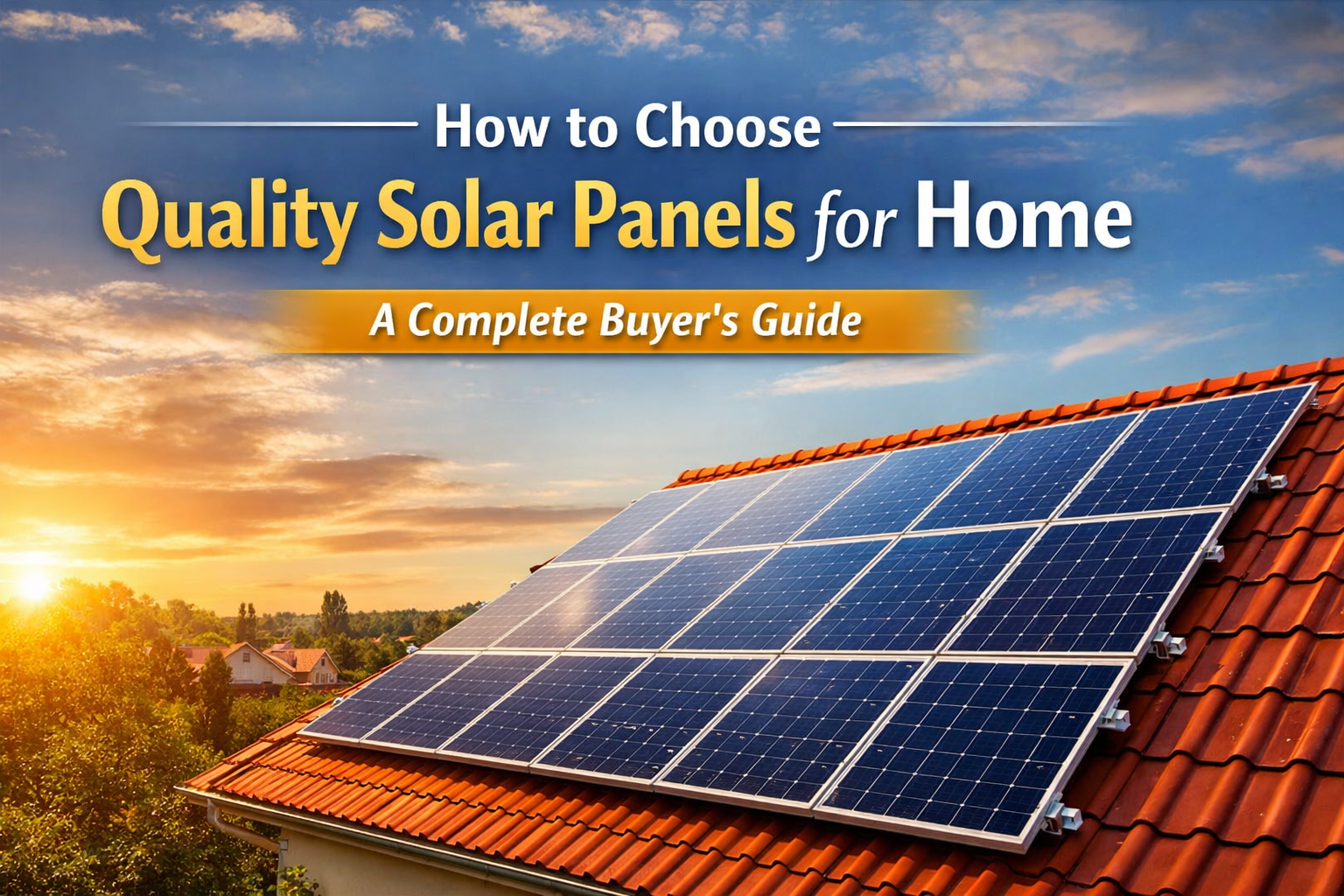
How to Choose Quality Solar Panels for Home: A Complete Buyer’s Guide
Installing solar panels at home is one of the smartest investments you can make today. With rising electricity bills and increasing awareness about renewable energy, more homeowners are switching to solar. But one question confuses almost everyone at the beginning: how do you choose quality solar panels for home?
Not all solar panels are the same. Quality directly affects how much electricity your system generates, how long it lasts, and how much money you save over the years. This buyer’s guide will help you understand what truly matters when selecting solar panels—without complicated technical terms.
Why Choosing Quality Solar Panels for Home Is Important
Solar panels are designed to work for 25 years or more. Choosing low-quality panels may reduce your upfront cost, but it often leads to:
- Lower power generation
- Faster performance degradation
- Frequent maintenance issues
- Shorter lifespan
- Poor return on investment
On the other hand, quality solar panels for home deliver consistent performance, higher efficiency, and long-term savings. The right panels ensure that your solar system works reliably for decades.
Understand How Solar Panels Work (In Simple Terms)
Solar panels capture sunlight and convert it into usable electrical power using photovoltaic (PV) technology. The better the panel quality, the more efficiently it converts sunlight into usable power—even during cloudy weather or high temperatures.
This is why quality matters far more than just the brand name or price.
Types of Solar Panels for Home Use
Before choosing quality solar panels for home, you should understand the main types available.
1. Monocrystalline Solar Panels
- High efficiency
- Require less rooftop space
- Perform better in hot climates
- Slightly higher cost
Best choice for homes with limited roof area.
2. Polycrystalline Solar Panels
- Affordable
- Reliable performance
- Require more space than monocrystalline panels
Suitable for homes with large rooftops and budget constraints.
3. Advanced Panels (TOPCon / Bifacial)
- Higher energy output
- Advanced technology
- Premium pricing
Ideal for homeowners looking for maximum performance and future-ready solutions.
Key Factors to Consider When Choosing Quality Solar Panels for Home
1. Panel Efficiency Rating
Efficiency explains how much of the sunlight hitting a panel is actually converted into electricity.
- Higher efficiency = more power from less space
- Quality panels usually offer 18%–22% efficiency
If your roof area is limited, always choose higher-efficiency panels.
2. Power Output (Wattage)
Solar panels come in different wattages like 400W, 540W, or 550W.
Higher wattage panels:
- Generate more electricity
- Reduce the total number of panels required
- Improve system aesthetics
Quality solar panels for home usually have consistent and reliable wattage ratings.
3. Temperature Coefficient
In hot regions, panel performance drops slightly as temperature rises.
A good-quality panel has:
- Lower temperature coefficient
- Better performance in Indian weather conditions
This ensures stable energy generation throughout the year.
4. Brand Reputation & Manufacturing Standards
Reputed manufacturers invest in:
- Advanced technology
- Better quality control
- Long-term reliability
Always check:
- Manufacturing certifications
- Company track record
- Presence in the Indian market
Quality solar panels for home usually come from manufacturers with proven credibility.
Warranty: A True Indicator of Panel Quality
Warranties reveal how confident a manufacturer is about their product.
Types of Warranties to Check
- Product Warranty: 10–12 years (covers manufacturing defects)
- A 25-year performance warranty ensures your panels keep producing power for decades.
Quality solar panels for home maintain at least 80–85% efficiency even after 25 years.
Check Certifications and Quality Standards
Before buying solar panels, ensure they meet recognized standards such as:
- IEC certification
- BIS (for India)
- MNRE-approved listings
These certifications confirm that the panels meet safety, durability, and performance benchmarks.
Understand Panel Degradation Rate
All solar panels slowly lose efficiency over time. This is called degradation.
- High-quality panels degrade at 0.4%–0.6% per year
- Poor-quality panels degrade much faster
Lower degradation means higher lifetime energy production and better long-term savings.
Compare Price vs Value (Not Just Cost)
It’s natural to look for affordable options, but cheapest doesn’t mean best.
When comparing quality solar panels for home, consider:
- Efficiency
- Warranty
- Expected lifespan
- Performance guarantees
Paying slightly more upfront often results in much higher savings over 25 years.
Compatibility with Your Solar System
Ensure the panels are compatible with:
- Your inverter
- Mounting structure
- Roof type
A good installer will help you select panels that integrate perfectly with your complete solar system.
Importance of Professional Installation
Even the best solar panels won’t perform well if installed incorrectly.
Professional installation ensures:
- Correct panel orientation
- Proper tilt angle
- Secure mounting
- Safe wiring
Quality solar panels for home deliver maximum output only when installed by experienced professionals.
Common Mistakes to Avoid When Buying Solar Panels
- Choosing panels only based on low price
- Ignoring efficiency and warranty details
- Buying from unknown or unverified brands
- Not checking certifications
- Skipping professional advice
By avoiding these mistakes, you can protect your investment and enjoy consistent performance for years.
Are Quality Solar Panels for Home Worth the Investment?
Yes—absolutely.
Benefits include:
- Higher electricity generation
- Faster payback period
- Lower maintenance cost
- Long-term reliability
- Increased property value
A quality solar panel system typically recovers its cost within 3–5 years and continues delivering savings for decades.
Choosing quality solar panels for home is not about buying the most expensive option—it’s about selecting panels that offer the best balance of efficiency, durability, warranty, and long-term value.
When you understand your energy needs, rooftop space, and budget, and combine that with the right panel quality, solar becomes one of the most rewarding investments you can make for your home.