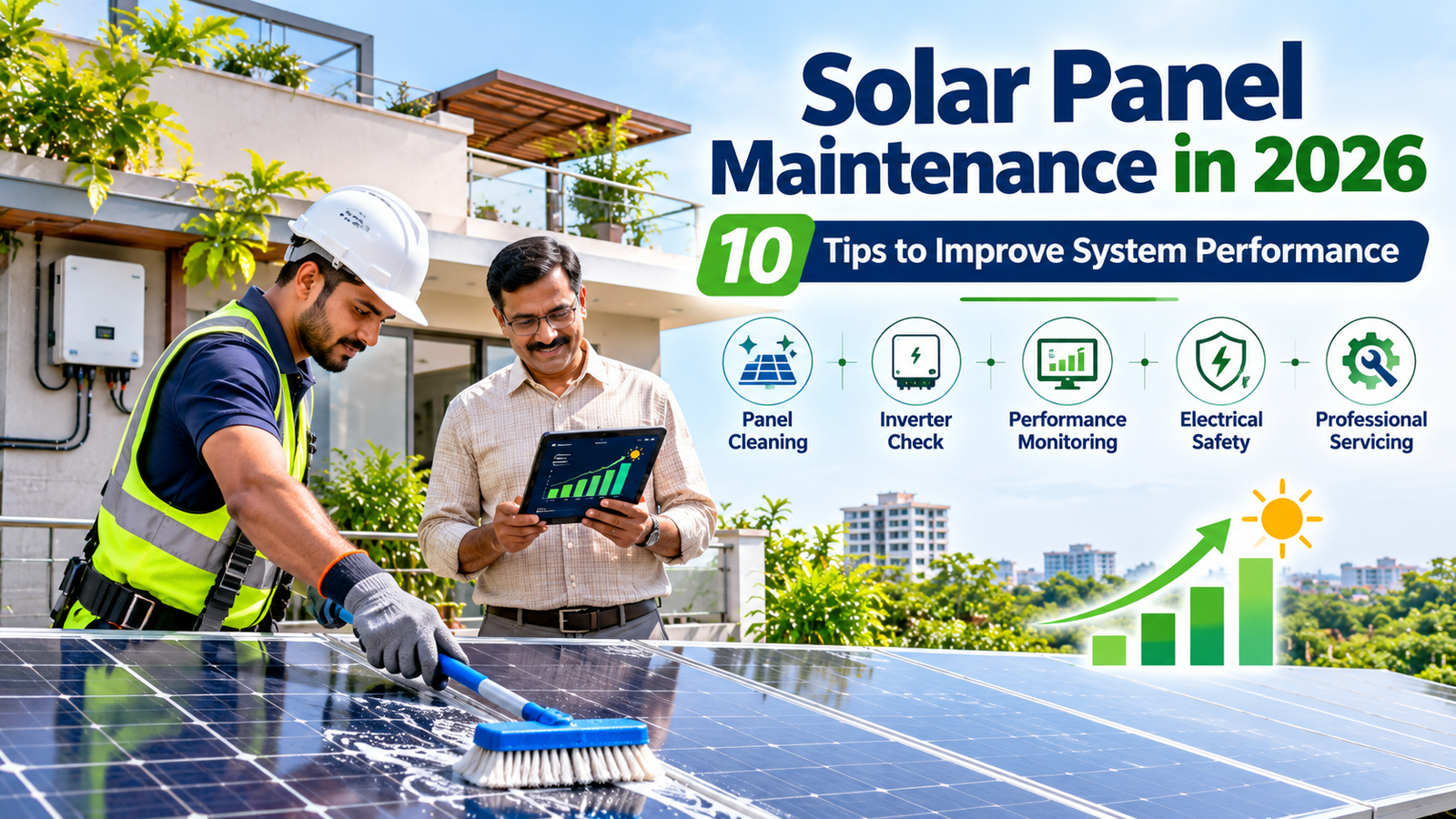
Solar Panel Maintenance in 2026: 10 Tips to Improve System Performance
Installing solar panels is a smart way to generate clean electricity, reduce dependence on grid power, and manage long-term energy expenses. However, installing a solar system is only the first step. To keep it operating efficiently over the years, homeowners and businesses must maintain it and inspect it regularly.
Proper Solar Panel Maintenance helps prevent avoidable performance losses, identify technical issues, and support the long-term reliability of the system. Dust, bird droppings, shading, loose electrical connections, and inverter problems can affect electricity generation if they are not addressed on time.
In 2026, solar monitoring technology and improved maintenance practices make it easier for system owners to track performance and identify potential problems.
Whether you have installed a rooftop solar system at your home, office, factory, or commercial property, this guide explains ten practical ways to maintain your installation and improve its performance. Solar Panel Maintenance
Why Is Solar Panel Maintenance Important?
Solar panels are designed for outdoor use and generally require limited routine attention. However, exposure to changing weather conditions, dust, pollution, and other environmental factors can affect their performance.
Regular Solar Panel Maintenance helps keep the system in good operating condition and allows owners to identify problems before they become more serious.
Here are some important benefits:
- Better energy generation: Removing accumulated dirt and addressing shading can help panels receive more sunlight.
- Early problem detection: Routine inspections can reveal visible damage, wiring issues, or equipment faults.
- Longer equipment life: Appropriate care supports the condition of panels and other system components.
- Improved safety: Professional electrical inspections can identify potentially dangerous faults.
- Better financial performance: Maintaining generation levels helps protect the expected electricity savings from the installation.
Maintenance does not guarantee maximum output every day, because weather, temperature, seasonal sunlight, and other factors also influence solar generation. Solar Panel Maintenance
10 Tips for Solar Panel Maintenance in 2026
The following practices can help homeowners and businesses maintain their rooftop solar systems more effectively.
1. Clean Solar Panels Regularly
Dust, fallen leaves, bird droppings, and other debris may gradually build up on the surface of solar panels. When dirt blocks sunlight from reaching photovoltaic cells, electricity generation may decrease.
Cleaning is one of the most important parts of routine Solar Panel Maintenance.
For suitable rooftop installations, follow these cleaning practices:
- Use clean water and a soft cleaning brush or manufacturer-approved equipment.
- Avoid abrasive materials that may scratch the glass surface.
- Do not apply excessive pressure while cleaning.
- Follow the manufacturer’s cleaning instructions.
- Avoid harsh chemicals unless specifically approved.
- Clean panels when they are cool, preferably during the early morning or evening.
Cleaning frequency depends on the property’s surroundings. Homes near dusty roads, construction areas, or industrial locations may require more frequent attention than properties in cleaner environments. Solar Panel Maintenance
Always prioritise safety. Avoid climbing onto rooftops or handling panels without suitable equipment and training.
2. Monitor Solar Energy Generation
Monitoring electricity generation helps you understand whether your solar system is operating as expected.
Most modern solar inverters provide a display or mobile application that shows useful performance information.
You can monitor:
- Daily electricity generation.
- Monthly energy production.
- Inverter operating status.
- System alerts and error messages.
- Changes in electricity generation over time.
Checking these details regularly can help identify unexpected performance changes.
For example, if your system normally produces a consistent amount of electricity under similar weather conditions but generation suddenly drops, there may be an issue involving shading, dirt accumulation, inverter operation, or electrical connections.
Monitoring should be an essential part of your Solar Panel Maintenance routine.
3. Inspect the Solar Inverter
The inverter is one of the most important components of a solar installation. It converts the direct current (DC) electricity produced by solar panels into alternating current (AC) electricity that can be used by compatible appliances.
An inverter problem can affect the entire system’s ability to supply usable electricity.
During routine checks, look for:
- Warning lights or error messages.
- Unusual operating sounds.
- Unexpected shutdowns.
- Ventilation openings blocked by dust.
- Visible signs of overheating or damage.
Keep the inverter area clean and properly ventilated according to the manufacturer’s instructions.
Never open the inverter or attempt internal electrical repairs yourself. Contact a qualified technician if you notice persistent warnings or unusual behaviour. Solar Panel Maintenance
4. Remove Shading Around Solar Panels
Solar panels need access to sunlight to generate electricity. Trees, nearby buildings, overhead structures, and newly installed rooftop equipment can create shadows that reduce energy production.
Even partial shading can affect the performance of some solar panel configurations.
To reduce shading-related losses:
- Check whether nearby trees have grown significantly.
- Remove avoidable obstructions around the installation.
- Review new rooftop structures that may cast shadows.
- Inspect the panels at different times of the day.
- Consult a solar professional before changing panel positions.
In growing residential areas of Nagpur, nearby construction and changes to surrounding buildings may affect sunlight availability over time.
Addressing these issues can support better system performance without requiring additional solar panels.
5. Check Electrical Connections and Cables
Electrical connections play an important role in the safe operation of a solar installation.
Damaged insulation, loose connections, exposed wires, or corrosion may affect system performance and create safety risks.
A qualified solar technician should inspect important electrical components periodically, including:
- DC and AC cables.
- Connectors and junction boxes.
- Electrical protection devices.
- Earthing arrangements.
- Inverter connections.
- Distribution boards associated with the system.
Homeowners should never touch exposed wiring or attempt to tighten electrical connections themselves.
Professional inspections are an important part of responsible Solar Panel Maintenance, particularly for older installations.
6. Inspect Mounting Structures and Roof Conditions
Solar panels are installed using mounting structures that hold them securely in position.
These structures must withstand outdoor conditions such as strong winds, rainfall, and temperature changes.
Over time, corrosion, loose fasteners, or structural movement may affect installation stability.
During professional inspections, check for:
- Signs of rust or corrosion.
- Loose mounting hardware.
- Damaged support structures.
- Unusual panel movement.
- Roof leakage near mounting points.
- Deterioration of waterproofing arrangements.
Do not attempt to climb onto the structure or tighten mounting hardware without proper training.
A stable mounting arrangement helps protect both the panels and the rooftop.
7. Maintain Proper Drainage Around the Panels
Rainwater should drain properly from the rooftop without collecting around mounting structures or electrical equipment.
Blocked drainage channels, accumulated leaves, and debris may contribute to water-related problems.
Homeowners should periodically check whether:
- Rooftop drainage outlets are clear.
- Leaves and debris are removed from suitable roof areas.
- Water is not collecting near electrical equipment.
- There are no visible signs of leakage.
- Mounting points remain properly sealed. Solar Panel Maintenance
Do not direct high-pressure water towards electrical components or inverter enclosures.
Proper drainage and roof inspections help protect the solar installation and the building itself.
8. Schedule Professional Solar Inspections
Visual checks are useful, but they cannot identify every technical problem.
A qualified solar technician can inspect equipment and electrical systems using appropriate tools and procedures.
A professional inspection may include:
- Solar panel condition assessment.
- Inverter performance checks.
- Electrical connection inspection.
- Mounting structure evaluation.
- Earthing and protection checks.
- Performance analysis.
- Identification of possible faults.
The inspection frequency should follow manufacturer recommendations, system requirements, and the installation’s operating conditions.
Professional servicing is particularly valuable for commercial installations, where unexpected interruptions may affect business operations. Solar Panel Maintenance
9. Protect Your Solar System During Extreme Weather
Solar installations are designed for outdoor conditions, but severe weather can still create challenges.
Heavy rainfall, strong winds, hail, storms, and flying debris may affect rooftop equipment.
After severe weather, look for visible signs of:
- Cracked or damaged panels.
- Loose mounting structures.
- Displaced cables.
- Water leakage.
- Unusual inverter warnings.
- Debris blocking the panels.
Do not touch damaged equipment or attempt repairs yourself. Contact a qualified technician for inspection.
In Nagpur, seasonal weather changes make it useful to review rooftop drainage, mounting stability, and panel condition before and after the monsoon season.
10. Maintain a Solar Maintenance Record
Keeping maintenance records helps you understand the history and condition of your installation.
A simple maintenance log can include:
- Installation date and system capacity.
- Solar panel and inverter details.
- Cleaning dates.
- Inspection reports.
- Repair history.
- Warranty information.
- Monthly electricity generation.
- Technician service details.
These records can help identify performance changes over time and make warranty-related discussions easier.
For businesses, organised maintenance documentation can also support operational planning and equipment management. Solar Panel Maintenance
How Often Should Solar Panels Be Maintained?
There is no single cleaning or inspection schedule suitable for every installation. The required frequency depends on local environmental conditions, system design, and manufacturer guidance.
The following table provides a general maintenance reference.
| Maintenance activity | Suggested frequency |
| Check solar generation | Weekly |
| Visual inspection | Monthly |
| Panel cleaning | As required based on dirt accumulation |
| Check inverter alerts | Regularly |
| Inspect rooftop drainage | Before and after monsoon |
| Professional system inspection | As recommended by the installer or manufacturer |
| Review maintenance records | Periodically |
These are general guidelines, not mandatory intervals. Follow the equipment manufacturer’s recommendations and arrange professional servicing when needed.
Common Solar Panel Maintenance Mistakes to Avoid
Even well-designed solar systems can experience avoidable problems when maintenance is handled incorrectly.
Here are some mistakes homeowners should avoid:
Using abrasive cleaning materials: Rough brushes and unsuitable tools can damage the panel surface. Solar Panel Maintenance
Applying excessive water pressure: High-pressure cleaning may damage seals or expose electrical equipment to water.
Ignoring inverter warnings: Persistent alerts may indicate faults that need professional attention.
Walking directly on solar panels: Panel surfaces are not designed to support a person’s weight.
Ignoring shading: Growing trees and new structures may reduce the amount of sunlight reaching the panels.
Attempting electrical repairs without training: Solar systems can contain hazardous electrical components even when the grid supply is switched off.
Delaying professional inspections: Small issues may become more serious if they are not identified early.
Avoiding these mistakes helps protect your equipment and supports safer system operation.
Does Regular Maintenance Improve Solar Panel Efficiency?
Regular care can help prevent performance losses caused by dirt, shading, and equipment problems. However, maintenance cannot eliminate every factor that affects electricity generation.
Solar output also depends on:
- Available sunlight.
- Weather and seasonal conditions.
- Panel temperature.
- Installation orientation and tilt.
- Equipment specifications.
- Natural panel ageing.
- System design and electrical configuration.
For example, cleaning may improve output when dirt is significantly blocking sunlight. However, it will not correct poor system design, damaged equipment, or insufficient sunlight.
The purpose of Solar Panel Maintenance is to keep the installation in suitable operating condition and address avoidable problems.
Solar Panel Maintenance for Homes and Commercial Properties
Maintenance requirements can differ depending on the type and size of the solar installation.
Residential Solar Systems
Homeowners should pay attention to panel cleanliness, inverter alerts, visible damage, and electricity generation.
Regular monitoring and timely professional servicing can help maintain a residential rooftop installation.
Commercial Solar Systems
Commercial properties may have larger installations spread across offices, warehouses, factories, hotels, and other facilities.
Because these systems may support significant business electricity requirements, maintenance planning is especially important. Solar Panel Maintenance
Commercial maintenance may involve scheduled inspections, performance monitoring, electrical testing, equipment checks, and documentation.
A planned servicing approach can help businesses identify potential issues and manage system performance more effectively.
Frequently Asked Questions
1. How often should solar panels be cleaned?
Cleaning frequency depends on dust levels, nearby construction, bird activity, rainfall, and local environmental conditions. Inspect the panels regularly and clean them when dirt accumulation is likely to affect performance. Always follow manufacturer guidance.
2. Does rain clean solar panels completely?
Rain may remove some loose dust and surface dirt, but it does not always remove bird droppings, sticky deposits, or stubborn stains. Occasional manual cleaning may still be required.
3. Can I clean solar panels myself?
Some ground-accessible installations may allow safe cleaning according to manufacturer instructions. However, rooftop work can be dangerous. Use a qualified cleaning or maintenance professional when safe access cannot be ensured. Solar Panel Maintenance
4. What happens if solar panels are not maintained?
Accumulated dirt, shading, loose connections, and equipment faults may reduce electricity generation or affect system reliability. Regular inspections help identify these problems.
5. Does the inverter require maintenance?
Yes. The inverter should be monitored for warning messages, unusual sounds, ventilation problems, and visible damage. Internal repairs should only be handled by qualified technicians.
6. Is solar panel maintenance expensive?
Routine care is generally limited, but actual expenses depend on system size, location, cleaning requirements, and the nature of any repairs. Ask your installer for a maintenance plan and service details.
7. Is solar maintenance necessary during the monsoon in Nagpur?
Yes. Rain may wash away loose dirt, but inspections are still useful. Check drainage, mounting structures, visible damage, and system performance before and after the monsoon.
8. Can regular maintenance increase the lifespan of solar panels?
Appropriate cleaning, monitoring, and timely repairs can help protect system components and support long-term operation. However, maintenance cannot prevent natural ageing or guarantee a specific lifespan.
Solar panels are a long-term investment, and keeping them in good operating condition is important for protecting their performance. Solar Panel Maintenance
Following these ten practical tips can help homeowners and businesses identify potential problems, reduce avoidable generation losses, and maintain their rooftop solar installations more effectively.
Regular cleaning, performance monitoring, inverter checks, electrical inspections, and professional servicing all contribute to responsible system care.
For properties in Nagpur, paying attention to dust accumulation, seasonal weather, rooftop drainage, and shading can make maintenance planning more effective.
At Ranas Solar Enterprises, we believe that proper installation and ongoing care are both important for a reliable solar energy system. Whether you have a residential rooftop installation or a commercial solar project, professional guidance can help you understand the maintenance requirements of your equipment. Solar Panel Maintenance