How to Clean and Maintain Solar Panels for Better Performance
Installing a rooftop solar system is a long-term investment in cleaner energy and better electricity management. However, simply installing the system is not enough to maintain consistent performance. Regular inspection, cleaning, and basic maintenance can help your solar installation operate reliably over time.
One of the simplest maintenance tasks is keeping solar panels free from excessive dust, dirt, bird droppings, leaves, and other debris. When the surface becomes heavily soiled, less sunlight can reach the photovoltaic cells, which may affect electricity generation.
For homeowners and businesses, understanding how to clean and maintain a rooftop solar system can help protect the investment and identify potential problems before they become serious.
Why Solar Panel Maintenance Matters
Solar panels are designed to operate outdoors for many years and generally require less maintenance than many other electrical systems. Nevertheless, their performance can be influenced by environmental conditions.
Dust, pollen, leaves, bird droppings, pollution, and other deposits can accumulate on the panel surface. The impact will vary depending on the local environment, rainfall, panel angle, and level of contamination.
Regular maintenance can help you:
- Keep the panel surface reasonably clean
- Identify visible damage
- Monitor electricity generation
- Detect potential system issues
- Maintain safe operation
- Support long-term system performance
Maintenance requirements are not identical for every property. A rooftop located near a busy road or construction area may require more frequent attention than one in a relatively clean environment.
How Dirt Affects Solar Panel Performance
Solar panels need sunlight to generate electricity. When dirt or other material covers part of their surface, it can reduce the amount of sunlight reaching the photovoltaic cells.
The impact varies depending on factors such as the amount and type of dirt or debris present
Light dust may have a relatively small effect, while heavy dirt, bird droppings, leaves, or persistent deposits can create more noticeable losses.
This is why visual inspection is important. Rather than following a rigid cleaning schedule, property owners should consider the local environment and monitor system performance.
How Often Should Solar Panels Be Cleaned?
There is no universal cleaning schedule that applies to every solar installation.
The appropriate frequency depends on:
- Local weather conditions
- Dust levels
- Rooftop location
- Nearby construction
- Traffic and air pollution
- Trees surrounding the property
- Bird activity
- Panel angle
- Frequency of rainfall
In areas with regular rainfall and relatively low dust accumulation, natural rain may help remove some surface dirt.
In dry or dusty locations, however, cleaning may be required more frequently.
The best approach is to inspect the system periodically and clean it when visible dirt is affecting the panel surface.
Best Time to Clean Solar Panels
The timing of cleaning can make the process safer and more effective.
It is generally preferable to clean panels when they are cooler, such as during the early morning or later in the evening. Cleaning very hot panels with cold water can create thermal stress, while working on a hot rooftop can also increase safety risks.
Before cleaning, switch off the system according to the manufacturer’s instructions where required and follow appropriate electrical safety procedures.
If the panels are installed on a difficult-to-access or elevated roof, professional cleaning is usually the safer choice.
Step-by-Step Guide to Cleaning Solar Panels
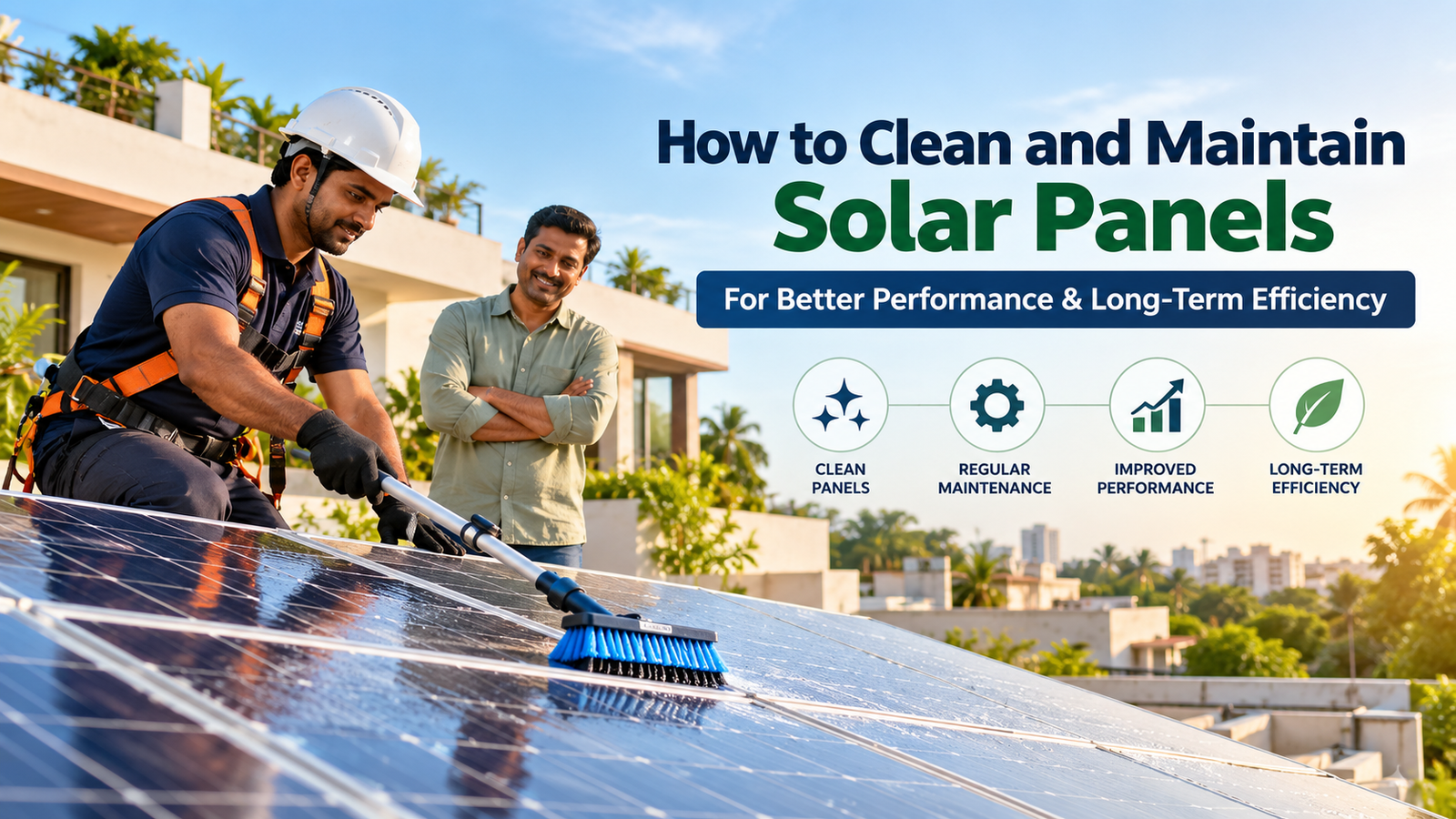
If the installation is safely accessible and the manufacturer permits manual cleaning, a basic cleaning process can be followed.
1. Inspect the Panels First
Look for visible dust, leaves, bird droppings, cracks, loose components, or unusual marks.
Do not attempt to clean a panel if you notice electrical damage, exposed wiring, broken glass, or another safety concern.
2. Remove Loose Debris
Use an appropriate soft brush or gentle method to remove loose leaves and surface dust.
Avoid using abrasive materials, as they may scratch or damage the surface of the solar panels.
3. Use Clean Water
For ordinary dirt, clean water may be sufficient. If necessary, use equipment recommended by the panel manufacturer.
Avoid harsh chemicals unless specifically approved for the equipment.
4. Clean Gently
Use a soft sponge, microfiber cloth, or suitable solar cleaning equipment. Avoid applying excessive pressure to the surface, as it may cause scratches or damage to the panel.
5. Rinse Thoroughly
Remove remaining dirt and cleaning residue with clean water.
Hard-water deposits can leave mineral marks, so the quality of the water used for cleaning can also matter.
6. Allow the Panels to Dry
Where appropriate, allow the surface to dry naturally or use a suitable soft drying method recommended for solar equipment.
What Should You Avoid When Cleaning Solar Panels?
Improper cleaning can potentially damage the equipment or create safety risks.
Avoid:
- Using abrasive brushes
- Scrubbing aggressively
- Applying unapproved chemicals
- Walking on the panels
- Using excessive water pressure
- Cleaning during extreme heat
- Touching electrical components
- Attempting repairs without appropriate expertise
Solar modules may look simple, but the complete rooftop system contains electrical equipment that should be treated carefully.
Can Rain Clean Solar Panels?
Rain can naturally remove some dust and loose surface particles, particularly when the rainfall is substantial.
However, rain should not be considered a complete replacement for inspection and maintenance.
After rainfall, panels can sometimes retain:
- Mud spots
- Bird droppings
- Dust residue
- Water stains
- Leaves and other debris
In areas with limited rainfall, relying entirely on rain may also leave significant dirt accumulation.
A visual inspection after periods of dusty weather can help determine whether additional cleaning is necessary.
Monitor Solar Energy Production
Cleaning is only one part of effective solar maintenance.
Monitoring electricity generation can help homeowners and businesses understand whether their system is performing as expected.
Many modern solar installations provide monitoring through an inverter display, mobile application, or web-based platform.
Keep an eye on:
- Daily generation
- Monthly generation
- Sudden changes in output
- Inverter alerts
- System shutdowns
- Differences between expected and actual production
A reduction in generation does not always mean dirty panels. Weather, shading, equipment faults, grid conditions, and other factors can also influence output.
Check for Shading
Even clean solar panels can experience reduced generation if new shading develops.
Trees grow over time, nearby structures may change, and objects placed on rooftops can create shadows.
Periodically inspect the installation for shading from:
- Trees
- Water tanks
- New structures
- Satellite dishes
- Nearby buildings
- Rooftop equipment
If shading becomes a problem, consult a qualified solar professional before making changes.
Inspect the Inverter and Electrical Equipment
The solar inverter is an important part of the system because it converts the electricity generated by the panels into usable AC electricity for compatible electrical loads.
Homeowners should monitor the inverter for warning messages, unusual shutdowns, or abnormal indicators.
However, electrical equipment should not be opened or repaired by unqualified individuals.
If you notice a persistent fault, contact a trained solar technician.
Check the Mounting Structure
The mounting system supports the panels and keeps them positioned correctly.
During routine inspection, look for obvious signs of:
- Corrosion
- Loose fasteners
- Physical damage
- Structural movement
- Water accumulation
- Deterioration
Do not climb onto the rooftop solely to perform an inspection if access is unsafe.
A professional technician can conduct a detailed assessment when required.
Keep Nearby Trees Under Control
Trees can provide valuable shade around a property, but they can also create unwanted shading across rooftop solar installations.
Branches may also drop leaves onto the panels.
Regularly inspect nearby vegetation and arrange appropriate trimming when necessary. Tree maintenance should be carried out safely and without damaging the solar equipment.
Bird Droppings and Solar Panels
Bird droppings can create localized obstruction on the panel surface. Unlike loose dust, they may remain attached after light rainfall.
If bird activity is frequent, inspect the installation more regularly.
Persistent contamination can sometimes create localized shading and may affect panel output.
Where bird-related problems are severe, a professional can recommend suitable, non-damaging solutions.
Solar Panel Maintenance During Monsoon
Monsoon weather can provide natural cleaning through rainfall, but it also introduces other considerations.
Strong winds and heavy rain can expose the installation to environmental stress. After severe weather, it can be useful to check for visible changes or damage.
Look for:
- Displaced components
- Loose cables
- Damaged mounting parts
- Water-related issues
- Physical panel damage
Do not touch damaged electrical equipment. Instead, contact a qualified technician.
Solar Panel Maintenance During Summer
Summer can bring high temperatures, dust, and increased electricity consumption.
Before and during the summer season, inspect the panels for accumulated dust and check whether the system is generating electricity as expected.
Keep the surrounding rooftop clear of unnecessary objects and make sure ventilation around relevant equipment is not obstructed.
Remember that hot weather does not automatically mean higher solar output. Photovoltaic modules generate electricity from sunlight, while excessive operating temperatures can affect their electrical efficiency.
Professional Solar Maintenance
Some maintenance tasks are suitable for basic homeowner observation, while others should be handled by trained professionals.
Professional solar maintenance may include:
- Detailed panel inspection
- Electrical testing
- Inverter diagnostics
- Cable inspection
- Mounting structure assessment
- Performance analysis
- Safety checks
- Cleaning where required
Professional servicing can be particularly valuable for larger commercial installations or systems installed on difficult-to-access rooftops.
Signs That Your Solar System Needs Attention
Contact a qualified solar professional if you notice:
- Unexpectedly low electricity generation
- Repeated inverter errors
- Visible panel cracks
- Loose cables
- Damaged mounting components
- Burn marks
- Unusual electrical sounds
- System shutdowns
- Persistent performance drops
Early attention can help prevent a minor issue from becoming a larger problem.
Does Cleaning Solar Panels Increase Electricity Generation?
Cleaning can help restore the amount of sunlight reaching the photovoltaic surface when significant dirt or contamination is present.
However, the improvement will depend on the starting condition of the installation. A lightly dusty system may show little difference, while heavily contaminated panels may benefit more noticeably from cleaning.
Therefore, cleaning should be viewed as one part of a broader maintenance strategy rather than a guaranteed method of producing a specific amount of additional electricity.
How to Maintain Solar Panels for Long-Term Performance
A simple maintenance routine can help keep your solar system in good condition.
Follow these practices:
Inspect regularly: Look for dirt, physical damage, shading, and unusual conditions.
Clean when necessary: Do not allow heavy contamination to remain on the panel surface.
Monitor production: Compare generation trends and investigate unexpected changes.
Check after severe weather: Look for visible damage after storms or strong winds.
Maintain surrounding vegetation: Prevent unnecessary shading and debris accumulation.
Follow manufacturer guidance: Use approved cleaning and maintenance procedures.
Schedule professional inspections: Arrange technical servicing when required.
Benefits of Proper Solar Panel Maintenance
Regular care can provide several practical benefits.
Better System Performance
Keeping panels reasonably clean and identifying problems early can support efficient operation.
Longer-Term Reliability
Routine inspections may help identify component issues before they become more serious.
Improved Energy Monitoring
Regularly checking system performance makes it easier to recognize unusual changes in generation.
Better Return on Investment
A solar installation is a long-term investment. Maintaining the system properly can help protect its expected performance over its operating life.
Greater Safety
Professional inspections can identify electrical, structural, and installation-related concerns that may not be obvious during a simple visual check.
Frequently Asked Questions
How often should solar panels be cleaned?
The required cleaning frequency depends on local dust, pollution, rainfall, bird activity, surrounding vegetation, and other environmental conditions. Inspect the panels regularly and clean them when significant contamination is visible.
Can I clean solar panels myself?
If the panels are safely accessible and the manufacturer permits manual cleaning, basic surface cleaning may be possible. However, rooftop work can be dangerous. Difficult-to-access installations should be handled by trained professionals.
Can I use normal tap water to clean solar panels?
Water quality matters because hard water can leave mineral deposits on the panel surface. Follow the manufacturer’s recommendations and use suitable cleaning methods.
Does rain remove all dirt from solar panels?
No. Rain can remove some loose dust, but it may not eliminate bird droppings, mud, mineral deposits, or stubborn dirt.
Can dirty solar panels reduce electricity generation?
Yes. Significant dirt or contamination can block part of the sunlight reaching the photovoltaic cells and may reduce electricity production.
Do solar panels require maintenance every month?
Not necessarily. Maintenance needs vary by location and system. Regular visual monitoring is useful, while cleaning and professional servicing should be performed according to actual conditions and manufacturer recommendations.
Should I clean solar panels during the afternoon?
It is generally better to avoid cleaning very hot panels. Cooler periods such as early morning or evening are more suitable, provided the work can be performed safely.
Regular cleaning and maintenance are important parts of responsible solar system ownership. While modern rooftop systems are designed for long-term outdoor operation, dust, bird droppings, leaves, shading, weather, and equipment issues can affect performance.
Keeping solar panels reasonably clean, monitoring energy generation, checking for visible problems, and arranging professional inspections when necessary can help support reliable operation over the long term.
The right maintenance routine depends on your property’s environment and the recommendations provided by the equipment manufacturer. Instead of following a fixed cleaning schedule blindly, inspect the system regularly and respond to actual conditions.
For homeowners and businesses, proper solar maintenance is a relatively small part of the overall investment but can play an important role in protecting system performance, safety, and long-term value.