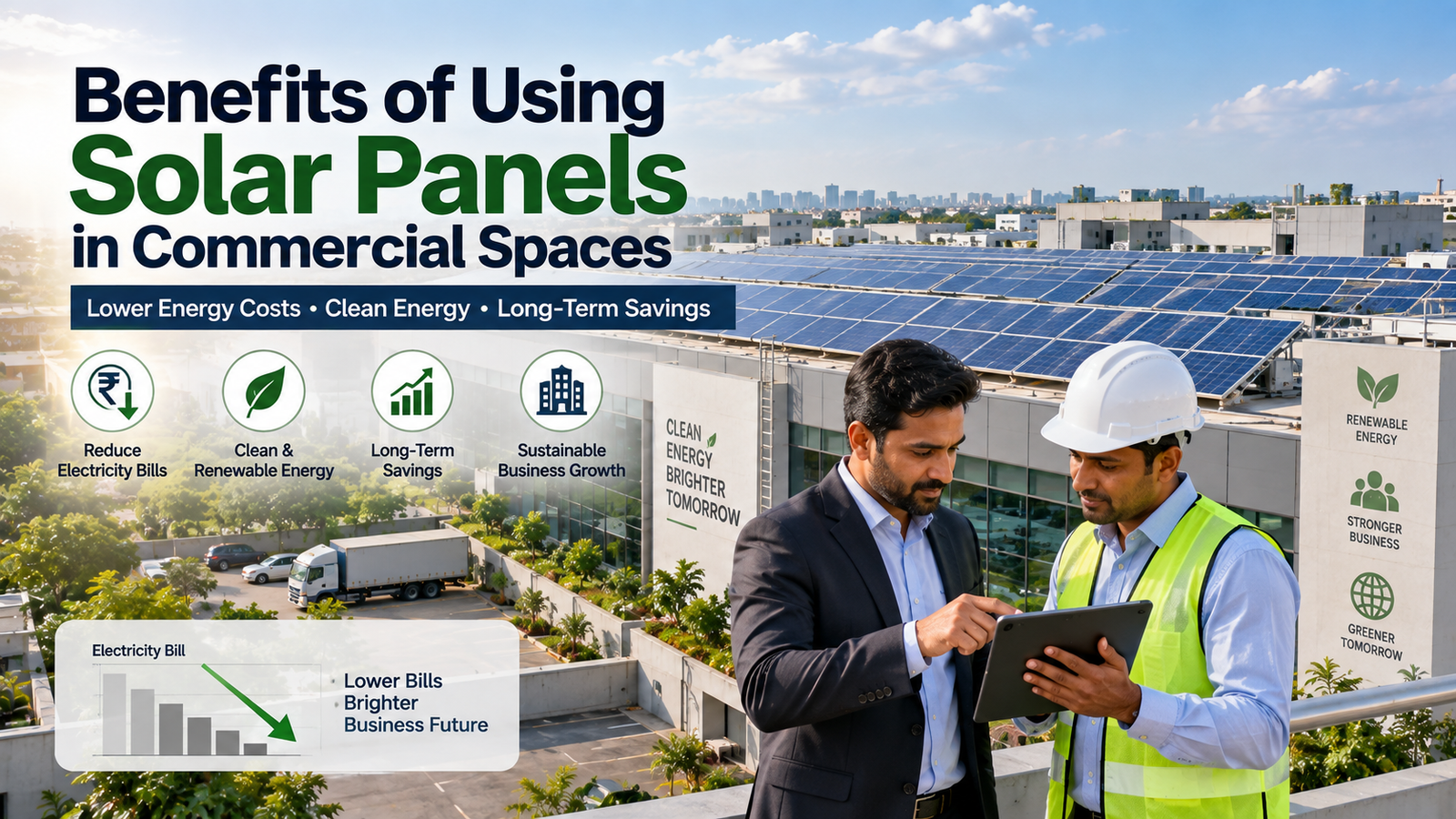
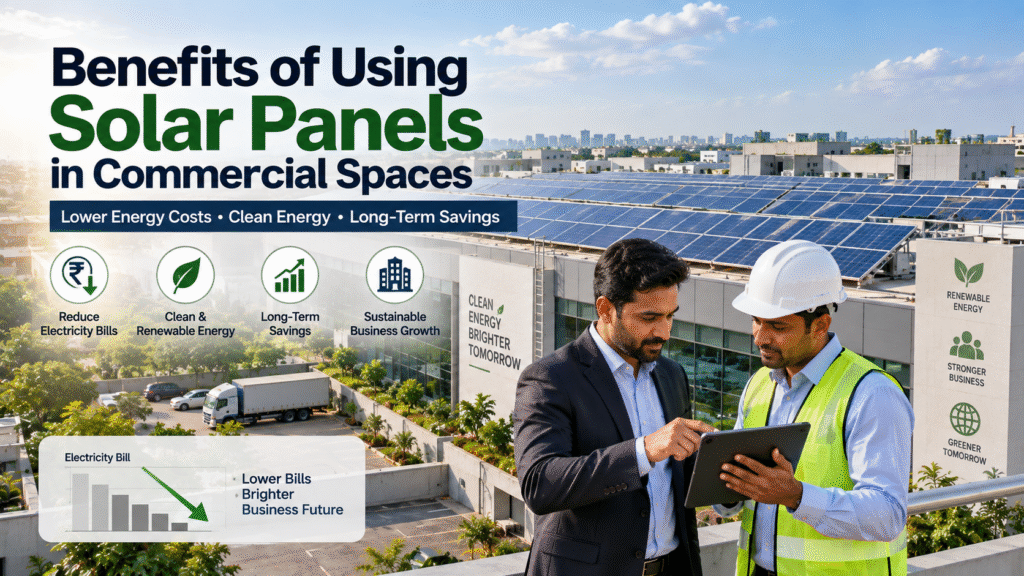
Benefits of Using Solar Panels in Commercial Spaces
Businesses today are looking for smarter ways to reduce operating costs, improve energy efficiency, and adopt more sustainable practices. Electricity is one of the major recurring expenses for offices, retail stores, warehouses, factories, hotels, schools, hospitals, and other commercial properties. As electricity prices and environmental concerns continue to influence business decisions, solar panels have become an increasingly practical solution for commercial spaces.
Installing a solar energy system allows businesses to generate electricity from sunlight and reduce their dependence on conventional power sources. Depending on the size, location, energy consumption, and system configuration, a commercial solar installation can help lower electricity expenses while supporting long-term energy planning.
From reducing monthly power bills to improving sustainability credentials, there are several reasons why businesses are considering rooftop and ground-mounted solar solutions.
Why Are Solar Panels Important for Commercial Spaces?
Commercial buildings often have significant electricity requirements because they operate lighting, air conditioning, computers, machinery, refrigeration systems, elevators, pumps, and other equipment. Unlike residential properties, many businesses consume electricity primarily during daytime hours—the same period when solar generation is generally available.
This makes solar panels particularly suitable for commercial applications. Electricity generated during business hours can be used directly by the property, helping reduce the amount of power purchased from the grid.
A properly designed solar system can also help businesses manage energy costs more effectively over the long term.
1. Reduce Monthly Electricity Bills
One of the biggest advantages of installing solar panels in a commercial property is the potential reduction in electricity expenses.
Businesses with high daytime consumption can use solar-generated electricity directly for their operations. This may reduce the amount of electricity they need to purchase from the utility provider.
For example, an office building with significant daytime air-conditioning and lighting requirements can use solar generation to offset part of its daytime electricity demand.
The actual savings depend on several factors, including:
- System capacity
- Daily electricity consumption
- Solar irradiation
- Roof orientation and available space
- Electricity tariff
- System performance
- Applicable regulations and metering arrangements
Rather than viewing solar only as an environmental investment, businesses can consider it as a strategy for managing recurring operational expenses.
2. Lower Dependence on Grid Electricity
Businesses that rely entirely on grid electricity remain exposed to changes in electricity tariffs and energy costs. Installing solar panels gives commercial property owners an additional source of electricity.
During periods of suitable sunlight, the solar system can generate power for the building’s operations. This can reduce dependence on conventional grid electricity during productive hours.
For businesses with predictable daytime energy consumption, this can be particularly useful.
A hybrid solar setup can provide additional flexibility by combining solar generation with battery storage and grid connectivity. However, the appropriate system depends on the business’s energy requirements and operational objectives.
3. Improve Long-Term Energy Cost Planning
Electricity is a recurring business expense, unlike a one-time purchase. Over the years, rising or changing energy tariffs can affect operating budgets.
Solar panels can help businesses generate a portion of their own electricity instead of purchasing all of it from the grid. Once the system is installed, sunlight becomes the primary energy source for solar generation.
This can make electricity costs more predictable over the useful operating life of the system.
Businesses can therefore include solar as part of their long-term energy and financial planning rather than treating electricity expenses as an entirely variable operating cost.
4. Make Better Use of Commercial Rooftops
Large commercial buildings frequently have substantial rooftop areas that remain unused. Warehouses, factories, shopping complexes, hotels, schools, and office buildings may have enough roof space to accommodate a suitably designed solar installation.
Installing solar panels on an appropriate rooftop can transform otherwise unused space into an electricity-generating asset.
Before installation, a professional assessment should evaluate:
- Available roof area
- Structural suitability
- Roof condition
- Shading
- Orientation and inclination
- Electrical infrastructure
- Access for installation and maintenance
Using existing rooftop space can be an efficient way to generate renewable electricity without requiring additional land.
5. Support Sustainable Business Practices
Environmental responsibility has become increasingly important for modern businesses. Customers, employees, investors, and business partners are paying greater attention to sustainability.
Using solar panels allows businesses to generate electricity from a renewable energy source and demonstrate their commitment to cleaner energy practices.
Solar adoption can complement broader sustainability initiatives such as:
- Energy-efficient lighting
- Efficient HVAC systems
- Water conservation
- Waste reduction
- Sustainable building practices
- Electric vehicle charging
- Energy monitoring
For companies working toward sustainability goals, solar can become an important part of their overall energy strategy.
6. Reduce Dependence on Conventional Energy Sources
Traditional electricity generation can involve the use of fossil fuels. Solar power, on the other hand, uses sunlight to produce electricity without requiring fuel combustion at the point of generation.
By installing solar panels, commercial properties can increase the share of their electricity coming from renewable energy.
This does not necessarily mean a business will become completely independent of the grid. Instead, solar can work alongside existing electricity infrastructure to reduce conventional electricity consumption.
For businesses interested in gradually transitioning toward cleaner energy, solar provides a scalable option.
7. Suitable for a Wide Range of Businesses
Another advantage of commercial solar is its versatility. Solar panels can be used across many types of commercial properties, provided the site is technically suitable.
Potential applications include:
Offices
Solar can help offset electricity used for computers, lighting, air conditioning, elevators, and other office equipment.
Retail Stores
Retail businesses can use solar-generated electricity for lighting, cooling, displays, security systems, and daily operations.
Warehouses
Warehouses often have large rooftops that can provide significant space for solar installations.
Manufacturing Facilities
Factories may have substantial electricity requirements and can evaluate solar as part of their broader energy-management strategy.
Hotels and Restaurants
Hotels and restaurants consume electricity throughout the day for lighting, cooling, refrigeration, kitchens, water heating, and other services.
Educational Institutions
Schools and colleges can use solar to reduce energy costs while also demonstrating renewable energy concepts to students.
The right system size should always be determined according to actual electricity consumption, available space, and site conditions.
8. Potentially Increase Energy Efficiency Awareness
Installing solar panels often encourages businesses to pay closer attention to their overall electricity consumption.
Once a commercial property begins monitoring solar generation and energy usage, management can identify areas where electricity is being consumed inefficiently.
For instance, a business may discover that certain equipment operates unnecessarily during low-occupancy periods or that inefficient lighting is contributing significantly to electricity consumption.
Combining solar generation with energy-efficiency measures can create a more effective overall energy strategy.
9. Solar Systems Can Be Scaled According to Requirements
Commercial energy requirements vary significantly from one property to another. A small office and a large manufacturing facility will have completely different electricity consumption patterns.
The capacity of solar panels and the overall solar system can therefore be planned according to the property’s requirements.
A professional solar assessment can consider:
- Historical electricity bills
- Connected load
- Monthly consumption
- Daytime consumption
- Available installation area
- Future electricity requirements
- Roof structure
- Local solar conditions
This helps businesses select a system that aligns with their energy goals rather than choosing a capacity based solely on available roof space.
10. Contribute to Lower Carbon Emissions
Generating electricity from sunlight can help reduce the need for electricity produced through conventional energy sources.
By using solar panels, businesses can increase renewable energy generation at their own premises and potentially reduce the carbon footprint associated with their electricity consumption.
The environmental benefit depends on factors such as system performance, electricity displaced, equipment lifespan, and the local electricity mix.
For businesses that want to integrate sustainability into their operations, solar can provide a visible and measurable renewable-energy solution.
11. Improve the Company’s Sustainability Image
A commercial building equipped with solar panels can visibly demonstrate that a company is investing in renewable energy.
This can support a company’s sustainability communication and help reinforce its environmental commitments.
For businesses operating in competitive markets, responsible energy practices can also contribute positively to their corporate image.
However, sustainability claims should always be based on measurable outcomes rather than simply installing solar equipment.
12. Potential Long-Term Return on Investment
A commercial solar system requires an initial investment for equipment, installation, electrical work, engineering, and related services.
However, the system can generate electricity over many years. The financial return depends on the amount of electricity generated and consumed, installation cost, electricity tariffs, financing structure, maintenance expenses, and applicable incentives or policies.
Businesses should evaluate the expected savings and payback period before installation.
A professional feasibility assessment can help estimate:
Initial Investment → Annual Energy Savings → Payback Period → Long-Term Savings
Because every commercial property is different, there is no universal payback period that applies to every solar installation.
13. Low Routine Maintenance Requirements
Once properly installed, modern solar panels generally require relatively straightforward routine maintenance.
Regular maintenance may include:
- Cleaning the panels when required
- Checking system performance
- Inspecting electrical connections
- Monitoring inverter performance
- Checking mounting structures
- Inspecting cables
- Removing excessive dust or debris
- Reviewing generation data
Commercial systems should ideally have a planned maintenance schedule to identify potential problems before they significantly affect energy generation.
14. Solar Can Work Alongside Other Energy Solutions
Businesses do not necessarily need to depend on solar alone. Solar panels can form one component of a broader commercial energy strategy.
Depending on the property’s needs, solar can be integrated with:
- Battery storage
- Energy monitoring systems
- Grid electricity
- Energy-efficient appliances
- Smart building controls
- Electric vehicle charging
- Backup power solutions
This integrated approach can help businesses manage energy consumption more efficiently.
What Should Businesses Consider Before Installing Solar?
Although commercial solar offers several benefits, proper planning is essential.
Before installing solar panels, businesses should evaluate their electricity bills, consumption patterns, roof condition, available space, shading, structural capacity, electrical infrastructure, and future energy requirements.
It is also important to work with an experienced solar installer that can provide appropriate system design, quality components, professional installation, safety checks, and after-sales support.
Businesses should avoid selecting a system based solely on the lowest installation price. Equipment quality, installation standards, warranties, monitoring, service, and long-term support can all influence the overall value of a solar investment.
Are Solar Panels Worth Installing for Commercial Properties?
For many businesses, solar panels can be a worthwhile investment when the property has suitable installation conditions and sufficient electricity consumption.
The strongest business case usually comes from properties with:
- High daytime electricity consumption
- Suitable rooftop or ground space
- Good sunlight exposure
- Significant electricity bills
- Long-term property usage
- A clear interest in reducing energy expenses
A detailed feasibility study is the best way to determine whether solar makes financial and operational sense for a specific commercial property.
Frequently Asked Questions
How do solar panels help commercial businesses?
They allow businesses to generate electricity from sunlight and potentially reduce the amount of grid electricity they purchase. Savings depend on system size, electricity consumption, tariffs, solar generation, and other site-specific factors.
Can solar be installed on an office building?
Yes. Office buildings can use rooftop solar when the roof is structurally suitable and has adequate space and sunlight exposure.
Do commercial solar systems require regular maintenance?
Yes. Routine cleaning, performance monitoring, electrical inspections, and periodic system checks can help maintain reliable operation.
Can solar panels power a factory?
They can provide a portion of a factory’s electricity requirements, depending on system capacity, available installation area, energy consumption, and operating conditions. Large facilities may require carefully engineered commercial or industrial solar solutions.
How long does a commercial solar system take to pay for itself?
The payback period varies from project to project. Installation cost, electricity tariffs, system generation, energy consumption, financing, maintenance, and applicable incentives can all influence the final payback period.
Are commercial solar systems connected to the electricity grid?
They can be. Grid-connected systems can work alongside utility electricity, while hybrid systems may additionally incorporate battery storage. The appropriate configuration depends on the business’s requirements.
The benefits of using solar panels in commercial spaces extend beyond reducing electricity bills. Solar can help businesses improve energy management, make productive use of rooftop space, reduce dependence on conventional electricity, support sustainability initiatives, and plan energy costs over the long term.
From offices and retail stores to warehouses, factories, hotels, and educational institutions, commercial properties can explore solar solutions based on their individual energy requirements.
However, successful solar adoption depends on proper site assessment, system sizing, quality equipment, professional installation, and ongoing maintenance. Businesses should evaluate their electricity consumption and financial objectives before selecting a system.
For companies considering renewable energy, solar panels can be an important step toward a more efficient, sustainable, and financially planned energy future.
Ready to Explore Commercial Solar?
If your business is considering solar, start with a professional site assessment and energy analysis. A qualified solar provider can help evaluate your electricity consumption, available space, system capacity, expected generation, and potential savings.
Make your commercial property more energy-efficient with a solar solution designed around your business needs.