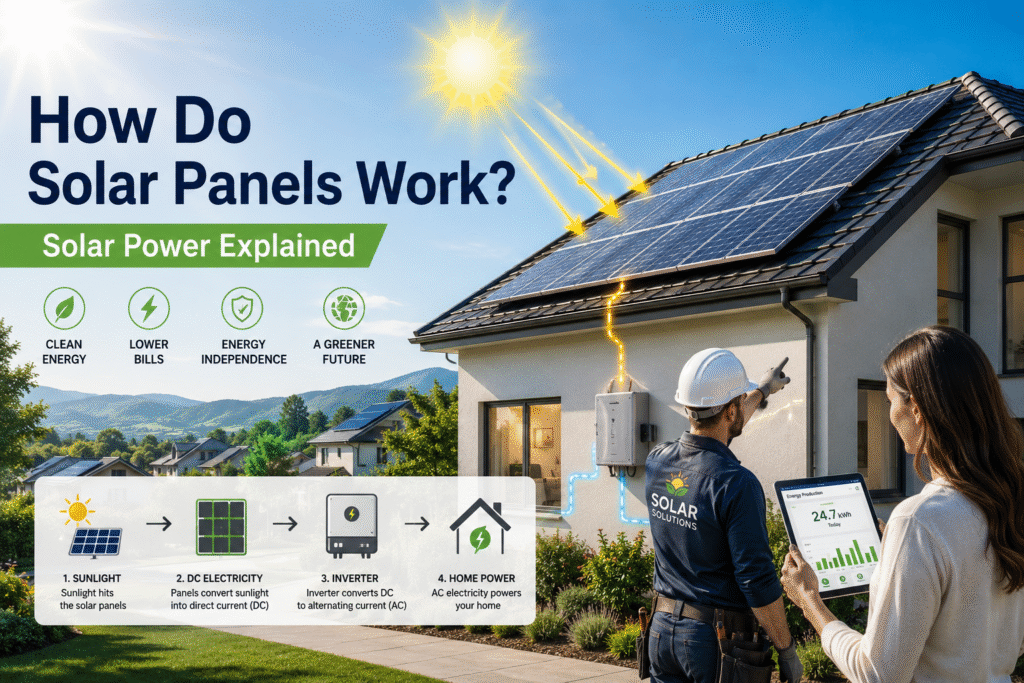
How Do Solar Panels Work? Solar Power Explained
As energy costs continue to rise and environmental concerns become more important, many homeowners and businesses are turning to solar power as a reliable and sustainable energy solution. Solar energy has become one of the fastest-growing renewable energy sources worldwide, helping people reduce electricity bills while contributing to a cleaner environment.
Despite its growing popularity, many people still wonder how solar panels actually work. Understanding the basics of solar power can help homeowners make informed decisions when considering a solar installation.
In this guide, we’ll explain how solar panels generate electricity, the components involved, and the many benefits of using solar power for your home or business.
What Is Solar Power?
Solar panels collect sunlight and convert it into clean electricity that can power homes and businesses.
Unlike traditional electricity generated from fossil fuels, solar power is clean, renewable, and environmentally friendly. Because sunlight is abundant and freely available, solar energy offers a long-term solution for reducing dependence on conventional energy sources.
Today, solar power is used in residential homes, commercial buildings, industries, and even large-scale solar farms.
What Are Solar Panels?
Solar panels serve as the core components of a solar energy system, converting sunlight into electricity. They are designed to capture sunlight and convert it into electricity through photovoltaic cells.
A typical solar panel consists of:
- Photovoltaic (PV) cells
- Protective glass layer
- Aluminum frame
- Electrical wiring
- Junction box
As sunlight reaches the photovoltaic cells, they start converting solar energy into electricity.
Types of Solar Panels
Today, homeowners can choose from different types of solar panels depending on their needs and budget.
Monocrystalline Solar Panels
Monocrystalline solar panels are built using a single silicon crystal, offering high efficiency and excellent performance. They offer high efficiency, excellent performance, and a sleek appearance.
Polycrystalline Solar Panels
Polycrystalline panels are manufactured using multiple silicon crystals. They are more affordable and provide reliable performance.
Thin-Film Solar Panels
Thin-film panels are lightweight and flexible. Although they are generally less efficient, they can be useful for specific applications.
Choosing the right panel type depends on budget, available space, and energy requirements.
How Do Solar Panels Work?
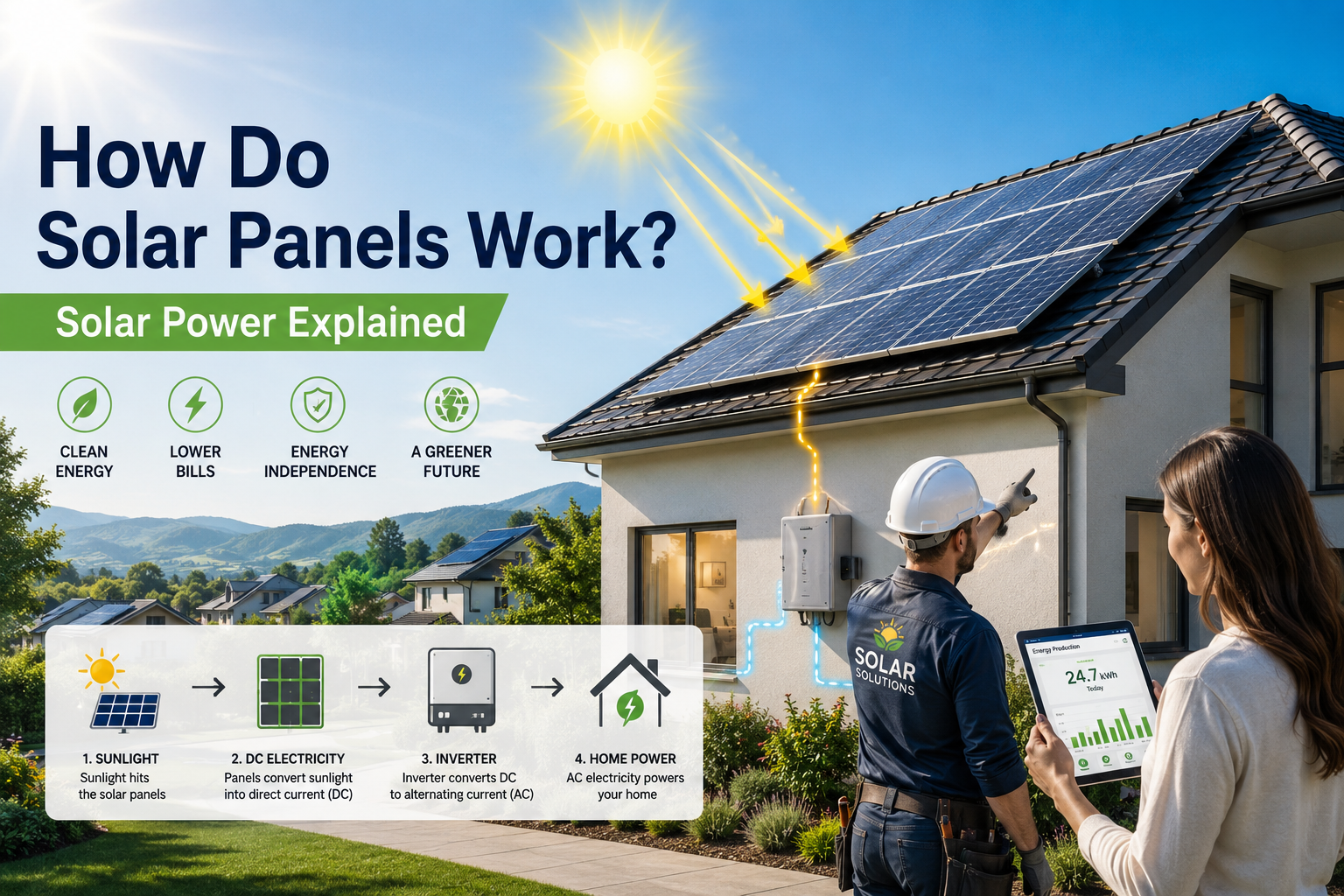
The process of generating electricity through solar power can be explained in four simple steps.
Step 1: Sunlight Reaches the Solar Panels
Solar panels are installed on rooftops or open areas where they receive maximum sunlight. The photovoltaic cells absorb sunlight throughout the day.
Most solar cells are made from silicon, which helps convert sunlight into electricity when sunlight hits the panel.
Step 2: Photovoltaic Cells Generate Electricity
When sunlight strikes the photovoltaic cells, electrons become energized and begin moving through the semiconductor material.
As electrons move through the solar cells, they generate DC electricity, which is the first step in producing solar energy.
This is the foundation of how solar power systems generate energy.
Step 3: The Solar Inverter Converts Electricity
The electrical energy produced by solar panels is initially generated as direct current (DC). However, household appliances operate using alternating current (AC) electricity.
The inverter transforms the electricity produced by solar panels into a form that can safely power household and commercial appliances.
Without the inverter, the electricity generated by solar power systems would not be compatible with most household devices.
Step 4: Electricity Powers Your Home
Once converted into AC electricity, the power is distributed throughout the home to operate lights, fans, refrigerators, air conditioners, and other appliances.
This reduces the need to purchase electricity from the utility grid and helps lower monthly energy bills.
What Happens to Excess Solar Energy?
Many solar systems generate more electricity than a home consumes during daylight hours.
Instead of wasting this energy, homeowners can take advantage of net metering.
Understanding Net Metering
Net metering allows homeowners to export excess solar electricity to the utility grid and receive credits on their electricity bills.
The extra electricity you send to the grid earns credits, which can lower your upcoming electricity bills.
This feature significantly increases the financial benefits of solar power and helps maximize energy savings.
Battery Storage Systems
Some homeowners choose to install battery storage systems.
Any extra electricity generated during the day can be stored in solar batteries and used later when sunlight is unavailable.
Battery storage increases energy independence and improves the overall effectiveness of solar power systems.
Benefits of Solar Power
There are many reasons why homeowners are choosing solar power for their energy needs.
Lower Electricity Bills
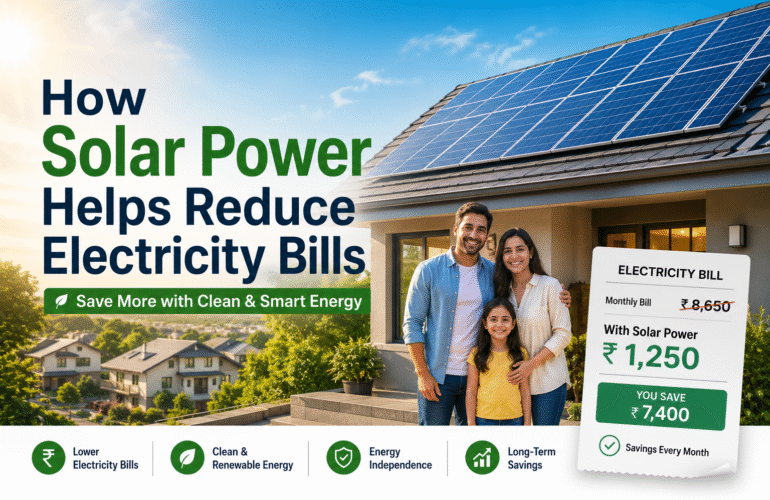
One of the biggest advantages of solar power is the ability to reduce monthly electricity expenses.
By generating your own electricity, you rely less on utility companies and can save significantly over time.
Environmentally Friendly Energy
Unlike traditional fossil fuels, solar power generates clean, renewable electricity while reducing harmful carbon emissions. By producing clean energy, it helps keep the air cleaner and supports a greener future.
Energy Independence
Solar systems provide greater control over energy consumption and reduce dependence on traditional electricity providers.
Long-Term Savings
Although solar installation requires an initial investment, most systems recover their cost within a few years and continue generating electricity for decades.
Low Maintenance
Modern solar panels require very little maintenance. Periodic cleaning and occasional inspections are generally sufficient to maintain performance.
Factors That Affect Solar Panel Performance
The overall efficiency of a solar power system depends on various factors.
Sunlight Availability
Areas with abundant sunlight typically generate more electricity.
Roof Orientation
South-facing roofs generally receive more sunlight and produce higher energy output.
Weather Conditions
Solar panels continue generating electricity on cloudy days, although output may be reduced.
Panel Quality
High-quality solar panels generally offer better efficiency and durability.
System Maintenance
Regular cleaning helps prevent dust and debris from reducing energy production.
Understanding how solar panels work makes it easier to appreciate the value of solar power. By converting sunlight into usable electricity, solar systems help homeowners reduce energy costs, achieve greater energy independence, and contribute to a cleaner environment.
As technology continues to improve, solar power is becoming more affordable, efficient, and accessible than ever before. Whether you are looking to reduce electricity bills or invest in sustainable energy, solar panels offer a practical solution for long-term savings and environmental responsibility.