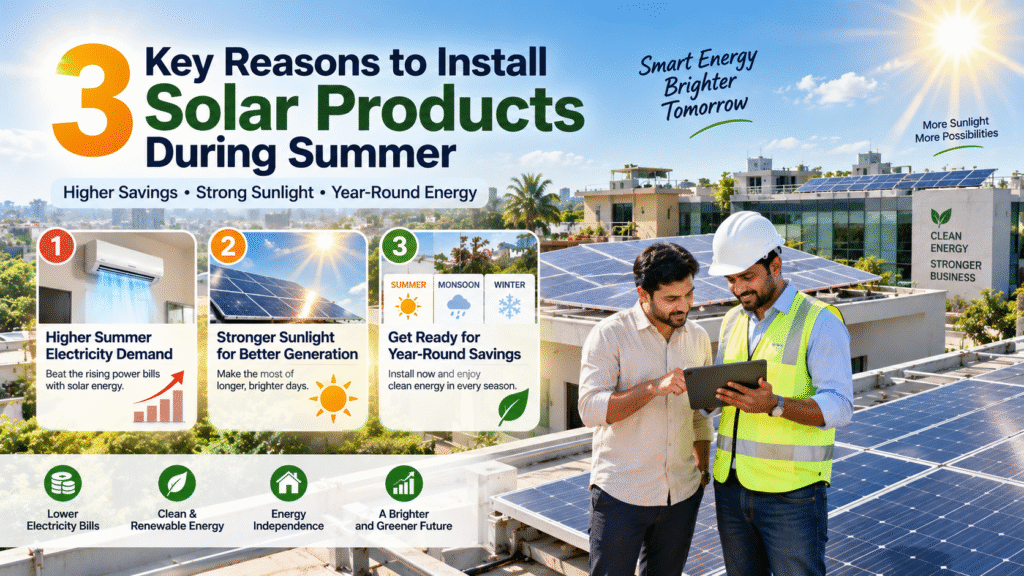
3 Key Reasons to Install Solar Products During Summer
Summer can be one of the most demanding seasons for electricity consumption in both residential and commercial properties. As temperatures increase, people tend to use air conditioners, coolers, refrigerators, fans, water pumps, and other electrical appliances more frequently. As a result, electricity usage can rise significantly, leading to higher monthly power bills.
For homeowners and businesses looking to adopt renewable energy, summer can be a suitable time to consider solar products. A well-designed solar installation can convert available sunlight into electricity and help reduce the amount of conventional grid power required.
But what makes summer a practical period for installing a solar system?
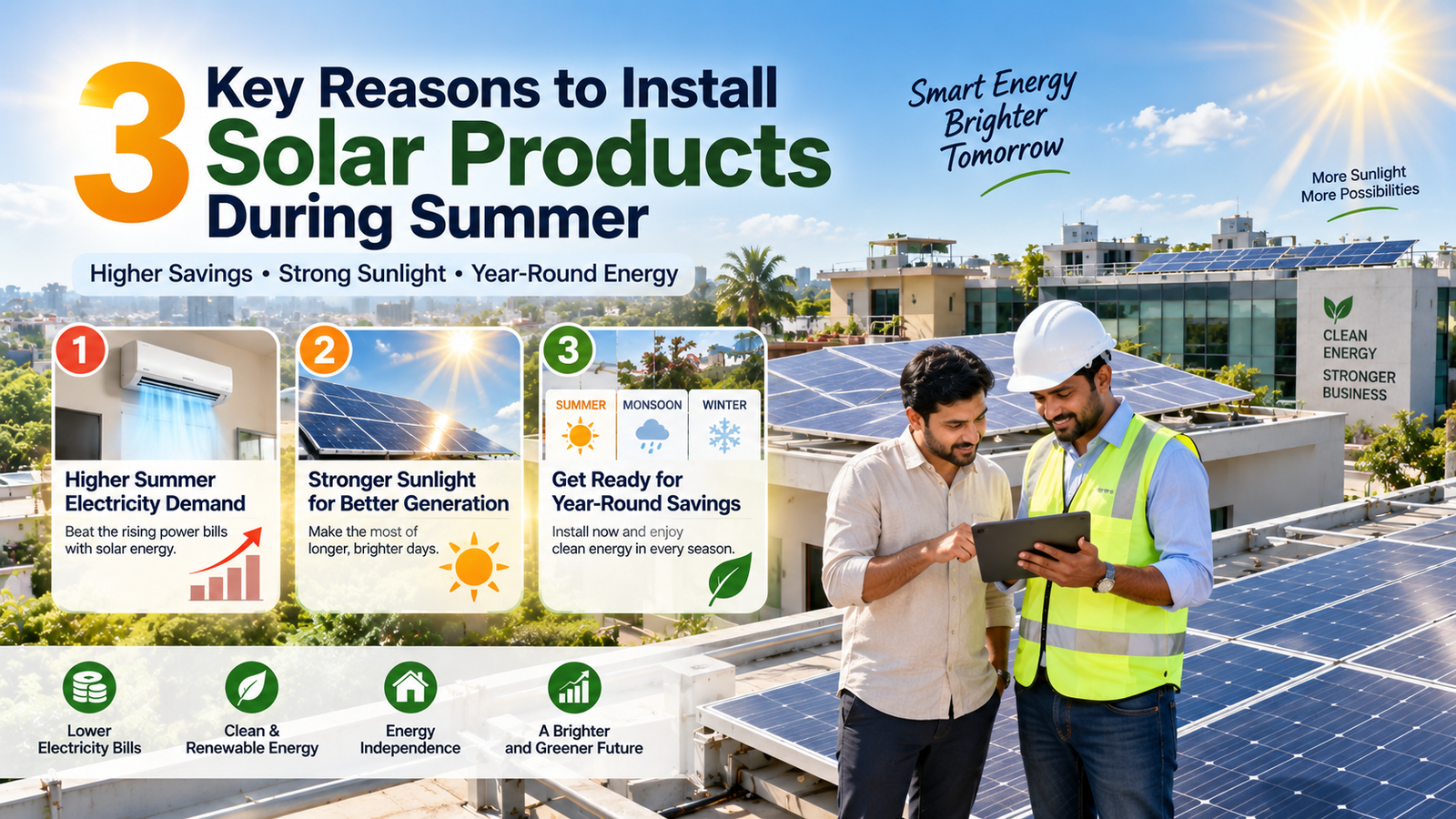
Below are three important reasons to install solar products during summer and how they can contribute to better energy management throughout the year.
1. Higher Summer Electricity Usage Can Increase Solar’s Value
One of the key reasons to consider solar during summer is the increase in electricity consumption. Solar Products
When temperatures rise, homes and businesses often operate cooling systems and other electrical equipment for longer periods. Air conditioners, fans, coolers, refrigerators, water pumps, and similar appliances can contribute considerably to daytime electricity demand.
Higher consumption can naturally lead to increased electricity bills.
A correctly sized solar system can generate electricity during daylight hours and help meet part of this demand. For instance, if an air conditioner is running during the afternoon, solar-generated electricity may be used to supply some of the property’s energy requirements while the system is producing power.
In simple terms:
Higher Daytime Electricity Demand + Solar Generation = Potential Reduction in Grid Electricity Consumption
Actual savings will vary according to factors such as system capacity, electricity usage, solar conditions, applicable tariffs, and the property’s metering arrangement.
Solar Can Help Meet Daytime Power Requirements
Summer electricity consumption frequently increases during daylight hours. This makes rooftop solar particularly useful because photovoltaic systems generate electricity when sunlight is available.
Commercial properties can also benefit from this pattern. Offices, retail outlets, schools, workshops, warehouses, and other businesses may consume substantial amounts of electricity during working hours.
Instead of relying entirely on grid electricity during the day, a properly designed solar system can generate part of the power needed to run the property.
Select a Solar System Based on Your Needs
Installing solar does not simply mean covering the available roof with as many panels as possible. The system should be sized according to the property’s actual electricity requirements. Solar Products
Before selecting a system, consider factors such as:
- Average monthly electricity consumption
- Daytime power usage
- Existing connected electrical load
- Available rooftop area
- Shading from surrounding structures
- Roof direction and layout
- Expected future energy requirements
- Available investment budget
A professional solar evaluation can help identify the right system size and configuration for the property.
2. Summer Offers Strong Sunlight for Solar Electricity Generation
Solar photovoltaic technology produces electricity by converting sunlight into electrical energy. In many locations, summer brings longer daylight periods and good solar availability, which can provide favorable conditions for electricity generation. Solar Products
However, it is important to understand that higher temperatures do not necessarily mean better solar panel performance. Solar panels require sunlight rather than heat to generate electricity, and excessive operating temperatures can affect their electrical efficiency.
Therefore, correct system design, appropriate equipment selection, professional installation, and adequate ventilation are important considerations.
More Available Sunlight Creates More Generation Opportunities
When sunlight reaches photovoltaic cells, they generate direct-current electricity. The solar inverter converts the DC electricity produced by the panels into AC power suitable for operating compatible appliances and electrical equipment.
The basic energy flow can be represented as: Solar Products
Sunlight → Solar Panels → Inverter → Electrical Loads
Depending on the system configuration and applicable electricity regulations, excess electricity may also be supplied to the grid through an approved metering arrangement.
Summer Can Help You Monitor Your Solar System
Installing a solar system during or before summer gives homeowners and businesses an opportunity to observe its operation during a period when electricity consumption may be relatively high.
Many modern systems allow users to monitor energy generation through the inverter or a dedicated monitoring platform.
This information can provide insights into:
- Daily solar generation
- Electricity consumption
- Overall system performance
- Peak generation periods
- Weather-related changes in output
- General energy consumption patterns
Solar generation naturally varies according to sunlight availability, cloud cover, shading, dust, temperature, and other environmental factors. Regular monitoring can help identify unusual changes in performance. Solar Products
Keep the Solar Panels Clean
Dust, dirt, and other deposits can accumulate on the surface of solar panels and reduce the amount of sunlight reaching the photovoltaic cells.
In areas that experience dusty summer conditions, regular inspection and appropriate cleaning can help maintain system performance.
The required cleaning frequency depends on the property’s surroundings. Buildings located close to construction sites, busy roads, industrial areas, or particularly dusty environments may require more frequent cleaning.
3. Installing Solar Before the Monsoon Can Support Year-Round Energy Generation
Installation timing is another reason some property owners choose to begin their solar project during summer.
In several parts of India, the arrival of monsoon can bring rainfall, cloudy conditions, strong winds, and periods that may make outdoor installation work more challenging. Completing the project before the monsoon gives property owners additional time to complete installation, testing, and commissioning.Solar Products
This does not mean solar systems stop working during rainy weather. Photovoltaic panels can continue generating electricity under cloudy conditions, although their output may decline when the available sunlight is reduced.
Complete Your Solar Installation Before Seasonal Changes
Installing a solar system involves much more than simply mounting panels on a rooftop. Each project requires proper planning, technical assessment, and installation according to the property’s requirements.
Depending on the project, the process may involve:
- Site inspection and evaluation
- Analysis of electricity consumption
- Solar system planning and design
- Selection of suitable equipment
- Assessment of the roof and supporting structure
- Installation of solar panels
- Installation of the inverter
- Electrical wiring and connections
- Safety checks and performance testing
- Final commissioning of the system
Starting the project during summer can allow adequate time to complete these stages carefully before seasonal weather conditions change.
After commissioning, the solar system can continue producing electricity throughout the year. However, its generation will naturally fluctuate depending on sunlight intensity, cloud cover, rainfall, daylight hours, and other seasonal conditions.
Plan Your Solar System for Year-Round Energy Needs
Although summer can bring higher electricity consumption, energy requirements do not stop when the season ends.
A properly designed solar system can continue generating renewable electricity throughout the year. During the monsoon and winter months, production may vary because of changes in sunlight availability, cloud cover, rainfall, and daylight duration.
Therefore, solar should be approached as a long-term renewable energy solution rather than something intended only for summer.
Additional Benefits of Installing Solar Products
The advantages of solar installation extend beyond managing summer electricity consumption. A well-planned system can provide valuable benefits throughout its operational life. Solar Products
Reduce Dependence on Grid Power
Generating electricity on-site can help reduce the amount of power a property needs to purchase from the electricity grid. The potential reduction depends on factors such as system capacity, electricity consumption, solar generation, and operating conditions.
Improve Long-Term Energy Management
Electricity represents a recurring expense for both households and businesses. Generating part of the property’s electricity through solar can help offset a portion of this expense and support better long-term energy planning.
Generate Renewable Electricity
Solar photovoltaic systems use sunlight to generate electricity without burning fuel at the point of generation. This makes solar an important option for properties looking to increase their use of renewable energy.
Suitable for Various Property Types
Solar solutions can be planned for many different types of properties, including: Solar Products
- Independent houses
- Apartments and housing societies
- Offices
- Retail stores
- Schools
- Hospitals
- Hotels
- Warehouses
- Manufacturing facilities
- Commercial buildings
The required system size should be determined based on the property’s electricity demand, available installation space, site conditions, and technical requirements.
What Should You Check Before Installing Solar During Summer?
Summer can be a convenient period to start a solar project, but proper preparation is essential for achieving reliable performance.
Analyze Your Electricity Consumption
Review recent electricity bills to understand your average energy consumption. It is particularly useful to identify how much electricity is consumed during daylight hours when solar generation is available.
Inspect the Rooftop
Ensure that the roof has adequate usable space and is structurally capable of supporting the proposed solar installation.
Look for Potential Shading
Nearby buildings, trees, water tanks, parapet walls, and other structures can create shadows across the panels. A professional site evaluation can help identify potential shading and determine the most suitable panel placement.
Select Suitable Solar Equipment
Solar panels, inverters, mounting structures, cables, safety devices, and other system components should be selected according to the project’s technical requirements and installation conditions.
Establish a Maintenance Plan
Regular system monitoring, panel cleaning, inspections, and professional servicing can help maintain consistent solar performance over time. Solar Products
Review Applicable Solar Regulations
For systems involving grid connectivity, net metering, subsidies, or other government provisions, property owners should review the current rules and eligibility conditions applicable to their location before proceeding with the investment.
Is Summer a Suitable Time to Install Solar?
There is no single season that works best for every solar installation.
However, summer can be a practical time to begin a solar project because electricity consumption may be higher, sunlight is generally available for daytime generation, and there may be an opportunity to complete the installation before subsequent seasonal weather conditions arrive.
The season of installation should not be the only factor considered when planning a solar project.
Important considerations include:
- Accurate system sizing
- Quality equipment
- Professional installation
- Suitable rooftop conditions
- Shading assessment
- Electrical safety
- Regular maintenance
These factors can significantly influence the reliability and performance of the completed solar system.
Frequently Asked Questions
Can Solar Panels Generate Electricity During Summer?
Yes. Solar panels can generate electricity during summer when adequate sunlight is available. However, extremely high operating temperatures can affect their electrical efficiency, making proper system design and installation important.
Do Solar Panels Work on Extremely Hot Days?
Yes. Solar panels use sunlight to generate electricity rather than heat. They can continue producing electricity on hot days, although higher panel temperatures can influence their efficiency.
Can Solar Energy Run an Air Conditioner During Summer?
A suitably sized solar system can supply electricity for an air conditioner while solar generation is available. Whether the system can operate one or multiple AC units depends on factors such as AC capacity, solar system size, other electrical loads, operating conditions, and system configuration.
Should Solar Be Installed Before the Monsoon?
Beginning the installation before the monsoon can provide additional time for site assessment, equipment installation, testing, and commissioning. However, the appropriate timing depends on the property’s location, project requirements, installer availability, and local weather conditions.
Do Solar Panels Stop Generating Electricity During Rain?
No. Solar panels can continue producing electricity during cloudy or rainy weather. However, their output may decrease when clouds or rainfall reduce the amount of sunlight reaching the panels.
How Can a Solar System Be Maintained During Summer?
Monitor the system regularly, keep the panels reasonably clean, inspect visible components for potential problems, and arrange professional servicing when necessary. For safety, avoid walking on solar panels or attempting electrical repairs without suitable expertise.
Summer can be a useful time to explore solar because electricity consumption often increases while sunlight provides an opportunity to generate renewable electricity during the day.
The three key reasons to install solar products during summer are the potential to offset higher daytime electricity consumption, the availability of sunlight for solar generation, and the opportunity to complete installation before changing seasonal weather conditions.
However, choosing a solar solution requires more than selecting an installation season. Electricity consumption, available rooftop space, shading, system capacity, equipment quality, installation standards, and long-term energy requirements should all be carefully considered.
With appropriate planning, quality components, professional installation, and regular maintenance, solar can serve as a long-term renewable energy solution for residential and commercial properties, helping them utilize clean electricity across different seasons.