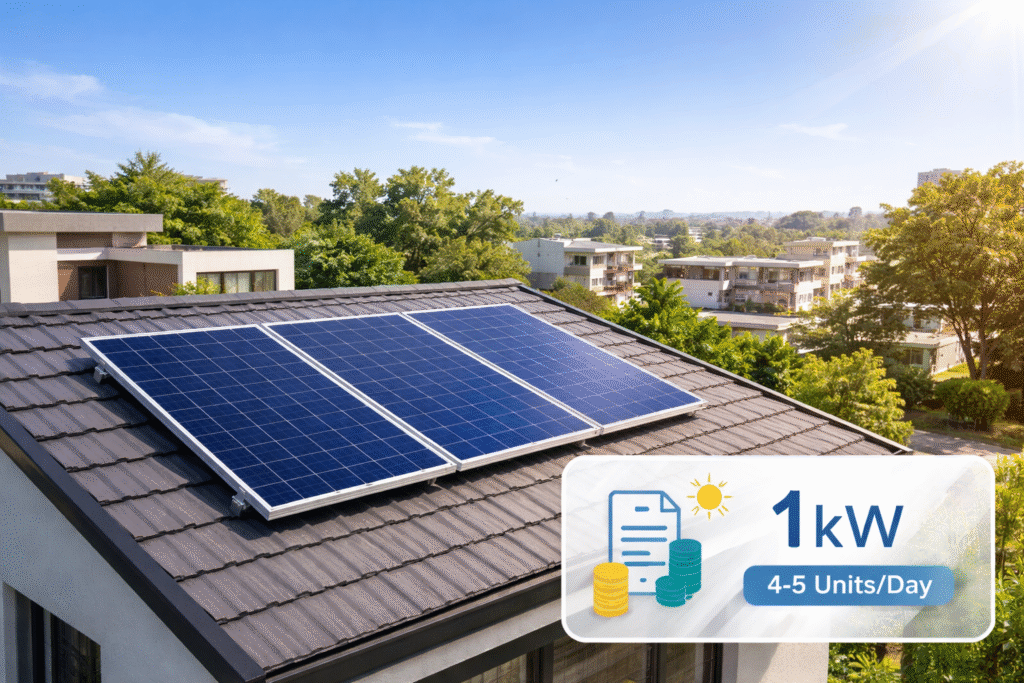
1 Kilowatt Solar Panel Price: Cost Structure, Power Generation & Payback Period
With rising electricity tariffs and growing awareness about clean energy, rooftop solar has become a practical solution for Indian homes and small businesses. Among the available system sizes, a 1 kW solar system is often the first choice for beginners due to its affordability and manageable installation requirements. Understanding the 1 Kilowatt Solar Panel Price, along with its cost structure, energy generation capacity, and payback period, helps buyers make an informed investment decision.
This detailed guide breaks everything down clearly—without jargon—so you know exactly what you’re paying for and what returns to expect.
What Is a 1 Kilowatt Solar System?
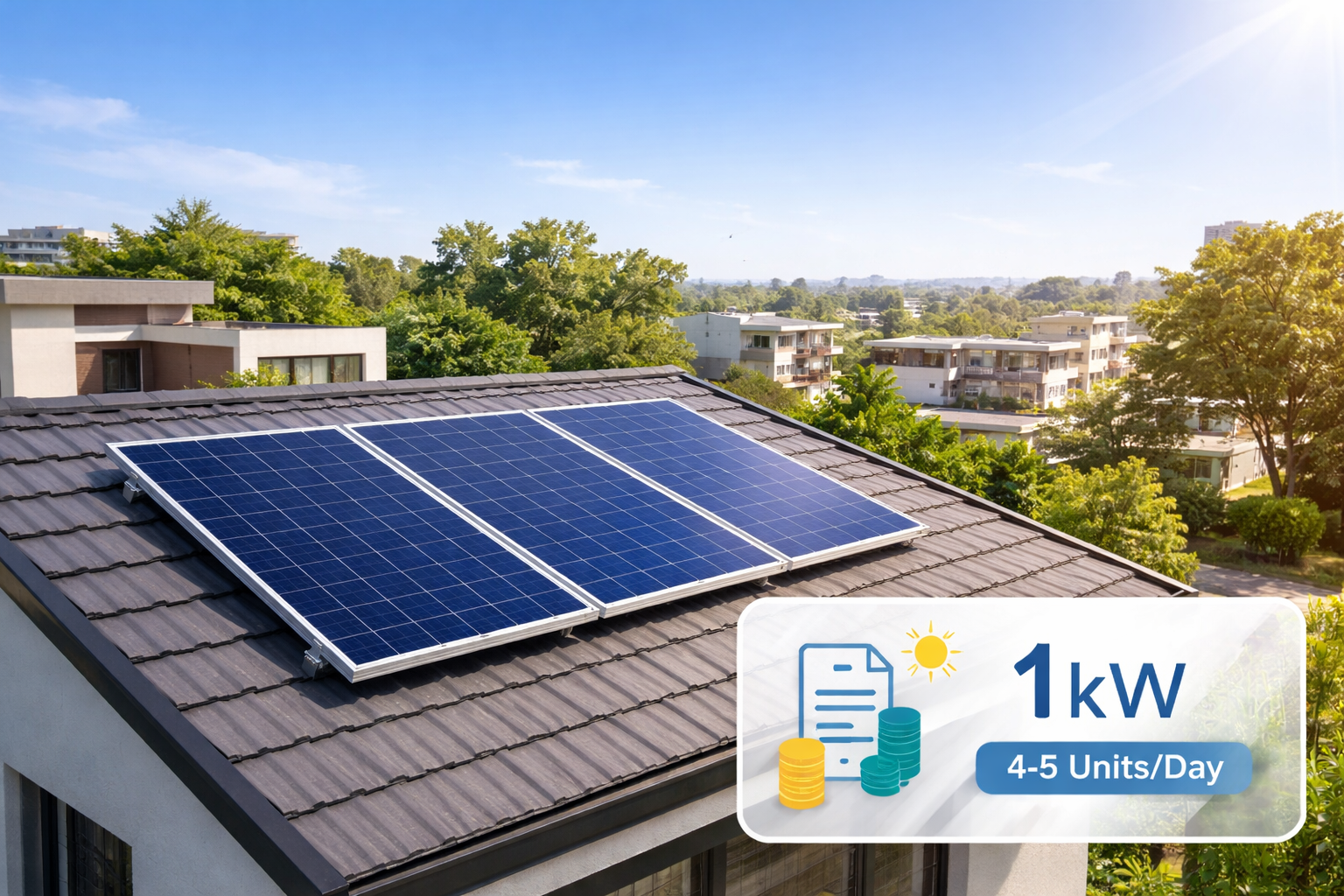
A 1 kilowatt (kW) solar system refers to a setup that can generate up to 1,000 watts of electricity under ideal sunlight conditions. It typically consists of 3 to 4 solar panels, depending on panel wattage, and is suitable for households with low to moderate electricity consumption.
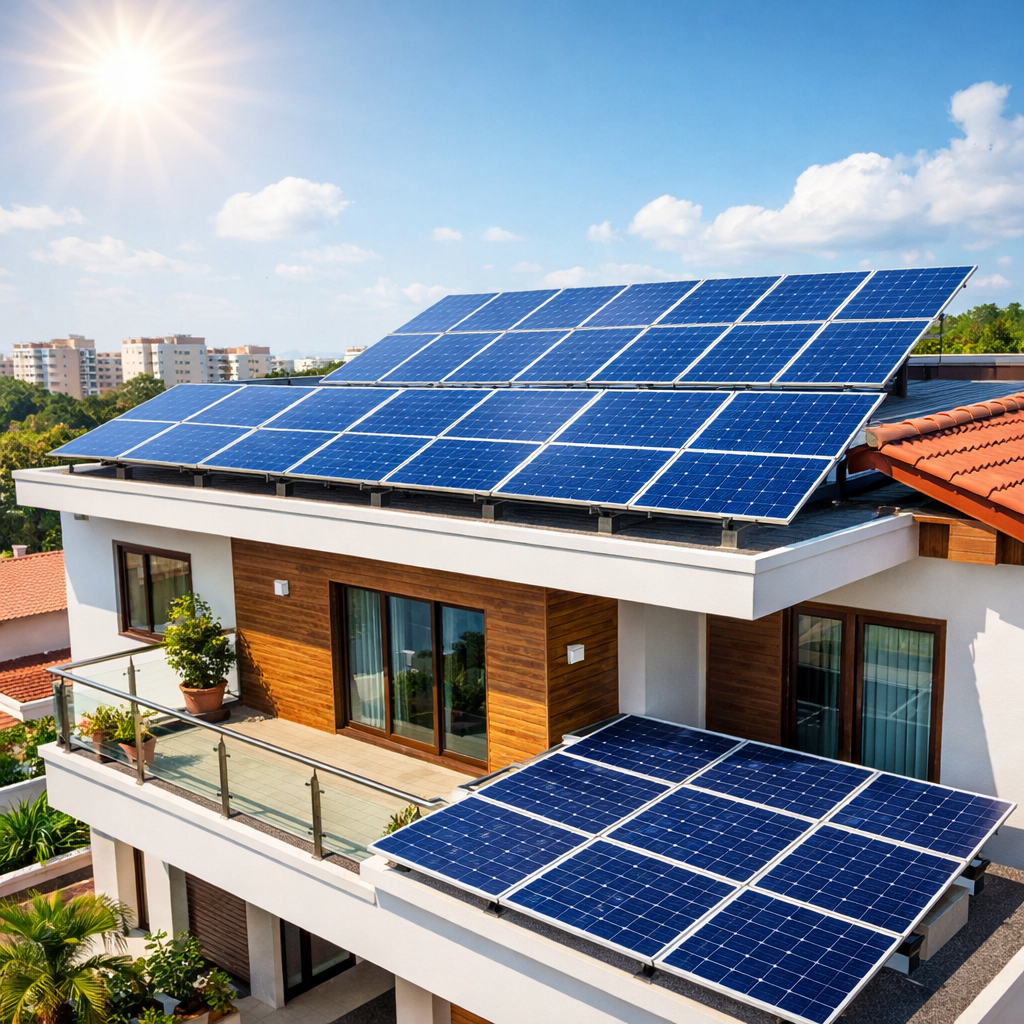
Such systems are commonly installed on rooftops and can power basic appliances like lights, fans, TVs, laptops, and refrigerators. For many homeowners, checking the 1 Kilowatt Solar Panel Price is the first step toward adopting solar energy.
1 Kilowatt Solar Panel Price in India
The 1 Kilowatt Solar Panel Price in India generally ranges between ₹65,000 and ₹85,000 for an on-grid system before subsidy. The final cost depends on several factors such as panel brand, inverter type, mounting structure, and installation location.
Here’s a general price range:
- On-grid system: ₹65,000 – ₹75,000
- Off-grid system: ₹75,000 – ₹85,000
- Hybrid system: ₹80,000 – ₹90,000
Government subsidies can further reduce the effective price, making solar power more accessible to residential consumers.
Cost Structure of a 1 kW Solar System
Understanding the cost structure behind the 1 Kilowatt Solar Panel Price helps you see where your money goes and avoid hidden charges.
1. Solar Panels (55–60%)
Solar panels form the largest part of the total cost. High-efficiency mono PERC panels are slightly more expensive but generate more power in limited space. Panel quality directly impacts long-term performance and durability.
2. Solar Inverter (15–20%)
The inverter converts DC electricity from panels into usable AC power. String inverters are commonly used for 1 kW systems due to their affordability and efficiency.
3. Mounting Structure (8–10%)
Mounting structures hold the panels securely on rooftops. These are usually made of galvanized iron or aluminum to withstand weather conditions.
4. Electrical Components & Wiring (5–7%)
This includes DC cables, AC cables, junction boxes, earthing, and safety components required for proper system operation.
5. Installation & Commissioning (5–8%)
Professional installation ensures safety, optimal panel angle, and long-term performance. This cost is usually included in the overall 1 Kilowatt Solar Panel Price.
Power Generation from a 1 kW Solar System
A key factor influencing buying decisions is how much electricity the system can generate. In India, a 1 kW solar system typically produces:
- 4 to 5 units per day
- 120 to 150 units per month
- 1,400 to 1,800 units per year
Actual generation depends on sunlight availability, roof orientation, shading, and location. States with higher solar irradiation tend to achieve better output, improving the value derived from the 1 Kilowatt Solar Panel Price.
Electricity Bill Savings
Once installed, a 1 kW solar system can significantly reduce electricity bills. If your average tariff is ₹7 per unit, annual savings can reach:
- ₹10,000 to ₹12,000 per year
With net metering, any excess power generated during the day is exported to the grid, further improving savings. Over time, these reductions make the 1 Kilowatt Solar Panel Price a financially sound investment.
Payback Period Explained
The payback period is the time required to recover the initial investment through electricity savings.
- Without subsidy: 5 to 6 years
- With subsidy: 3.5 to 4.5 years
Considering that solar panels last 25 years or more, users enjoy nearly two decades of free electricity after recovering the initial 1 Kilowatt Solar Panel Price.
Government Subsidy on 1 kW Solar Systems
Residential rooftop solar systems are eligible for government subsidies under national solar programs. For residential installations, systems with a capacity of 3 kW or less may qualify for subsidies of up to 40%.
This subsidy can reduce the effective 1 Kilowatt Solar Panel Price by ₹20,000 to ₹25,000, depending on approval and documentation. Subsidies apply mainly to on-grid systems installed by approved vendors.
On-Grid vs Off-Grid: Which Is Better?
Choosing the right system type affects both performance and cost.
On-Grid System
- Lower upfront cost
- Eligible for subsidy
- Requires grid availability
- Ideal for urban homes
Off-Grid System
- Includes battery storage
- Higher 1 Kilowatt Solar Panel Price
- Suitable for power-cut-prone areas
- No net metering
For most city households, on-grid systems offer the best balance of affordability and efficiency.
Maintenance Costs and Lifespan
One of solar energy’s biggest advantages is low maintenance. Cleaning panels every 2–3 months and periodic inspections are usually sufficient.
- Annual maintenance cost: ₹1,000 – ₹2,000
- Panel lifespan: 25 years
- Inverter lifespan: 8–12 years
Minimal maintenance further enhances returns on the 1 Kilowatt Solar Panel Price.
Is a 1 kW Solar System Worth It?
For small households, shops, and offices with limited power needs, a 1 kW solar system is an excellent entry point. It reduces electricity bills, protects against tariff hikes, and contributes to environmental sustainability.
When evaluated over its lifespan, the 1 Kilowatt Solar Panel Price delivers strong financial and environmental returns, especially when combined with government incentives and net metering benefits.
Investing in a solar system is no longer just an eco-friendly choice—it’s a smart financial decision. By understanding the cost structure, power generation potential, and payback period, buyers can confidently evaluate the 1 Kilowatt Solar Panel Price and its long-term value.
With falling equipment costs, supportive government policies, and rising electricity prices, there has never been a better time to switch to solar and start generating your own clean power.