A Guide to Solar Panel Types and How Each One Generates Electricity ?
Solar energy is quickly becoming one of the most dependable and eco-friendly sources of electricity. As more households and businesses install solar systems, it becomes important to understand the different of solar panel types and how each one works. Each of solar panel types has unique characteristics in terms of efficiency, cost, and performance, which can influence the overall effectiveness of a solar power system.
In this article, we will explore the major types of solar panels available today and explain how each technology functions.
How Solar Panels Produce Electricity
Before discussing the different panel types, it is helpful to understand the basic principle behind solar power generation. Solar panels generate electricity using the photovoltaic effect, a process where sunlight is converted directly into electrical energy.
When sunlight reaches the surface of a solar panel, the photovoltaic cells absorb the solar radiation. The absorbed energy excites electrons inside the semiconductor material of the cell. As these electrons begin to move, they produce an electric current.
The electricity created by solar panels is initially direct current (DC). Since most household appliances operate on alternating current (AC), an inverter is used to convert the DC electricity into AC power.
Main Types of Solar Panels
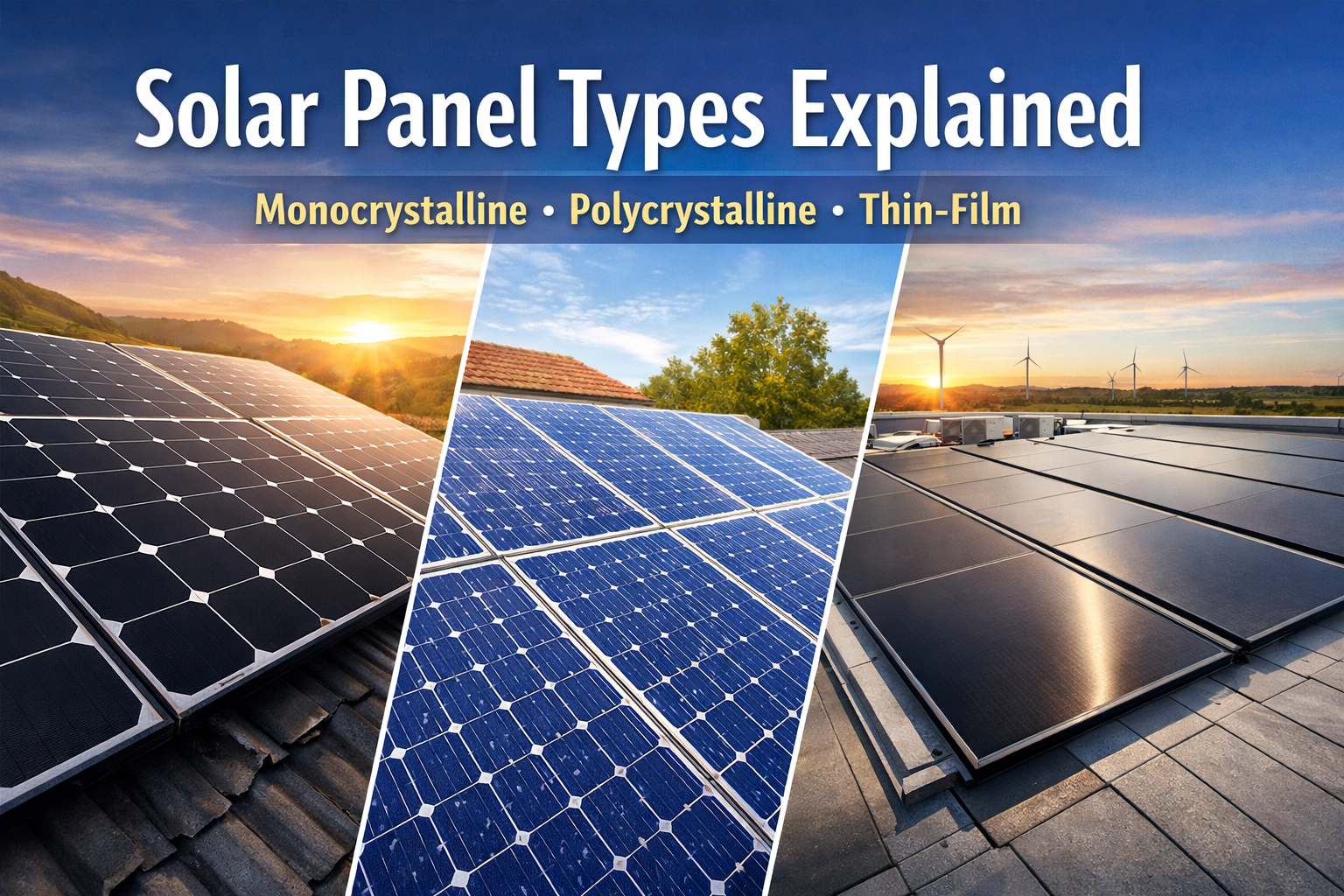
There are three main categories of solar panels commonly used in residential and commercial solar installations:
- Monocrystalline Solar Panels
- Polycrystalline Solar Panels
- Thin-Film Solar Panels
Each of these technologies uses sunlight to generate electricity but differs in materials, manufacturing processes, and efficiency levels.
1. Monocrystalline Solar Panels
Monocrystalline solar panels are widely regarded as one of the most efficient solar panel technologies currently available.
How Monocrystalline Panels Work
These panels are manufactured from a single crystal of silicon. The silicon is shaped into cylindrical ingots and sliced into thin wafers to form solar cells.
Because the silicon structure is uniform and pure, electrons can move more freely when exposed to sunlight. This allows monocrystalline panels to generate electricity more efficiently than many other panel types.
Key Characteristics
- High efficiency, typically between 18% and 22%
- Long operational lifespan
- Better performance when roof space is limited
- Recognizable black appearance
Best Applications
Monocrystalline panels are ideal for homes or buildings where roof space is limited and maximum energy production is required.
2. Polycrystalline Solar Panels
Polycrystalline panels are another common option in the solar market. They are generally more affordable than monocrystalline panels, though their efficiency is slightly lower.
How Polycrystalline Panels Work
Instead of using a single silicon crystal, polycrystalline panels are produced by melting multiple silicon fragments together. This process creates solar cells composed of several crystal structures.
When sunlight reaches these cells, electrons move through the silicon material and produce electrical energy, similar to other photovoltaic panels.
Key Characteristics
- Efficiency usually between 15% and 17%
- Lower manufacturing costs
- Distinct blue color surface
- Reliable performance for residential systems
Best Applications
Polycrystalline panels are often used in installations where there is enough roof space and affordability is an important factor.
3. Thin-Film Solar Panels
Thin-film panels represent a different approach to solar technology. Unlike crystalline panels, they use extremely thin layers of photovoltaic material.
How Thin-Film Panels Work
Thin-film panels are created by depositing very thin layers of photovoltaic materials—such as cadmium telluride or amorphous silicon—onto a surface like glass, plastic, or metal.
When sunlight strikes these layers, the photovoltaic material absorbs the energy and generates electrical current.
Key Characteristics
- Lightweight and flexible
- Lower efficiency compared to crystalline panels
- Easier and cheaper manufacturing process
- Suitable for large solar installations
Best Applications
Thin-film panels are often used for commercial buildings, large solar farms, and specialized applications where lightweight materials are advantageous.
Comparing Solar Panel Types
Choosing the right solar panel involves considering efficiency, cost, and space availability.
| Solar Panel Type | Efficiency | Cost Level | Space Requirement |
| Monocrystalline | High | Higher | Requires less space |
| Polycrystalline | Moderate | Moderate | Requires more space |
| Thin-Film | Lower | Lower | Needs larger area |
Although all solar panels rely on the photovoltaic principle, their performance differs depending on material quality and design.
Factors to Consider When Choosing Solar Panels
Selecting the right solar panel type depends on several factors related to your energy needs and installation conditions.
Available Roof Space
Homes with limited rooftop space usually benefit from higher-efficiency panels such as monocrystalline modules.
Budget
If cost is the primary concern, polycrystalline panels can provide a more affordable option.
Environmental Conditions
Climate factors such as sunlight intensity, temperature, and shading can influence solar panel performance.
Electricity Consumption
The amount of electricity you use each month will determine the required solar system size and panel type.
Benefits of Solar Panels
Regardless of the type of panel used, solar energy systems provide several long-term advantages.
Lower Energy Costs
Solar panels generate electricity from sunlight, helping homeowners significantly reduce monthly electricity bills.
Clean and Renewable Energy
Solar power is environmentally friendly and does not produce harmful emissions.
Long Operational Life
Most solar panels are designed to last 25 years or longer, making them a reliable long-term energy solution.
Minimal Maintenance
Solar systems require very little maintenance beyond occasional cleaning and routine inspection.
The Future of Solar Panel Technology
Solar technology continues to improve rapidly. Scientists and engineers are constantly developing new materials and manufacturing methods to enhance performance and reduce costs.
Some future developments may include:
- Higher efficiency photovoltaic cells
- Transparent solar panels for windows
- Flexible solar materials for building integration
- Advanced solar roofing solutions
These innovations will make solar power more efficient and accessible for homes and businesses in the future.
Before installing a solar system, it’s important to understand the different types of solar panels and how they work. Monocrystalline panels provide high efficiency, polycrystalline panels offer a balance between cost and performance, and thin-film panels deliver flexibility for specific applications.
Although their materials and efficiency levels differ, all solar panels operate using the same basic principle—converting sunlight into electricity. As solar technology continues to advance, it will play an increasingly important role in creating a sustainable and environmentally friendly energy future.