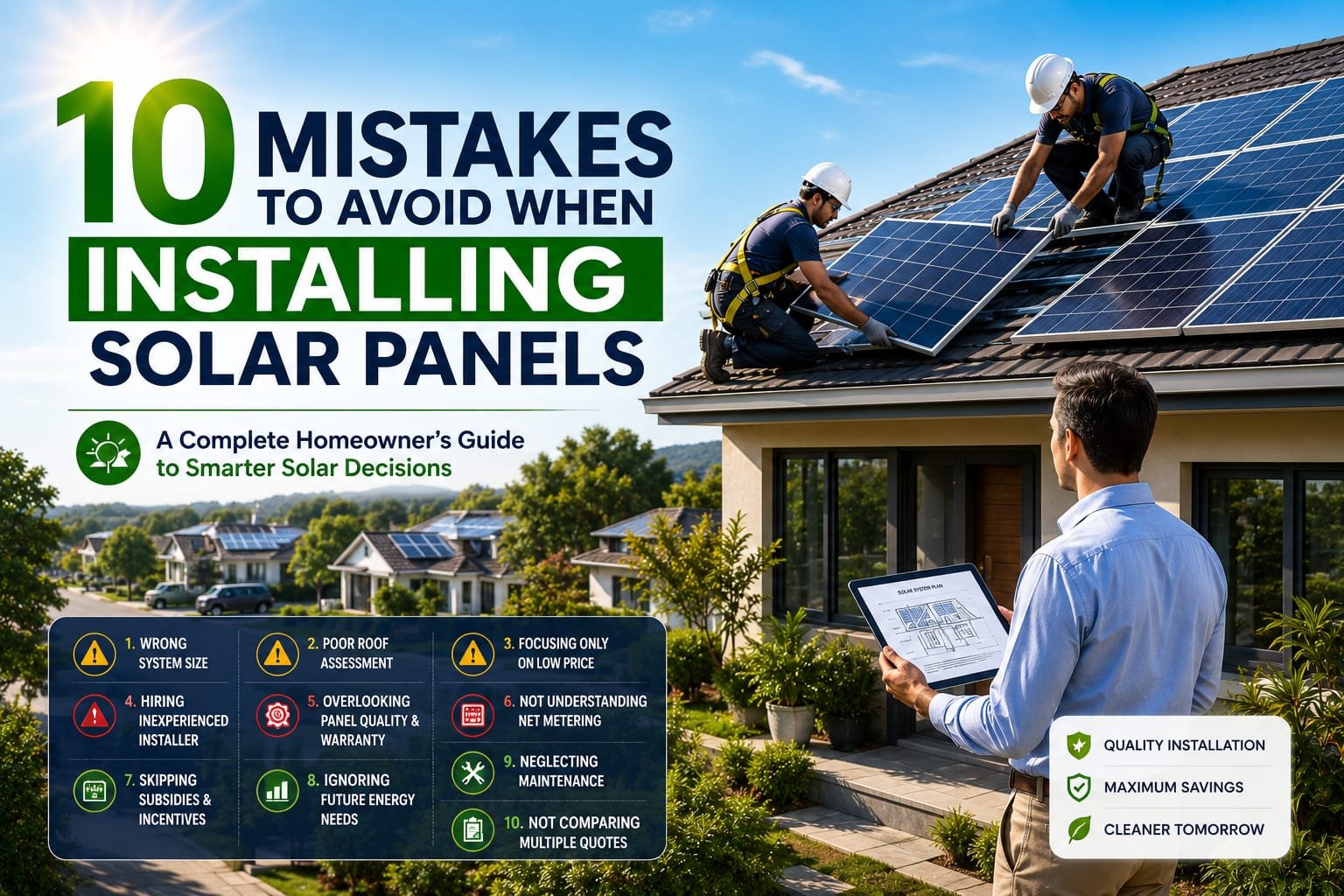
10 Mistakes to Avoid When Installing Solar Panels: A Complete Homeowner’s Guide
As electricity prices continue to rise, more homeowners and businesses are turning to solar energy as a cost-effective and environmentally friendly solution. However, installing solar panels is a significant investment that requires careful planning and informed decision-making. Avoiding common mistakes can help you maximize energy production, reduce maintenance costs, and achieve better long-term savings.
In this guide, we’ll discuss the 10 most common mistakes to avoid when installing solar panels and share practical tips to ensure your solar project is successful.
Why Careful Planning Matters When Installing Solar Panels
Before installing solar panels, it’s important to evaluate your energy needs, roof condition, and budget. A well-designed system can provide reliable electricity for decades, while poor planning may reduce efficiency and increase costs.
Working with experienced professionals and choosing quality equipment can make a significant difference in the performance of your solar system.
1. Choosing the Wrong System Size
One of the biggest mistakes homeowners make when installing solar panels is selecting a system that doesn’t match their electricity consumption.
A system that is too small may not generate enough electricity, while an oversized system could result in unnecessary costs.
Solution:
Review your past electricity bills and consult a solar expert to determine the ideal system size for your home.
2. Ignoring Roof Condition
Your roof plays a crucial role in the success of a solar installation. Installing a solar system on an old or damaged roof may require costly repairs later.
Solution:
Inspect and repair your roof before installing solar panels to avoid future disruptions and additional expenses.
3. Focusing Only on the Lowest Price
While it’s tempting to choose the cheapest quote, lower prices may come with compromises in product quality, installation standards, or after-sales service.
Solution:
Compare value rather than price alone. Consider panel efficiency, warranties, installer experience, and customer support.
4. Hiring an Inexperienced Installer
The quality of installation directly affects system performance. Poor workmanship can lead to reduced energy generation, electrical issues, and safety concerns.
Solution:
Choose a reputable installer with experience in installing solar panels, positive customer reviews, and a proven track record.
5. Overlooking Solar Panel Quality
Not all solar panels are created equal. Low-quality products may have lower efficiency and shorter lifespans.
Solution:
Invest in certified, high-performance solar panels from trusted manufacturers that offer strong warranties.
6. Not Understanding Net Metering
Many homeowners miss out on valuable savings because they do not understand net metering.
Net metering allows excess electricity generated by your solar system to be sent back to the grid, often earning credits that reduce future electricity bills.
Solution:
Learn how net metering works in your area before installing solar panels and ensure your system is designed to take advantage of it.
7. Skipping Government Subsidies and Incentives
Many governments offer financial assistance for residential solar installations, but some homeowners fail to apply.
Solution:
Research available subsidies, incentives, and rebate programs before installing solar panels to reduce your upfront investment.
8. Ignoring Future Energy Needs
Your electricity consumption may increase over time due to new appliances, electric vehicles, or home expansions.
Solution:
When installing solar panels, consider your future energy requirements and choose a system that can accommodate growth or be expanded later.
9. Neglecting Maintenance Requirements
Although solar systems require relatively little maintenance, they still need periodic cleaning and inspections to perform efficiently.
Dust, debris, and bird droppings can reduce panel output if left unchecked.
Solution:
Create a simple maintenance schedule and arrange professional inspections when necessary.
10. Failing to Compare Multiple Quotes
Selecting the first installer you contact may not provide the best value or service.
Solution:
Request quotations from several reputable companies and compare:
- Equipment quality
- Installation experience
- Warranty terms
- Customer support
- Overall project cost
This helps ensure you make an informed decision when installing solar panels.
Additional Tips for a Successful Solar Installation
Beyond avoiding common mistakes, there are several ways to improve the success of your solar project.
Assess Sunlight Exposure
Ensure your roof receives sufficient sunlight throughout the day and is free from excessive shading caused by trees or nearby buildings.
Choose the Right Panel Type
Monocrystalline panels generally offer higher efficiency, while polycrystalline panels can be a more budget-friendly option.
Verify Warranty Coverage
Review both the product warranty and installation warranty to protect your investment.
Work with Certified Professionals
Experienced installers can optimize panel placement, wiring, and system configuration for maximum performance.
Long-Term Benefits of Installing Solar Panels
Making informed decisions when installing solar panels can provide numerous long-term advantages.
Lower Electricity Bills
Generating your own electricity reduces dependence on utility providers and helps lower monthly energy costs.
Increased Property Value
Homes equipped with quality solar systems are often more attractive to buyers due to their energy-saving potential.
Cleaner Environment
Solar energy reduces greenhouse gas emissions and supports a more sustainable future.
Energy Independence
Producing electricity on-site decreases reliance on conventional power sources and provides greater control over energy expenses.
Frequently Asked Questions
How long do solar panels last?
Most modern solar panels have an expected lifespan of 25 years or more with proper maintenance.
Do solar panels work on cloudy days?
Yes. Although output is reduced during cloudy weather, solar panels still generate electricity from available daylight.
Is maintenance expensive?
No. Solar systems generally require minimal maintenance, mainly periodic cleaning and occasional inspections.
Can I install solar panels on any roof?
Most roofs are suitable, but factors such as structural integrity, orientation, and shading should be evaluated before installation.
Installing solar panels is one of the smartest investments homeowners can make for long-term energy savings and environmental sustainability. However, success depends on careful planning, quality equipment, and professional installation.
By avoiding these common mistakes, you can improve system performance, maximize financial returns, and enjoy reliable clean energy for decades. Whether you are considering solar for a new home or upgrading your current property, taking the time to plan properly will help you get the most from your investment.
With the right approach, installing solar panels can transform the way you power your home while reducing electricity bills and contributing to a greener future.