Grid-Connected Solar System with Battery Storage: Complete Guide
Solar energy has become an increasingly popular option for homeowners and businesses looking to reduce electricity expenses and adopt renewable power. Traditional grid-connected solar systems allow properties to generate electricity from sunlight and use the utility grid when solar generation is insufficient. However, adding battery storage provides another advantage: the ability to store surplus solar electricity for later use.
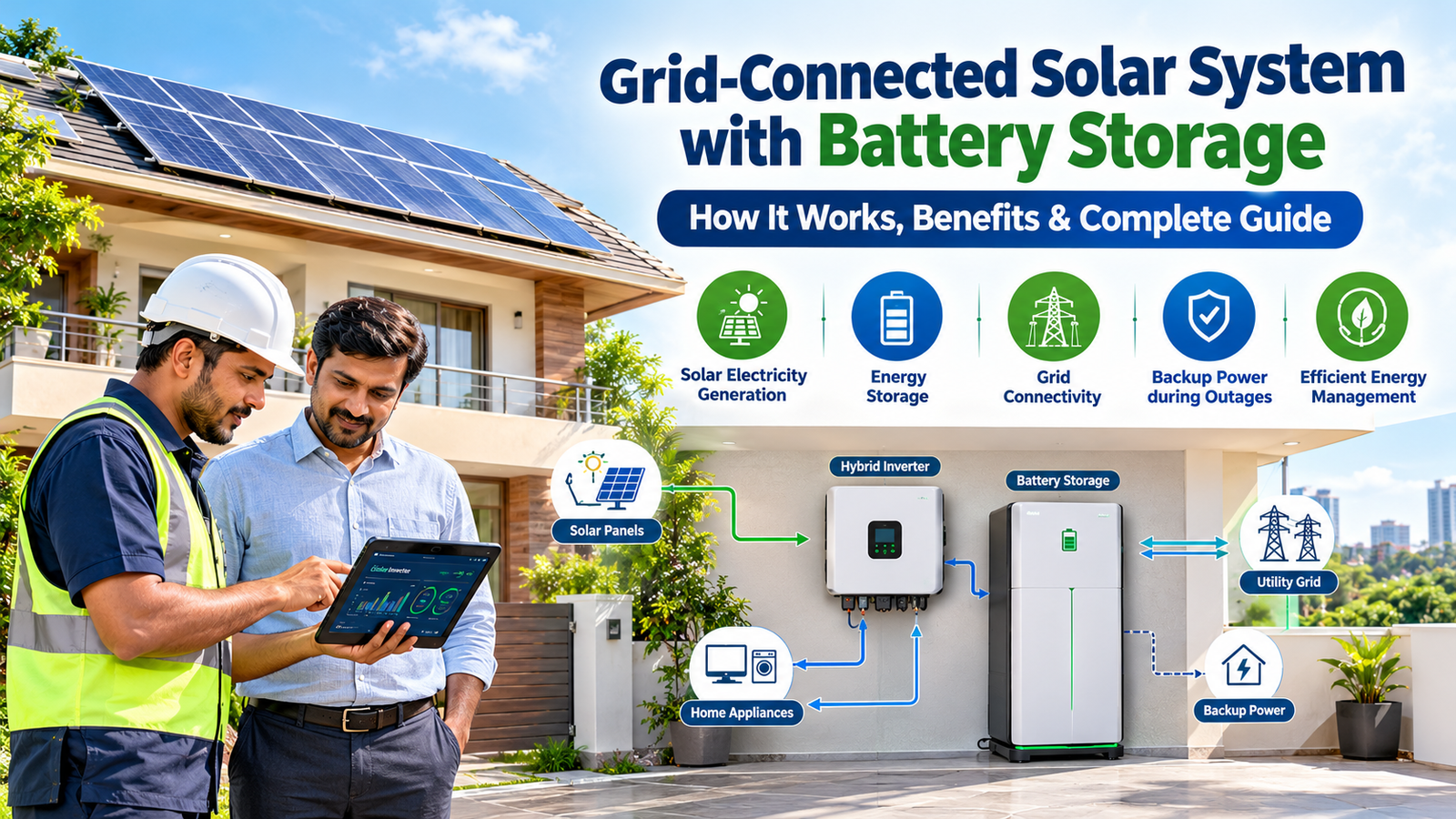
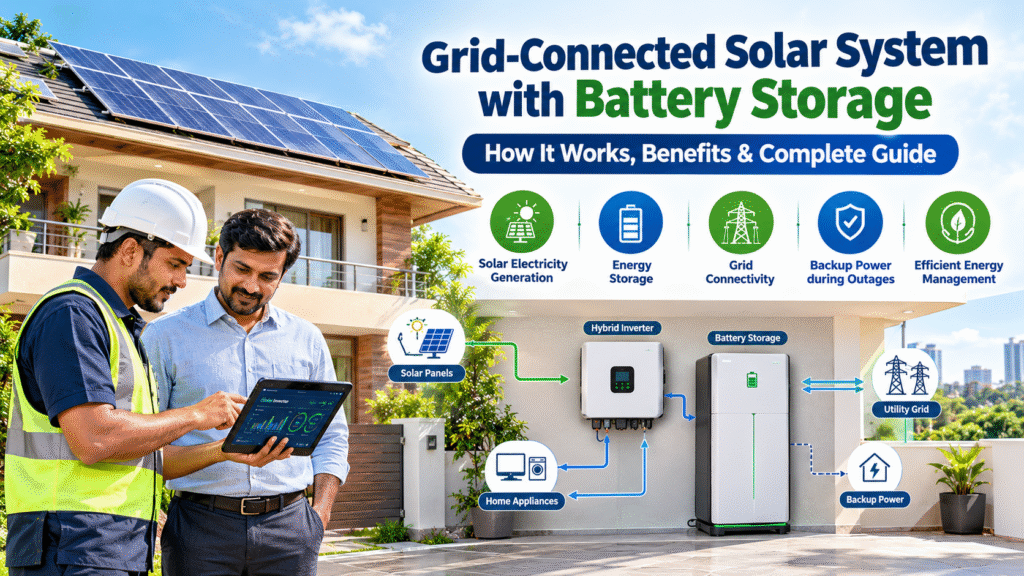
A Grid-Connected Solar System with Battery Storage combines rooftop solar panels, an inverter, battery storage, and a connection to the electricity grid. This arrangement allows users to consume solar electricity, store excess energy, and draw power from the grid when required.
For Indian households and commercial properties, this technology can offer greater flexibility in managing electricity consumption. It can also provide backup power during grid interruptions when the system is designed with suitable backup functionality.
In this guide, we explain how the system works, its major components, benefits, installation considerations, and how to choose the right configuration for your property.
What Is a Grid-Connected Solar System with Battery Storage?
A Grid-Connected Solar System with Battery Storage is a solar energy installation that operates alongside the utility electricity network and includes batteries for storing electricity.
During daylight hours, solar panels absorb sunlight and generate direct current (DC) electricity. An inverter converts this electricity into alternating current (AC) power that can operate compatible household or commercial appliances.
When solar generation exceeds the property’s immediate electricity requirements, the surplus energy can be directed towards battery charging, depending on the system configuration. Once the battery is charged, additional surplus electricity may be exported to the grid where permitted by the applicable connection and billing arrangements.
When solar generation decreases or electricity consumption increases, stored battery energy can help supply the property’s electrical loads. Grid electricity can also be used when solar and battery power are insufficient.
This arrangement combines renewable energy generation, energy storage, and utility grid connectivity in one integrated system.
How Does a Grid-Connected Solar System with Battery Storage Work?
Understanding the operating process helps explain why battery storage can improve the flexibility of a solar installation.
A typical system operates through the following stages:
1. Solar Panels Generate Electricity
Photovoltaic cells in solar panels capture sunlight and transform it into direct current (DC) electricity. The amount of electricity generated depends on sunlight availability, panel capacity, temperature, shading, and installation conditions.
2. The Inverter Converts Electricity
The inverter converts the DC electricity produced by the panels into AC electricity that can be used by compatible appliances.
In systems with battery storage, a suitable hybrid or battery-compatible inverter manages electricity flow between the solar panels, battery, household loads, and grid.
3. Appliances Use Solar Electricity
The electricity generated by the solar system can supply connected household or commercial appliances.
Using solar electricity directly helps reduce the amount of power that needs to be purchased from the utility provider.
4. Surplus Energy Charges the Battery
When solar generation is greater than immediate electricity consumption, available surplus energy can charge the battery.
The amount stored depends on battery capacity, charging limits, inverter settings, and the system’s energy management configuration.
5. Stored Electricity Is Used When Required
When sunlight becomes insufficient, the battery can discharge stored electricity to support compatible electrical loads.
This can be particularly useful during evening hours when solar panels are no longer generating power.
6. The Grid Provides Additional Electricity
If solar generation and available battery energy cannot meet the property’s requirements, electricity can be drawn from the utility grid.
Depending on the approved system design, surplus solar energy may also be exported to the grid.
Main Components of a Grid-Connected Solar System with Battery Storage
Every component has a specific role in generating, converting, storing, and distributing electricity.
1. Solar Panels
Solar panels are the primary electricity-generating components. They capture sunlight and produce DC electricity through photovoltaic technology.
Panel capacity, efficiency, orientation, and installation quality influence the amount of energy the system can generate.
2. Hybrid Solar Inverter
The hybrid inverter manages electricity generated by the solar panels and coordinates battery charging and discharging.
It also converts DC electricity into AC power for compatible electrical appliances. Depending on its design, it can manage grid interaction and provide backup power to selected circuits.
3. Battery Storage
Batteries store surplus solar electricity for use when solar generation is low or unavailable.
Common battery technologies include lithium-ion and lead-acid batteries. LiFePO4, also known as lithium iron phosphate, is a type of lithium-ion battery chemistry commonly used in modern energy storage systems.
Battery selection should consider usable capacity, charging limits, expected operating life, warranty, safety features, and compatibility.
4. Mounting Structures
Mounting structures secure solar panels to the rooftop or ground installation area.
They should be designed to support the panels under local environmental conditions while providing suitable positioning for sunlight exposure.
5. Protection and Electrical Equipment
A complete installation may include AC and DC protection devices, isolators, surge protection, suitable cables, earthing arrangements, and distribution equipment.
These components help support safe system operation and protect equipment against electrical faults.
6. Monitoring System
Monitoring equipment allows users to review solar generation, battery charging, electricity consumption, and grid interaction.
Depending on the inverter, information may be available through a display or mobile application.
Benefits of a Grid-Connected Solar System with Battery Storage
Installing a Grid-Connected Solar System with Battery Storage can provide several advantages compared with a conventional grid-connected installation without batteries.
1. Better Use of Surplus Solar Electricity
During sunny hours, solar panels may produce more electricity than the property immediately requires.
Battery storage allows suitable surplus energy to be saved for later use instead of relying entirely on exporting it to the grid.
2. Backup Power During Grid Outages
One important benefit is the possibility of supplying selected electrical loads when the utility grid experiences an interruption.
However, ordinary grid-connected inverters generally shut down during a grid outage for safety reasons. Backup operation requires compatible equipment, appropriate isolation arrangements, and a properly configured backup output.
3. Reduced Dependence on Grid Electricity
Stored solar electricity can be used when sunlight is unavailable, helping reduce the amount of electricity purchased from the utility provider.
The level of grid dependence depends on battery capacity, solar generation, and electricity consumption.
4. Improved Energy Management
Battery storage provides additional flexibility in deciding when solar electricity should be consumed or stored.
Homeowners and businesses can manage energy use according to their operating requirements and available solar generation.
5. Greater Flexibility for Different Properties
A battery-supported solar system can be designed for residential homes, offices, shops, and certain commercial facilities.
The system capacity and battery configuration should be selected according to the property’s electricity requirements.
6. Support for Renewable Energy Usage
Storing surplus solar electricity can increase the amount of solar energy available for use after sunset.
This supports greater utilisation of renewable electricity generated at the property.
Grid-Connected Solar System with Battery Storage vs Traditional On-Grid Solar
Both systems use solar panels and connect to the utility grid, but their energy storage capabilities differ.
| Feature | Traditional On-Grid System | Grid-Connected System with Battery |
| Solar electricity generation | Yes | Yes |
| Grid connectivity | Yes | Yes |
| Battery storage | Generally not included | Included |
| Surplus energy management | Grid export where permitted | Battery charging and permitted grid export |
| Evening solar usage | Grid supply or other arrangement | Stored battery energy or grid |
| Backup during outages | Generally unavailable | Possible with suitable backup design |
| Initial investment | Generally lower | Generally higher |
| System configuration | Relatively simple | More complex |
A traditional on-grid system may be suitable for properties focused primarily on reducing electricity bills.
A battery-supported configuration may be more appropriate when storing surplus solar energy and providing backup power are important requirements.
How to Choose the Right Battery Capacity
Choosing the correct battery size is important for achieving the desired backup duration and energy storage performance.
An undersized battery may not provide enough stored electricity for the required appliances. An oversized battery can increase installation costs unnecessarily.
Consider these factors before selecting a battery:
- Daily electricity consumption.
- Appliances that need backup.
- Expected backup duration.
- Available solar generation.
- Battery usable capacity.
- Battery charging and discharging limits.
- Future electricity requirements.
For example, a household that wants to operate only lights, fans, Wi-Fi equipment, and essential appliances during outages may require a different battery configuration from a property that wants to support air conditioners and other high-power equipment.
A professional energy assessment can help determine the appropriate battery capacity.
Factors to Consider Before Installing the System
Before choosing a Grid-Connected Solar System with Battery Storage, evaluate the following requirements.
1. Electricity Consumption
Review previous electricity bills to understand your average monthly consumption and identify the appliances that use the most electricity.
2. Rooftop Availability
Check whether your property has sufficient suitable space for solar panels. Roof orientation, shading, structural condition, and accessibility should also be evaluated.
3. Battery Requirements
Decide which appliances need backup and how long they should operate during a grid interruption.
4. Equipment Compatibility
Solar panels, inverters, and batteries must be compatible with one another. Confirm that the proposed equipment supports the required operating modes.
5. Installation Budget
Battery storage increases the upfront investment. Compare the complete system cost, warranty coverage, expected savings, and backup benefits before making a decision.
6. Grid Connection Requirements
Confirm applicable connection approvals, export arrangements, metering requirements, and technical standards with the relevant electricity distribution company.
Is a Grid-Connected Solar System with Battery Storage Worth It in India?
The suitability of a Grid-Connected Solar System with Battery Storage depends on the property’s electricity consumption, grid reliability, backup requirements, and available budget.
For homeowners, battery storage may be useful when evening electricity requirements are significant or backup power is important.
For businesses, stored solar electricity may help support selected operations during grid interruptions, provided the backup system is correctly designed.
However, batteries increase the initial system cost and may require replacement during the installation’s operating life. Therefore, the financial benefits should be compared with the additional investment.
Before proceeding, evaluate whether the value of backup power and stored electricity justifies the extra expense for your particular property.
Maintenance Tips for Battery-Connected Solar Systems
Proper maintenance helps keep the solar installation operating reliably.
Follow these practices:
- Clean solar panels when dirt accumulation requires attention.
- Monitor solar generation through the inverter application.
- Check battery status and system alerts regularly.
- Keep the inverter and battery area properly ventilated according to manufacturer instructions.
- Arrange professional inspections of electrical connections.
- Review mounting structures and rooftop conditions.
- Follow battery charging and operating recommendations.
- Keep installation documents and warranty information safe.
Never attempt to open battery enclosures or carry out electrical repairs without appropriate training. Contact a qualified technician when faults or unusual warnings appear.
Frequently Asked Questions
1. What is a grid-connected solar system with battery storage?
It is a solar installation connected to the utility grid that also includes batteries for storing surplus electricity. The stored energy can be used when solar generation is insufficient, depending on the system configuration.
2. Can a grid-connected solar system with battery storage work during power cuts?
Yes, if the installation includes compatible backup functionality, suitable isolation from the utility grid, and correctly configured backup circuits. Not every grid-connected system provides power during outages.
3. Can solar batteries store electricity for nighttime use?
Yes. Batteries can store surplus electricity generated during daylight hours and supply compatible electrical loads later, depending on available stored energy and system settings.
4. Which battery is suitable for a solar system?
Lithium-ion batteries, including LiFePO4 models, and lead-acid batteries are used in solar applications. The right choice depends on budget, usable capacity, warranty, compatibility, safety, and expected operating life.
5. Is a hybrid solar inverter necessary?
A hybrid inverter is a common option for systems combining solar panels, battery storage, and grid connectivity. However, other compatible configurations may also be available depending on the installation design.
6. Does battery storage reduce electricity bills?
It can help reduce grid electricity consumption by storing surplus solar energy for later use. Actual savings depend on electricity tariffs, battery efficiency, consumption patterns, and applicable billing rules.
7. Can I add a battery to my existing on-grid solar system?
In some cases, yes. However, the existing inverter, system configuration, and electrical equipment must support battery integration or be upgraded with compatible equipment.
8. How long does a solar battery last?
Battery life depends on its chemistry, usage, temperature, charging and discharging patterns, and manufacturer specifications. Check the product warranty and expected cycle life before purchasing.
A Grid-Connected Solar System with Battery Storage combines renewable electricity generation, energy storage, and utility grid connectivity to provide greater flexibility in managing power consumption.
It can help homeowners and businesses store surplus solar electricity, reduce grid dependence, and maintain power to selected appliances during outages when the system includes appropriate backup functionality.
However, choosing the right installation requires careful consideration of solar capacity, battery size, equipment compatibility, budget, and local electricity regulations.
At Ranas Solar Enterprises, we help homeowners and businesses explore solar energy solutions based on their electricity requirements and property conditions.
Planning to install a solar system with battery backup?
Contact Ranas Solar Enterprises to discuss suitable solar configurations and explore an energy solution designed around your requirements.